
Lao Tzu Biography Quotes 75 Report mistakes
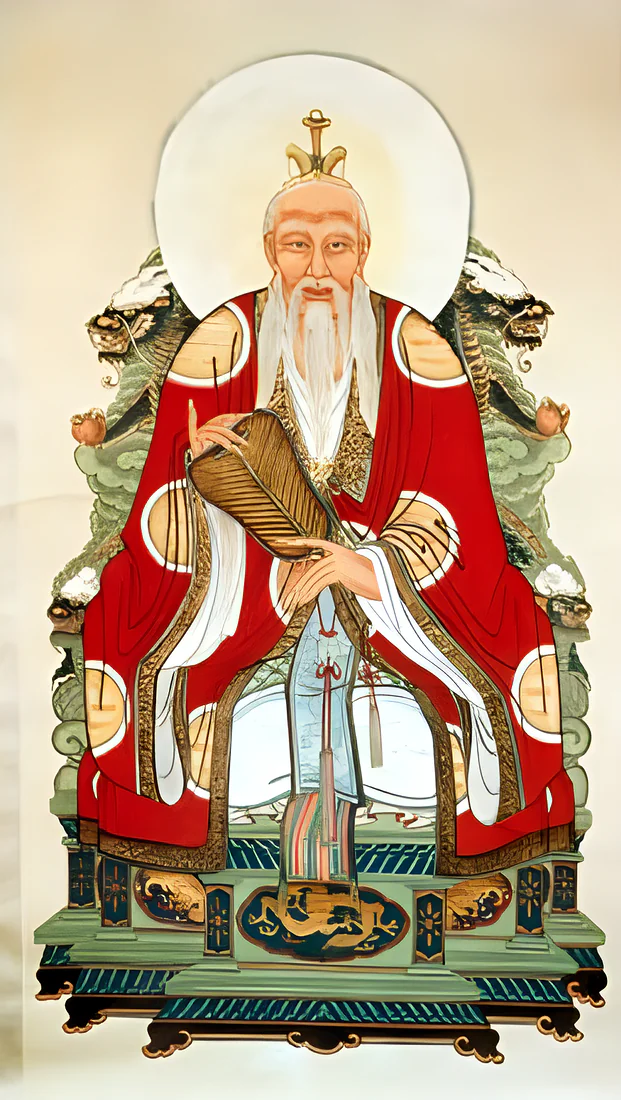
| 75 Quotes | |
| Occup. | Author |
| From | China |
| Born | 571 BC |
| Died | 471 BC |
| Cite | |
Citation Formats
APA Style (7th ed.)
Lao tzu biography, facts and quotes. (2026, February 10). FixQuotes. https://fixquotes.com/authors/lao-tzu/
Chicago Style
"Lao Tzu biography, facts and quotes." FixQuotes. February 10, 2026. https://fixquotes.com/authors/lao-tzu/.
MLA Style (9th ed.)
"Lao Tzu biography, facts and quotes." FixQuotes, 10 Feb. 2026, https://fixquotes.com/authors/lao-tzu/. Accessed 12 Feb. 2026.
Early Life and Background
Lao Tzu (Laozi), traditionally dated to roughly 571-471 BCE, sits at the hinge between history and reverent legend. Ancient sources place him in the late Zhou world, when the old feudal order was splintering into rival states and itinerant advisers competed to sell political remedies. That era's anxieties - war, ritual decay, and brittle authority - form the pressure chamber in which his quiet, anti-coercive vision later reads as both spiritual counsel and political critique.Later biographical sketches, especially in Sima Qian's Records of the Grand Historian, identify him as Li Er (courtesy name Dan), associated with the state of Chu and employed as an archive keeper in the Zhou royal court. Whether this describes a single person, a lineage of thinkers, or a symbolic figurehead, the portrait is consistent: an official close enough to power to see its hollowness, and distant enough to prefer inward cultivation over factional advancement. The famous departure scene - leaving the court, riding west on an ox, and being asked at a frontier pass to write down his teachings - condenses a psychology of withdrawal: he does not storm the palace; he exits it.
Education and Formative Influences
Lao Tzu's "education" is best understood as immersion in Zhou ritual culture and its documentary memory. As an archivist or keeper of records in the traditional account, he would have handled historical annals, genealogies, and the language of rites - the very instruments by which rulers claimed legitimacy. The breakdown of that legitimacy in the Spring and Autumn period supplied his formative contrast: where Confucian reformers doubled down on ceremony and moral instruction, Lao Tzu's voice (or the voice later gathered under his name) turned toward older, cosmological patterns - the Dao as the self-so ordering way of nature - and toward a discipline of unlearning, in which simplicity becomes a strategy for survival in a world made loud by ambition.Career, Major Works, and Turning Points
Lao Tzu is remembered primarily as the authorial presence behind the Dao De Jing (Tao Te Ching), a compact work of about five thousand Chinese characters that likely crystallized over time before stabilizing as a text attributed to him. Its two-part structure - Dao (Way) and De (virtue, potency) - suggests a turning point from court-centered ethics to a metaphysics of process: the best governance resembles nature, and the deepest strength is non-assertive. Excavated manuscripts from Guodian (4th century BCE) and Mawangdui (2nd century BCE) show an early, living textual tradition, reinforcing the likelihood that "Lao Tzu" also functioned as an organizing name for a stream of thought rather than a solitary, fully documentable career. Even so, the enduring image is coherent: an older mind choosing the periphery, shaping counsel that could travel farther than office.Philosophy, Style, and Themes
The Dao De Jing speaks in aphorism, paradox, and compressed imagery - valleys, water, uncarved wood - because its central claim resists doctrinal capture. Lao Tzu distrusts the impulse to name and control: once reality is carved into rigid categories, people begin fighting for the labels. The text returns obsessively to wu-wei (non-forcing): action that does not strain against the grain of things. This is not passivity; it is precision. A ruler, like a craftsperson, errs most when trying to show mastery. "A leader is best when people barely know he exists, when his work is done, his aim fulfilled, they will say: we did it ourselves". The line revealsOur collection contains 75 quotes written by Lao, under the main topics: Ethics & Morality - Wisdom - Truth - Justice - Love.
Lao Tzu Famous Works
- -4 Tao Te Ching (Book)
Source / external links