
Larry Fink Biography Quotes 15 Report mistakes
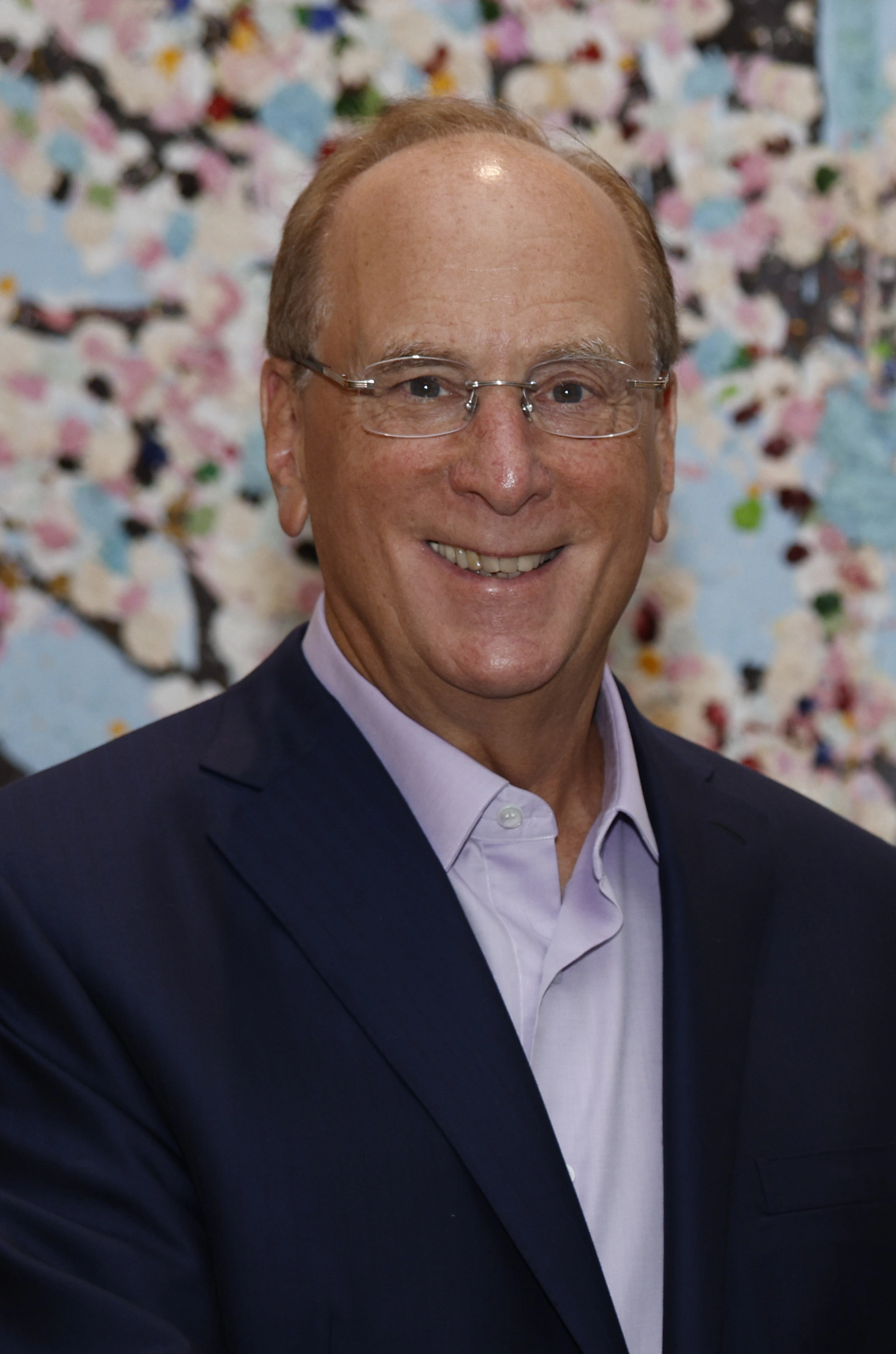
| 15 Quotes | |
| Born as | Laurence Douglas Fink |
| Native name | Laurence Douglas Fink |
| Occup. | Businessman |
| From | USA |
| Spouse | Lori (Lori Fink) |
| Born | November 2, 1952 Los Angeles, California, USA |
| Age | 73 years |
| Cite | |
Citation Formats
APA Style (7th ed.)
Larry fink biography, facts and quotes. (2026, February 11). FixQuotes. https://fixquotes.com/authors/larry-fink/
Chicago Style
"Larry Fink biography, facts and quotes." FixQuotes. February 11, 2026. https://fixquotes.com/authors/larry-fink/.
MLA Style (9th ed.)
"Larry Fink biography, facts and quotes." FixQuotes, 11 Feb. 2026, https://fixquotes.com/authors/larry-fink/. Accessed 22 Mar. 2026.
Early Life and Background
Laurence Douglas Fink was born on November 2, 1952, in the United States and grew up in Van Nuys, a San Fernando Valley neighborhood of Los Angeles shaped by postwar expansion and a practical, middle-class ethic. In a region where aerospace, real estate, and small enterprise coexisted, money was not an abstraction but a tool that determined whether families advanced, stalled, or slid backward. That early proximity to ordinary risk - mortgages, paychecks, inflation - helped form a temperament alert to the consequences of financial decisions beyond trading floors.His father ran a shoe store, and the rhythms of retail - thin margins, inventory risk, trust with customers - offered an early education in accountability. Fink would later build a career inside institutions whose products were complex and global, yet his public arguments repeatedly returned to a simple premise: finance is social infrastructure. That tension between everyday prudence and elite capital markets became a defining thread of his inner life - ambitious, competitive, and intensely focused on systems that, when they fail, punish people far from the source of the error.
Education and Formative Influences
Fink attended the University of California, Los Angeles, earning a BA in political science in 1974 and an MBA from UCLA's Anderson School of Management in 1976. Political science sharpened his sense that markets are governed systems, not pure nature; the MBA supplied the language of risk, balance sheets, and incentives. He entered finance during a decade of stagflation, volatile rates, and rapid innovation in bond markets, when the bond desk became a laboratory for new instruments - and for new ways to misjudge uncertainty.Career, Major Works, and Turning Points
Fink joined First Boston and became a prominent figure in fixed income, helping develop mortgage-backed securities as they moved from niche to mainstream. A pivotal setback came in 1986, when incorrect interest-rate assumptions reportedly led to major losses for the firm - an experience that hardened his belief that scalable finance requires scalable risk controls. In 1988 he co-founded BlackRock with partners including Robert Kapito, building it first as a risk-management and fixed-income shop before its expansion into a global asset manager. Under his leadership as CEO, BlackRock grew through performance, distribution, and acquisitions - notably the 2009 purchase of Barclays Global Investors, which brought iShares and made the firm a central node in index investing. During the 2008 crisis and its aftermath, BlackRock advised institutions and governments, elevating both its influence and the scrutiny it attracted. In the 2010s and 2020s, Fink became known beyond Wall Street for annual letters that framed corporate governance, long-termism, and sustainability as investment imperatives rather than philanthropy.Philosophy, Style, and Themes
Fink's worldview is that modern capitalism survives only if it prices reality - especially risk that compounds slowly and detonates suddenly. His formative wound was not ideological but operational: the memory of getting the math wrong at scale. That helps explain his persistent emphasis on transparency, stress testing, and systems thinking, as well as his comfort with steering capital by measurement rather than moral appeal. He argues that fiduciary duty is forward-looking and that ignoring foreseeable shocks is itself a breach of prudence.In his most quoted formulations, Fink collapses the distance between ethics and accounting by treating climate, governance, and social stability as variables that move cash flows. “Climate risk is investment risk”. The sentence is blunt by design - a psychological tell of a leader who persuades by redefining the frame rather than pleading for virtue. He pairs that with an investor's prediction of regime change: “In the near future, and sooner than most anticipate, there will be a significant reallocation of capital”. Underneath is both warning and opportunity: the manager who can quantify transition risk can also capture the flows it unleashes. His version of stakeholder capitalism insists it is not a departure from markets but a defense of them: “Stakeholder capitalism is not about politics. It is capitalism”. The theme running through his letters and speeches is legitimacy - companies that treat workers, customers, and communities as externalities invite backlash, regulation, and ultimately higher capital costs.
Legacy and Influence
Fink's legacy is inseparable from BlackRock's scale: he helped normalize passive investing, institutionalize risk analytics, and make stewardship - voting, engagement, disclosure demands - a mainstream lever in public markets. Admirers credit him with pushing corporations and investors to think longer-term about climate transition, governance, and systemic fragility; critics argue that concentrated ownership and advisory roles create outsized, opaque power. Either way, Fink became a symbol of 21st-century finance: a manager who speaks in the language of fiduciary duty while shaping how trillions interpret risk, and whose influence lies less in a single trade than in a durable idea - that what markets measure, markets will change.Our collection contains 15 quotes written by Larry, under the main topics: Success - Tough Times - Vision & Strategy - Investment - Business.
Source / external links