
Laura Riding Biography Quotes 11 Report mistakes
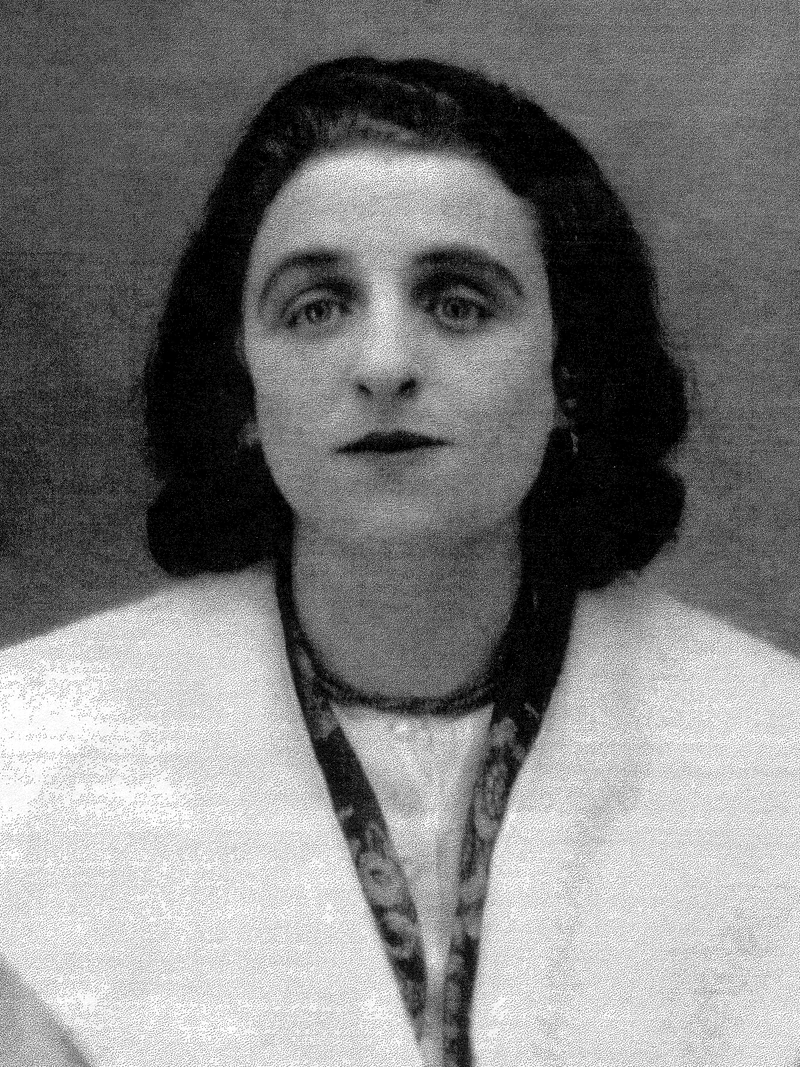
Attr: WtwmDIN4
| 11 Quotes | |
| Born as | Laura Reichenthal |
| Known as | Laura Riding Jackson |
| Occup. | Poet |
| From | USA |
| Born | January 16, 1901 Baltimore, Maryland, United States |
| Died | September 2, 1991 |
| Aged | 90 years |
| Cite | |
Citation Formats
APA Style (7th ed.)
Laura riding biography, facts and quotes. (2026, February 11). FixQuotes. https://fixquotes.com/authors/laura-riding/
Chicago Style
"Laura Riding biography, facts and quotes." FixQuotes. February 11, 2026. https://fixquotes.com/authors/laura-riding/.
MLA Style (9th ed.)
"Laura Riding biography, facts and quotes." FixQuotes, 11 Feb. 2026, https://fixquotes.com/authors/laura-riding/. Accessed 26 Mar. 2026.
Early Life and Background
Laura Riding was born Laura Reichenthal on January 16, 1901, in New York City, into a Jewish immigrant household in the thick of a polyglot, working-to-middle-class metropolis where English, Yiddish, and the idioms of trade and aspiration mixed daily. That environment mattered: her later impatience with literary pretension and her insistence on verbal exactitude were forged in a city where language was a tool of survival as much as a vehicle of art. The United States she entered was moving from Progressive-era reform toward the shocks of world war and modern mass culture, and she grew up alert to the moral pressure those forces put on words - slogans, editorials, and the new authority of print.Family expectations and the opportunities of New York pushed her toward intellectual distinction, but Riding early exhibited a temperament that resisted belonging for its own sake. She carried a severe inwardness and a watchfulness about how people "made" one another through opinion and affiliation, a wariness that later hardened into a critique of literary society. Even before her public career, she was forming the private conviction that the self had to be disciplined by truthfulness in speech, not gratified by applause. That stance made her both magnetic and difficult - a young woman determined to make language bear the full weight of conscience.
Education and Formative Influences
Riding attended Cornell University briefly in the early 1920s, encountering modern poetry, philosophy, and the institutional habits of criticism at close range; she left without a degree, but with sharpened antagonism toward received authority and a strengthened belief that writing was not a decorative pursuit. The postwar literary climate was shifting quickly - imagism, the little magazines, and experimental forms were challenging genteel verse - and Riding absorbed the era's impatience while also rejecting its easy self-mythology. Early publication and contact with poets and editors drew her into the modernist networks that promised seriousness, even as she began to see how quickly seriousness could turn into faction.Career, Major Works, and Turning Points
By the mid-1920s Riding had published poems and criticism and soon became a central, controversial figure in Anglo-American modernism, collaborating intimately and professionally with Robert Graves. Their partnership took her to Europe and into the most intense years of her production: poetry volumes, polemical essays, and the ambitious critical anthology A Survey of Modernist Poetry (1927, with Graves), which argued for disciplined reading against vagueness and merely biographical interpretation. In Mallorca during the early 1930s she helped found the Seizin Press, producing finely made books while trying to build an enclave for rigorous thought amid the political tremors of the decade; the Spanish Civil War shattered that refuge and sent her outward again. The decisive turning point came in the late 1930s and early 1940s when she largely renounced poetry itself, concluding that the art form could not deliver what she demanded of truth, and redirected her life toward a more austere project of linguistic and ethical exactness, later pursued with her husband, the scholar Schuyler B. Jackson, after her return to the United States.Philosophy, Style, and Themes
Riding's inner life, as it emerges through her criticism and the cold blaze of her poems, was organized around a moralized idea of speech: words were not ornaments but obligations. She distrusted the romance of the artist and the social theater of literary circles, sensing how quickly "culture" becomes a substitute for honesty. Her work repeatedly interrogates the difference between verbal power and verbal truth, refusing the consolations of aesthetic distance. “There can be no literary equivalent to truth”. That sentence is not just an aphorism but a confession of the wound that drove her: she wanted language to be true in the way conscience is true, and she feared that literature, as a social practice, made that impossible by rewarding effects.Her style therefore aimed at severe clarity - compact statements, pared images, and a syntax that often feels like argument under pressure. She treated poetry as a crucible that heightens awareness rather than a balm: “The end of poetry is not an after-effect, not a pleasurable memory of itself, but an immediate, constant and even unpleasant insistence upon itself”. Psychologically, this insistence reads as both ascetic discipline and self-protection: if the poem must hurt, it cannot flatter. Yet she also recognized the temptation to confuse the making of a poem with the solving of life, warning against artistic self-deception: “To a poet the mere making of a poem can seem to solve the problem of truth, but only a problem of art is solved in poetry”. Her eventual renunciation of poetry was the extreme, coherent outcome of these beliefs, a refusal to let the social category of "poet" replace the harder work of truthful thinking-speaking.
Legacy and Influence
Riding died on September 2, 1991, having spent decades as a figure both revered and resisted: a modernist who helped define close, exacting reading, and a dissenter who challenged modernism's confidence in art as salvation. Her influence persists in the moral seriousness of later poets and critics who treat language as an ethical arena, in feminist and biographical reassessments that disentangle her from the myths of her male collaborators, and in the continuing fascination with her rare decision to abandon a successful poetic career on principle. The endurance of her work lies less in a school of followers than in the pressure she applies to readers: to ask what we are doing when we call something "poetry", and what we are avoiding when we let style stand in for truth.Our collection contains 11 quotes written by Laura, under the main topics: Truth - Art - Friendship - Deep - Honesty & Integrity.
Frequently Asked Questions
- Beryl Graves: Beryl Graves was the married name used by Laura Riding, an American poet also known as Laura (Riding) Jackson.
- Laura Riding Progress of stories: “Progress of Stories” is a prose work by American poet and writer Laura Riding.
- Laura Riding Anarchism is Not Enough: “Anarchism is Not Enough” is a work associated with Laura Riding as an author.
- Laura Riding children: Laura Riding had two children with her husband, Schuyler B. Jackson.
- Laura Riding Collected Poems: Laura Riding is the author of collected editions of her poetry that gather poems from across her career under the name Laura Riding.
- Laura (Riding) Jackson Foundation: The Laura (Riding) Jackson Foundation is a nonprofit organization associated with preserving and promoting the legacy of poet Laura Riding, also known as Laura (Riding) Jackson.
- Laura Riding Books: Laura Riding was an American poet and writer whose books include poetry, essays, and prose works published under the name Laura Riding and Laura (Riding) Jackson.
- How old was Laura Riding? She became 90 years old
Source / external links