
Laurel Clark Biography Quotes 29 Report mistakes
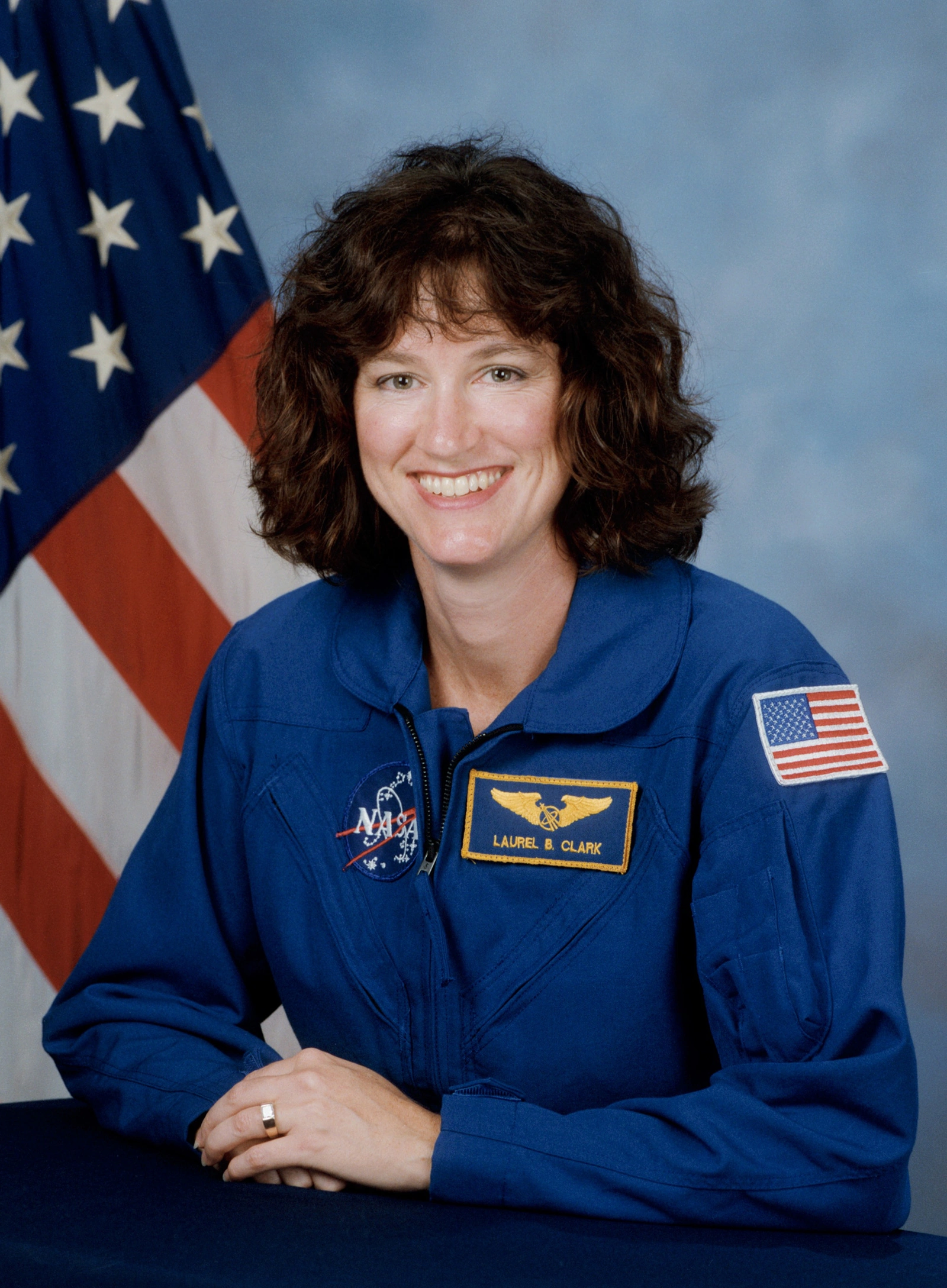
| 29 Quotes | |
| Born as | Laurel Blair Salton Clark |
| Occup. | Astronaut |
| From | USA |
| Born | March 10, 1961 Ames, Iowa, U.S. |
| Died | February 1, 2003 Texas, U.S. |
| Aged | 41 years |
| Cite | |
Citation Formats
APA Style (7th ed.)
Laurel clark biography, facts and quotes. (2026, February 11). FixQuotes. https://fixquotes.com/authors/laurel-clark/
Chicago Style
"Laurel Clark biography, facts and quotes." FixQuotes. February 11, 2026. https://fixquotes.com/authors/laurel-clark/.
MLA Style (9th ed.)
"Laurel Clark biography, facts and quotes." FixQuotes, 11 Feb. 2026, https://fixquotes.com/authors/laurel-clark/. Accessed 5 Mar. 2026.
Early Life and Background
Laurel Blair Salton Clark was born March 10, 1961, in Ames, Iowa, and grew up in a Midwestern culture that prized competence, modesty, and practical service. When her family later settled in Racine, Wisconsin, she showed an early appetite for challenge - the kind that combines curiosity with stamina - and she gravitated toward science not as abstraction but as a tool for helping real people. Friends and teachers remembered a bright, competitive student who could move easily between high achievement and quiet teamwork, an early hint of the steady, crew-minded professional she would become.That temperament matured in the late Cold War United States, when the space program carried both national symbolism and a disciplined, engineering-first ethos. Clark absorbed the era's twin messages: that exploration was public service, and that excellence demanded preparation. By the time NASA began selecting larger classes of astronauts in the 1990s, she embodied a new archetype - the physician-astronaut whose value was not only in piloting a spacecraft but in turning the human body itself into a frontier of data.
Education and Formative Influences
Clark earned a Bachelor of Science in zoology from the University of Wisconsin-Madison in 1983 and an M.D. from the University of Wisconsin School of Medicine in 1987. She pursued residency training in aerospace medicine and public health-oriented clinical work, drawn to environments where physiology, uncertainty, and high stakes converge. The Navy offered that crucible: operational medicine, aviation communities, and an ethic of responsibility that matched her own. Over time, she learned to translate bedside ambiguity into method - asking better questions, collecting better evidence, and staying calm when answers arrived slowly.Career, Major Works, and Turning Points
Commissioned in the U.S. Navy, Clark served as a flight surgeon and later worked with undersea and aviation units, developing expertise in the physiology of extreme environments. Selected by NASA as an astronaut in 1996, she trained through the Shuttle era's peak operational tempo, when crews were expected to master systems, robotics, and emergency procedures while also serving as hands-on research operators. Her sole spaceflight came with STS-107 aboard Space Shuttle Columbia, launched January 16, 2003, a dedicated science mission that ran a dense schedule of experiments in life sciences, combustion, and materials research. On February 1, 2003, Columbia broke apart during reentry, killing Clark and her six crewmates and reshaping NASA's culture around foam-shedding risk, organizational dissent, and the hard boundary between normal and safe.Philosophy, Style, and Themes
Clark's inner life, as it emerges from interviews and crew communications, fused wonder with rigor. She spoke like a clinician who had learned to be at peace with uncertainty without becoming numb to it. “We'd like to have immediate answers to all of our questions. I think medicine in particular”. That frustration was not cynicism - it was a moral impatience to reduce suffering by replacing guesswork with knowledge. In space, she saw research as an extension of care: “As a physician, I understand how important it is to collect data on people so we can understand what's happening with them. I will be in the position to help enable that knowledge”. The line reveals a psychology oriented toward usefulness: she wanted not simply to witness history, but to make herself an instrument through which others - patients, scientists, future crews - could know more.Her style was practical, observant, and quietly poetic, grounded in physiology yet open to awe. On orbit she described fluid shifts with the clarity of a teacher, turning the strange into the intelligible without draining it of mystery. And she retained a child's astonishment at living systems even inside a machine built for vacuum. “There was a moth in there, and it still had its wings crumpled up, and it was just starting to pump its wings up. Life continues in lots of places, and life is a magical thing”. That sentence is a key to her themes: resilience, adaptation, and the conviction that the biological world is not an accessory to exploration but its meaning. Her excitement was always tied to crewwork and preparation, suggesting a character who trusted process more than bravado and who found confidence in shared competence.
Legacy and Influence
Clark's legacy is inseparable from Columbia, but it is larger than tragedy. She stands for the generation that made human spaceflight a laboratory for understanding the body - sleep, balance, fluids, immunity - and for the idea that care can be practiced through measurement as much as through touch. In memorial scholarships, medical and aerospace programs, and the ongoing reforms inspired by the Columbia Accident Investigation Board, her life continues to argue that wonder must be partnered with discipline, and that exploration is ultimately an ethical project: to learn enough about ourselves to travel farther, safer, and with more humility.Our collection contains 29 quotes written by Laurel, under the main topics: Nature - Life - Live in the Moment - Doctor - Science.
Source / external links