
Lawrence Clark Powell Biography Quotes 7 Report mistakes
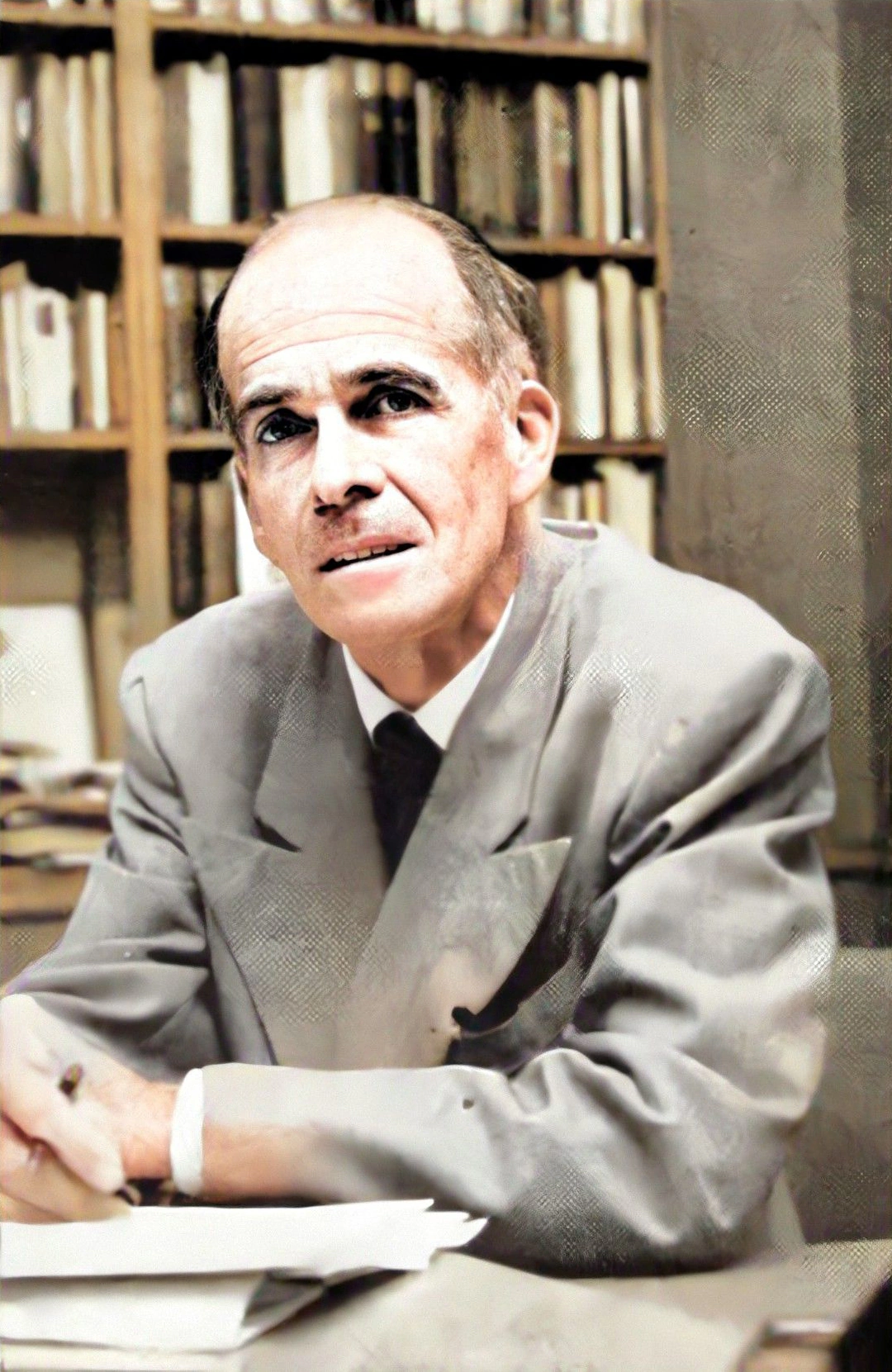
Attr: University of California
| 7 Quotes | |
| From | USA |
| Born | September 6, 1906 |
| Died | March 14, 2001 |
| Aged | 94 years |
| Cite | |
Citation Formats
APA Style (7th ed.)
Lawrence clark powell biography, facts and quotes. (2026, February 11). FixQuotes. https://fixquotes.com/authors/lawrence-clark-powell/
Chicago Style
"Lawrence Clark Powell biography, facts and quotes." FixQuotes. February 11, 2026. https://fixquotes.com/authors/lawrence-clark-powell/.
MLA Style (9th ed.)
"Lawrence Clark Powell biography, facts and quotes." FixQuotes, 11 Feb. 2026, https://fixquotes.com/authors/lawrence-clark-powell/. Accessed 12 Feb. 2026.
Early Life and Background
Lawrence Clark Powell was born on September 6, 1906, in Ohio, and came of age as the United States moved from Progressive-era optimism into the disillusionments of World War I and the cultural ferment of the 1920s. In his youth he absorbed two forces that would never stop tugging at each other in his work - a Midwestern plainspokenness that prized clarity and use, and an early romance with books as physical objects carrying personal and national memory.By the time he was a young man, America was learning to live with mass media, advertising, and the accelerated rhythms of modern life. Powell would spend his career insisting that the deepest modernity was not speed but attention. The library, for him, was not merely a storehouse but a civic instrument - a place where private reading could become public intelligence, and where the solitary act of opening a book could be linked to the health of institutions and communities.
Education and Formative Influences
Powell pursued higher education in the interwar years, when American universities were professionalizing and expanding their research missions, and when librarianship was evolving from custodial practice into a strategic discipline of collection-building, teaching, and cultural stewardship. He was formed by the idea that bibliographic knowledge is not trivia but a kind of historical sensing - the ability to see how ideas travel, which voices are amplified, and how a civilization remembers itself through what it preserves and circulates.Career, Major Works, and Turning Points
Powell became one of the most prominent American librarians of the 20th century, best known for his leadership at the University of California, Los Angeles, where he served as university librarian and later as dean of the School of Library Service, helping shape UCLA into a major research institution through ambitious acquisitions, fundraising, and a public-facing philosophy of the library as the university's intellectual heart. In an era marked by the Great Depression, World War II, and the postwar boom in higher education, he wrote widely as a bibliographer and man of letters - producing essays, library histories, and regional literary studies that fused administrative realism with an almost pastoral love of reading. His public talks and books made him a bridge figure: a scholar-librarian who could speak to donors, faculty, students, and general readers with the same conviction that collections are built one decision at a time, and that those decisions decide what future scholarship can be.Philosophy, Style, and Themes
Powell's inner life, as it emerges from his essays and speeches, is animated by a paradox: he revered books as enduring artifacts, yet mistrusted any worship that stopped at the object rather than the encounter. "Unless their use by readers bring them to life, books are indeed dead things". That sentence is less a slogan than a psychological self-portrait: Powell wanted the library to be a living organism, not a mausoleum, and he feared the genteel complacency that can settle over cultural institutions. His ideal librarian was therefore not a guardian of silence but an instigator of minds, someone who understood that circulation, teaching, and readerly transformation are the real measures of a collection.At the same time, he was no naive futurist. He watched universities become larger and more bureaucratic, and he saw technology accelerate reproduction and distribution; yet he argued that the human act at the center remains stubbornly intimate. "We are the children of a technological age. We have found streamlined ways of doing much of our routine work. Printing is no longer the only way of reproducing books. Reading them, however, has not changed". His prose style follows the ethic of that claim - direct, unornamented, built to be read rather than admired at a distance. Even when speaking in institutional terms, he framed the library as a civilizational hinge: "No university in the world has ever risen to greatness without a correspondingly great library... When this is no longer true, then will our civilization have come to an end". The intensity is revealing: Powell treated culture as something that can be lost through neglect, and he wrote as if alertness itself were a public duty.
Legacy and Influence
Powell died on March 14, 2001, after a long life that spanned from the age of print supremacy into the early internet era, and his influence endures in the model he helped popularize - the librarian as intellectual leader, fundraiser, teacher, and advocate for the humanities within a research university. His essays remain touchstones for readers who want an argument for libraries that is neither nostalgic nor purely technocratic: he insisted that collections are built for use, that reading is a constant amid changing formats, and that the greatness of institutions is measurable in how seriously they take the stewardship of knowledge.Our collection contains 7 quotes written by Lawrence, under the main topics: Writing - Knowledge - Book - Technology.
Source / external links