
Lawrence Taylor Biography Quotes 29 Report mistakes
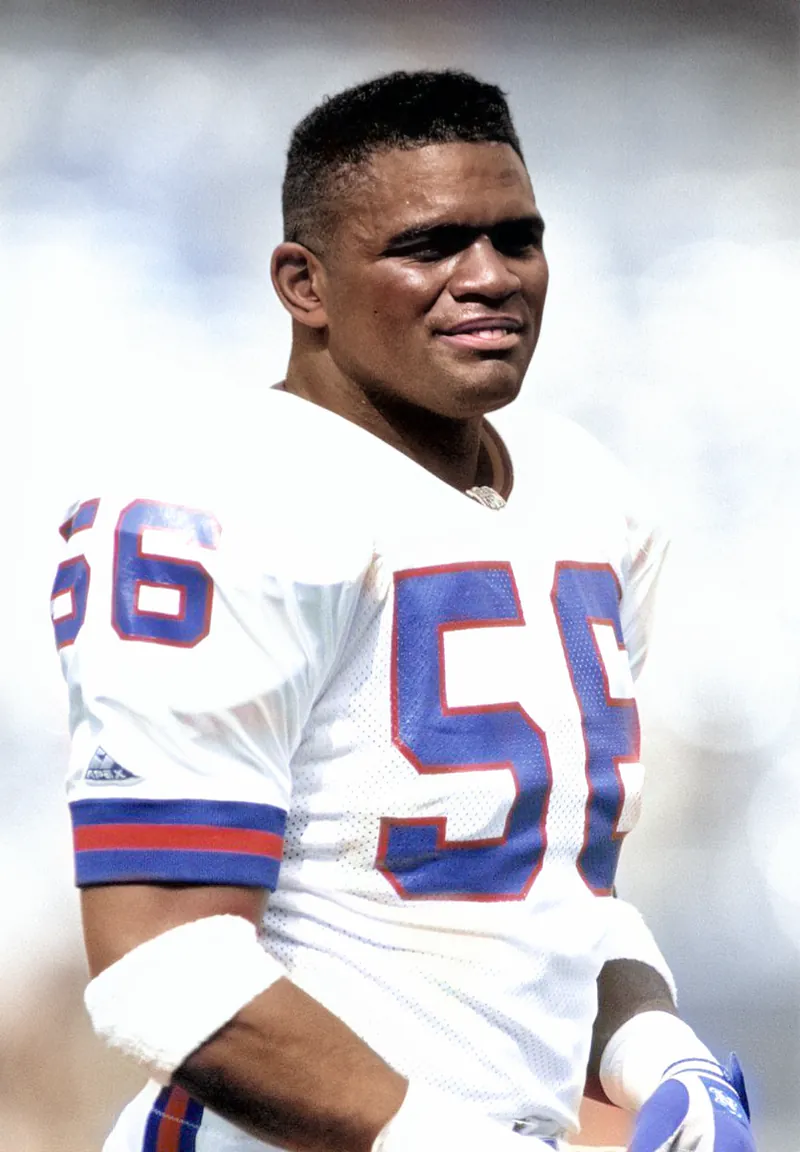
| 29 Quotes | |
| Born as | Lawrence Julius Taylor |
| Known as | LT |
| Occup. | Athlete |
| From | USA |
| Born | February 4, 1959 Williamsburg, Virginia, USA |
| Age | 66 years |
Lawrence Julius Taylor was born on February 4, 1959, in Williamsburg, Virginia, and grew up in a large, working-class household shaped by the disciplines of the postwar South. His father, a U.S. Army veteran, and his mother, a steadying presence amid frequent moves, raised children in an era when opportunity and pressure arrived together - school integration, Vietnam-era aftershocks, and the hardening of American football into a televised national rite.
Taylor was a late-blooming athlete by myth and an early-blooming competitor by temperament. Friends and coaches remembered a restless energy that could tilt either toward achievement or trouble depending on who held the structure. Even before fame, he carried a contradiction that would define his public life: a hunger for contact and domination paired with a quick appetite for risk, the kind that makes young men magnetic in locker rooms and combustible in the wider world.
Education and Formative Influences
At the University of North Carolina at Chapel Hill, Taylor refined raw aggression into craft under head coach Dick Crum, becoming the prototype of the modern edge defender - explosive first step, violent hands, and an intuitive sense for where fear lived in an offense. In the late 1970s, as strength training and film study professionalized college football, Taylor absorbed both: he learned how to read protections, bait quarterbacks, and turn pursuit into performance, earning ACC recognition and positioning himself as a transformative NFL prospect.
Career, Major Works, and Turning Points
Drafted by the New York Giants in 1981, Taylor detonated on the league, winning Defensive Rookie of the Year and Defensive Player of the Year in the same season, then anchoring Bill Parcells' defense through a culture shift from talented also-ran to champion. With coordinator Bill Belichick tailoring schemes to weaponize Taylor's edge pressure, the Giants won Super Bowl XXI and XXV; Taylor became a perennial All-Pro, an MVP in 1986, and a player so disruptive that opponents changed protections, personnel, and even roster priorities. Off the field, however, arrests and substance abuse followed him into the spotlight, and late-career suspensions and wear signaled a body paying interest on years of violence. He retired after the 1993 season, was inducted into the Pro Football Hall of Fame in 1999, and later navigated legal and personal crises that complicated - but did not erase - his athletic imprint.
Philosophy, Style, and Themes
Taylor's style was less "linebacker" than force of nature: a sprinter's takeoff fused to a street-fighter's finish, the ability to turn a tackle into a statement. He thrived on the thin line between fear and exhilaration, describing rare afternoons of total clarity when the game slowed down and instinct became orchestration: "There were probably about five games in my career where everything was moving in slow motion and you could be out there all day, totally in the zone, and you don't even know where you are on the field, everything is just totally blocked out". Psychologically, those moments read like a craving - not merely to win, but to reach a state where noise, consequence, and even identity disappear.
Yet the same appetite that made him historic on Sundays made ordinary life feel muffled, and his post-peak narrative often circles addiction, notoriety, and the struggle to outgrow the self that fame rewards. When he later said, "I played one game, and one game played me". he framed his career as a reciprocal possession: football as both vehicle of transcendence and engine of compulsion. His blunt acknowledgment of costs - "And once you cross over into that world, no matter how strong you are, you have to pay the price". - suggests a man who learned that power does not immunize, it exposes.
Legacy and Influence
Taylor changed the architecture of professional football: he helped popularize the 3-4 outside linebacker as a premier pass rusher, accelerated the rise of blind-side protection as a franchise mandate, and became the measuring stick for edge defenders from Derrick Thomas to Von Miller and beyond. Just as enduring is the cautionary dual legacy - a case study in how brilliance can coexist with chaos, and how a sport built on controlled violence can amplify whatever its stars bring into it. In highlight reels he remains an argument for the sublime possibilities of defense; in biography he remains a reminder that the same intensity that creates a legend can, without guardrails, consume the person who wore the number.
Our collection contains 29 quotes who is written by Lawrence, under the main topics: Wisdom - Justice - Never Give Up - Parenting - Sports.
Source / external links