
LeBron James Biography Quotes 8 Report mistakes
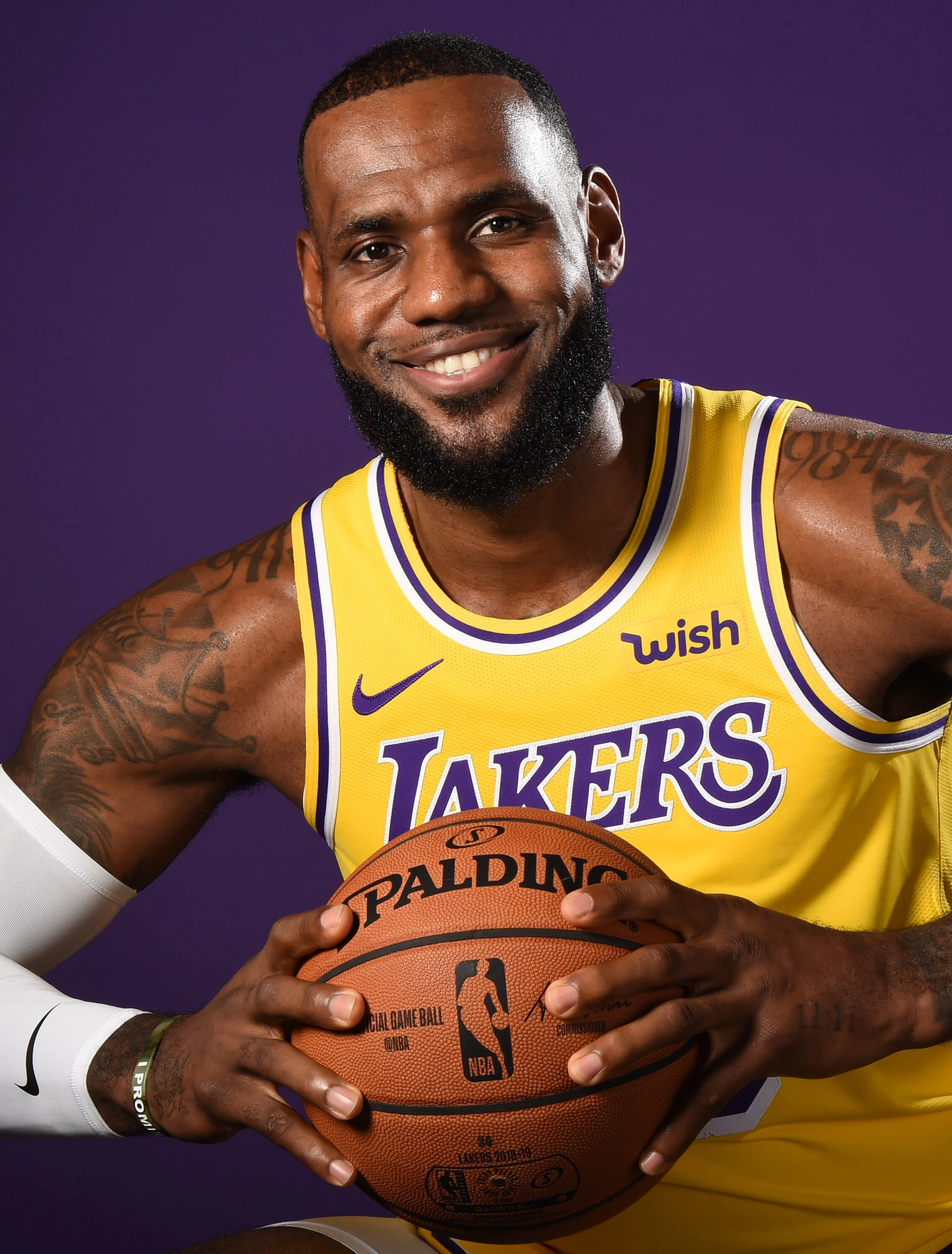
| 8 Quotes | |
| Born as | LeBron Raymone James |
| Occup. | Athlete |
| From | USA |
| Born | December 30, 1984 Akron, Ohio, USA |
| Age | 41 years |
| Cite | |
Citation Formats
APA Style (7th ed.)
Lebron james biography, facts and quotes. (2026, February 22). FixQuotes. https://fixquotes.com/authors/lebron-james/
Chicago Style
"LeBron James biography, facts and quotes." FixQuotes. February 22, 2026. https://fixquotes.com/authors/lebron-james/.
MLA Style (9th ed.)
"LeBron James biography, facts and quotes." FixQuotes, 22 Feb. 2026, https://fixquotes.com/authors/lebron-james/. Accessed 5 Mar. 2026.
Early Life and Background
LeBron Raymone James was born on December 30, 1984, in Akron, Ohio, a Midwestern city shaped by deindustrialization and hard-edged neighborhood boundaries. Raised primarily by his mother, Gloria James, he grew up amid housing insecurity and the daily noise of stressed communities - a background that later made his poise under spectacle feel less like a talent than an adaptation. He has described the north side of Akron in sensory detail, where sirens and gunfire were not exceptional but routine, a nightly weather system that trained vigilance and self-reliance early.The emotional center of his childhood was not poverty itself but absence - the uncertainty of whether the one stable person in his life would be home. His memories return to small, intimate needs rather than grand deprivation: wanting his mother safe, present, and not exhausted by survival. Those conditions helped produce a public figure who often speaks in the language of responsibility and control, as if mastery on the court could compensate for what childhood could not guarantee.
Education and Formative Influences
James attended St. Vincent-St. Mary High School in Akron, where his combination of size, court vision, and competitive calm turned local games into national events. Coached by Keith Dambrot, he became the rare American teenager treated simultaneously as student-athlete and emerging enterprise, with scouts, cameras, and expectations compressing adolescence into brand management. Yet his formative influences were also communal: youth coaches, neighborhood friends who became a lifelong inner circle, and a city that alternated between pride and protective anxiety as he rose.Career, Major Works, and Turning Points
Drafted first overall by the Cleveland Cavaliers in 2003, James entered the NBA as a franchise savior and quickly justified it, winning Rookie of the Year and later MVP awards while carrying undermanned teams deep into the playoffs. His first Cleveland era peaked with a 2007 Finals trip, but the inability to secure a title fueled the defining pivot of modern player autonomy: his 2010 decision to join the Miami Heat, where he won championships in 2012 and 2013 and refined his game into ruthless efficiency. Returning to Cleveland in 2014, he delivered a historic 2016 championship by overcoming a 3-1 deficit against the Golden State Warriors, sealing an identity as both hometown redeemer and strategic career architect. In 2018 he signed with the Los Angeles Lakers, winning another title in 2020, while climbing toward and then past the NBA scoring record, turning longevity into a fourth prime rather than a decline.Philosophy, Style, and Themes
James is often described as a physical marvel, but his deeper signature is cognition - a quarterback-like reading of space, tempo, and human psychology. He plays as a system: pressure release valve, transition engine, and late-game shot-maker, with an instinct to make the correct play even when the culture demands the heroic one. That self-concept is explicit in his leadership theory: “To all the positions, I just bring the determination to win. Me being an unselfish player, I think that can carry on to my teammates. When you have one of the best players on the court being unselfish, I think that transfers to the other players”. Unselfishness here is not humility as posture - it is a method for control, a way to shape teammates behavior and enlarge the margin for error.His inner life, publicly managed but repeatedly glimpsed, turns on a tension between external scrutiny and internal regulation. “There is a lot of pressure put on me, but I don't put a lot of pressure on myself. I feel if I play my game, it will take care of itself”. The sentence reads like self-talk, a practiced counterspell against the noise of comparison, debate shows, and the constant audit of legacy. Yet he never pretends the stakes are abstract: “Well, I mean, to me, I think my ultimate - my ultimate goal is winning championships and - and I understand that me going down as one of the greats will not happen until I, you know, win a championship”. That candor reveals a mind that treats greatness as a standard with receipts - rings, moments, durability - and responds by building teams, bodies, and narratives sturdy enough to satisfy it.
Legacy and Influence
James enduring influence reaches beyond statistics into how modern stars understand power: the right to choose teammates, to demand organizational competence, and to treat a career as a long arc rather than a sequence of seasons. He helped normalize positionless basketball at superstar scale, proving that a primary scorer can also be a primary organizer, and his longevity reset expectations for preparation, recovery, and late-career reinvention. Off the court, his philanthropy and civic identity - most visibly through education initiatives in Akron - tightened the link between athletic celebrity and local obligation, while his visibility in culture and media expanded the blueprint for the athlete as producer, advocate, and institution.Our collection contains 8 quotes written by LeBron, under the main topics: Victory - Sports - Goal Setting - Confidence - Teamwork.
Other people related to LeBron: Pat Riley (Coach), Anthony Edwards (Athlete), Scott Brooks (Coach), Jason Kidd (Athlete), Andrew Bogut (Athlete), Eric Snow (Athlete), Paul Pierce (Athlete)
Source / external links