
Lee Atwater Biography Quotes 6 Report mistakes
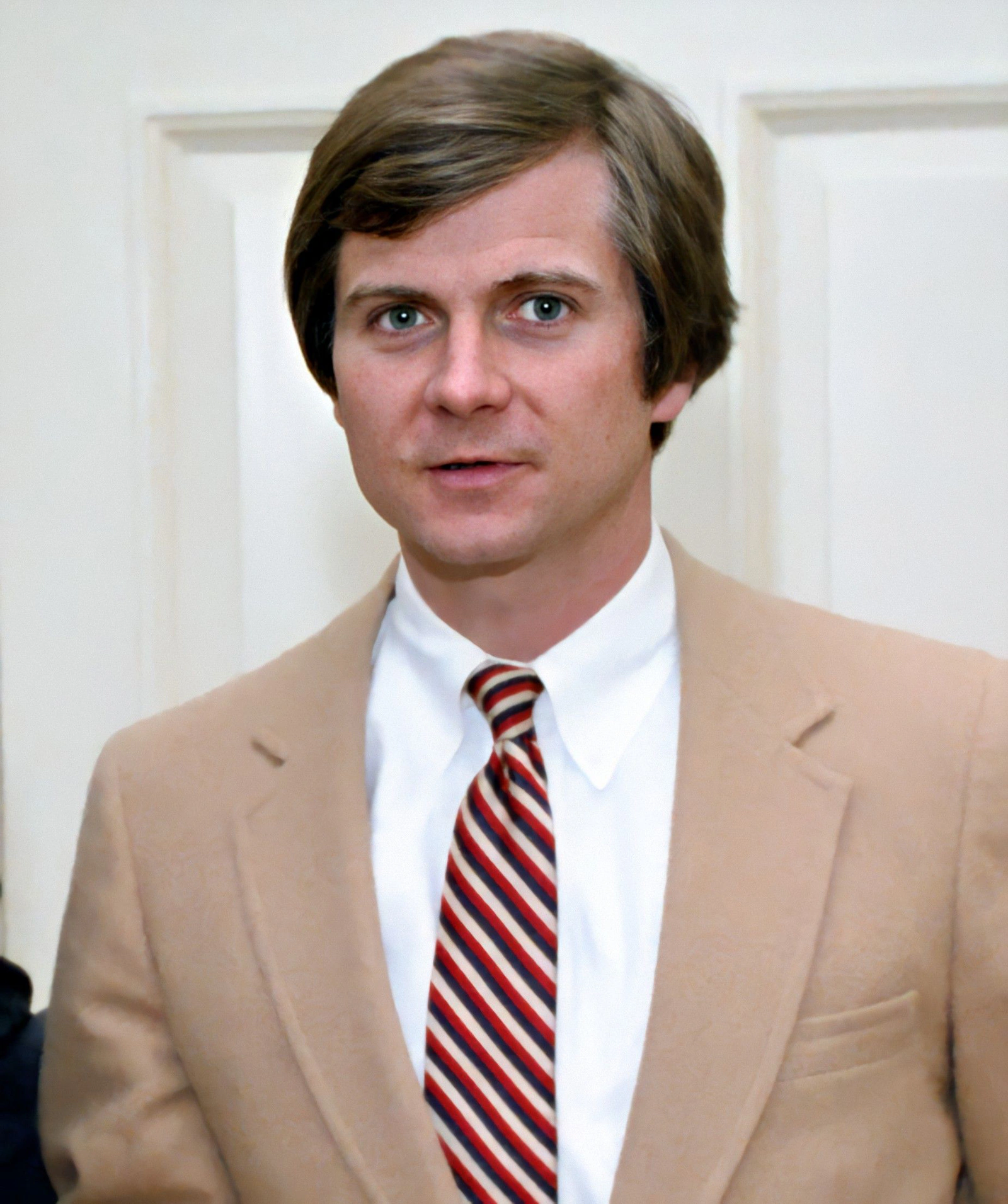
Attr: William Fitz-Patrick
| 6 Quotes | |
| Born as | Harvey Lee Atwater |
| Occup. | Politician |
| From | USA |
| Spouse | Stefanie Rader |
| Born | February 27, 1951 Atlanta, Georgia, USA |
| Died | March 29, 1991 Washington, D.C., USA |
| Cause | Brain cancer |
| Aged | 40 years |
| Cite | |
Citation Formats
APA Style (7th ed.)
Lee atwater biography, facts and quotes. (2026, February 11). FixQuotes. https://fixquotes.com/authors/lee-atwater/
Chicago Style
"Lee Atwater biography, facts and quotes." FixQuotes. February 11, 2026. https://fixquotes.com/authors/lee-atwater/.
MLA Style (9th ed.)
"Lee Atwater biography, facts and quotes." FixQuotes, 11 Feb. 2026, https://fixquotes.com/authors/lee-atwater/. Accessed 5 Mar. 2026.
Early Life and Background
Harvey Lee Atwater was born February 27, 1951, in Atlanta, Georgia, and grew up in the coastal low country of South Carolina, a region where courthouse politics, race, and patronage still shaped daily life in the long aftershock of Jim Crow. He absorbed early how power actually moved: through friendships, favors, and the ability to read a room. The South of his youth was modernizing fast, but it carried an older moral vocabulary of loyalty and transgression - a tension that would later echo in his mix of ruthless tactics and late-life remorse.He learned music young and played guitar with a performer's instinct for timing and audience, an instinct that later translated into political showmanship. By his teens he was already a political operative in temperament: competitive, gregarious, and unusually attuned to how people reacted not only to arguments but to tone, posture, and momentum. The era rewarded that instinct. In the 1960s and 1970s, party identities in the South were realigning, and the ambitious could rise quickly by turning cultural unease into electoral math.
Education and Formative Influences
Atwater attended Newberry College in South Carolina and later earned a law degree from the University of South Carolina. Campus life and the statehouse orbit gave him two formative tools: a lawyer's feel for rules and loopholes, and a tactician's certainty that politics is won at the margins. He studied campaigns the way musicians study riffs - not for purity but for effect - and he cultivated mentors and patrons in the South Carolina Republican Party at the moment it was turning from insurgency into a governing machine.Career, Major Works, and Turning Points
Atwater emerged as a hard-driving strategist in South Carolina campaigns and then on the national stage, eventually joining the Republican National Committee and rising to chairman in 1989. His signature role came earlier as a key force in George H.W. Bush's 1988 presidential campaign, where sharp negative advertising and culturally charged messaging helped define Michael Dukakis as out of touch and soft on crime, most notoriously through attacks tied to Willie Horton. Atwater's methods made him feared and imitated: rapid-response aggression, message discipline, and the willingness to use resentment as a mobilizing fuel. In 1990 he was diagnosed with a brain tumor; his final year became a public reckoning as he issued apologies to figures he had targeted and confronted the human cost of the political warfare he had helped normalize. He died March 29, 1991, in Washington, D.C., at 40.Philosophy, Style, and Themes
Atwater's governing belief was that politics is not a seminar but a contest for emotional ownership of the public's attention. He treated campaigns as narrative systems in which images, repetition, and humiliation could do what policy white papers could not: define the opponent first. The most revealing compression of his craft was his insistence that “Perception is reality”. It was not merely cynicism; it was an operator's metaphysics, a claim that in mass democracy the experienced story matters more than the objective record. That premise made him brilliantly effective and morally evasive, because it converted ethical questions into technical ones - not whether a charge was just, but whether it landed.His style was improvisational, the strategist as jam-session bandleader, always probing for a new hook. “Just keep stirring the pot, you never know what will come up”. That line captures both his appetite for chaos and his confidence that confusion favors the aggressor. Yet illness cracked the armor of the "good general" persona. Facing death, he spoke with an almost theological hunger for meaning, lamenting a nation “caught up in its ruthless ambitions and moral decay”. In that late turn, his inner life becomes visible: a man who had mastered the tools of modern persuasion discovering that mastery does not equal peace, and that the campaigns he treated as games had trained him to see people as enemies rather than ends.
Legacy and Influence
Atwater's enduring influence is paradoxical: he helped professionalize the high-speed, attack-oriented campaign culture that now dominates American elections, while also leaving behind a cautionary text in his final public reflections. The techniques associated with him - negative framing, cultural wedge issues, rapid message iteration, and the elevation of optics over deliberation - became standard practice across parties and media ecosystems. At the same time, his late apologies and moral language provided a rare internal critique from someone who had won by hardball. In the long view, Atwater stands as both architect and warning: a strategist who proved how far perception could be weaponized, and how costly that weapon can be to the soul and to civic trust.Our collection contains 6 quotes written by Lee, under the main topics: Witty One-Liners - Truth - Mortality - Life - Faith.
Other people related to Lee: Mary Matalin (Celebrity)
Source / external links