
Lee Kuan Yew Biography Quotes 6 Report mistakes
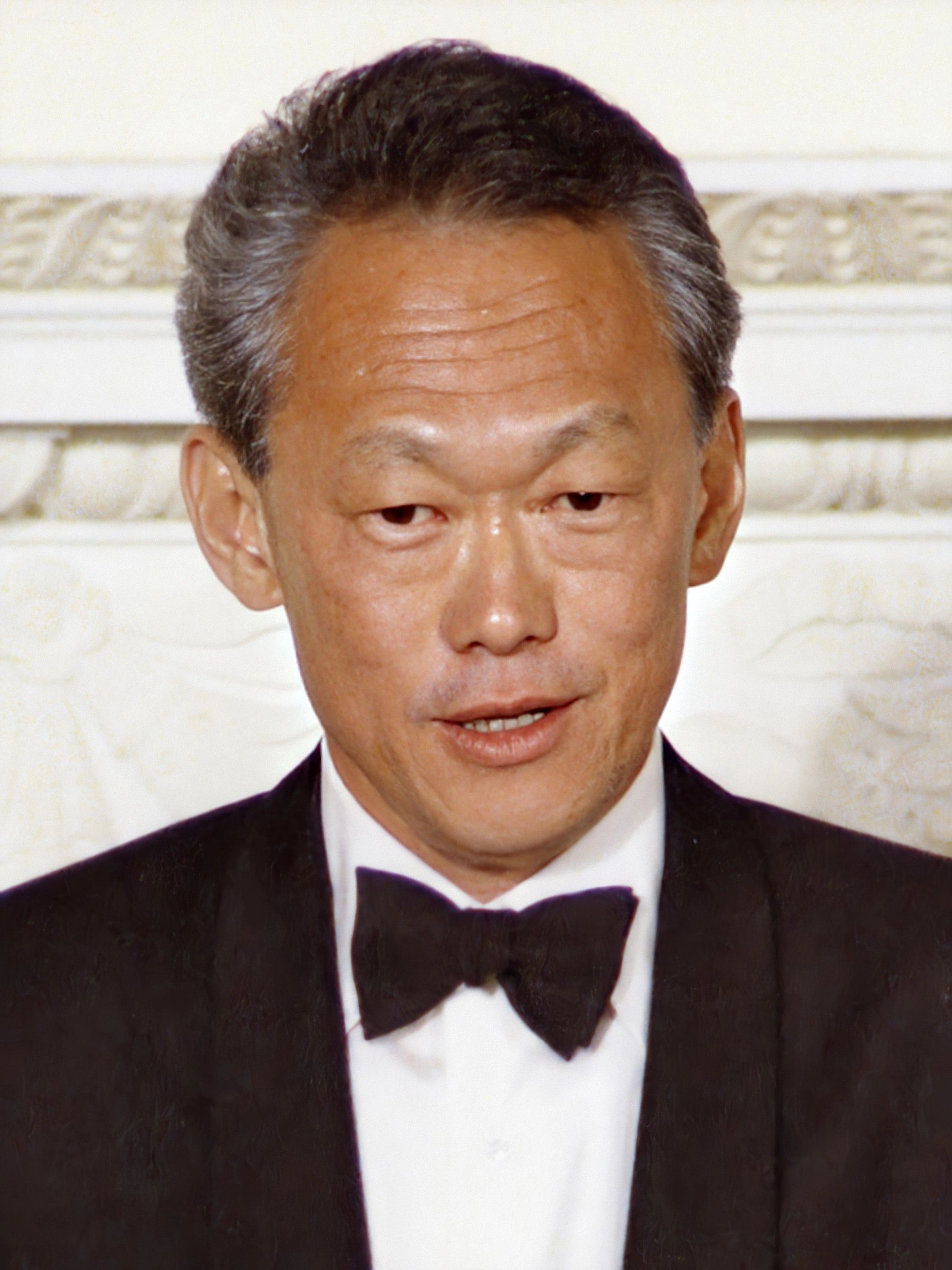
| 6 Quotes | |
| Occup. | Statesman |
| From | Singapore |
| Born | September 16, 1923 Singapore |
| Died | March 23, 2015 Singapore |
| Cause | Pneumonia |
| Aged | 91 years |
| Cite | |
Citation Formats
APA Style (7th ed.)
Lee kuan yew biography, facts and quotes. (2026, February 11). FixQuotes. https://fixquotes.com/authors/lee-kuan-yew/
Chicago Style
"Lee Kuan Yew biography, facts and quotes." FixQuotes. February 11, 2026. https://fixquotes.com/authors/lee-kuan-yew/.
MLA Style (9th ed.)
"Lee Kuan Yew biography, facts and quotes." FixQuotes, 11 Feb. 2026, https://fixquotes.com/authors/lee-kuan-yew/. Accessed 5 Mar. 2026.
Early Life and Background
Lee Kuan Yew was born on 1923-09-16 in Singapore, then a British colony whose commercial dynamism sat atop sharp communal divisions and imperial hierarchy. Raised in a Straits Chinese family, he grew up speaking English at home while moving through a multilingual port-city where Malay, Chinese dialects, Tamil, and trade English overlapped. That early proximity to difference, and to the quiet inequities of colonial administration, became a lifelong fixation: how to make a small, vulnerable place cohere without sentimentality.The Japanese Occupation (1942-1945) formed his emotional bedrock. The collapse of British power, the daily terror of arbitrary violence, and the brutal lesson that security could not be outsourced to distant protectors shaped his later intolerance for disorder and his belief that survival required competence, intelligence-gathering, and social discipline. In those years he saw fear reorganize society faster than ideology ever could - and he learned, privately, that politics would always be conducted under the shadow of worst-case outcomes.
Education and Formative Influences
After the war he went to Britain, studying law at Fitzwilliam College, Cambridge, graduating with top honors and being called to the Bar at the Middle Temple. He returned to Singapore with a dual inheritance: admiration for British institutions and skepticism about their fit for postcolonial realities. “I was a product of the times, the war, the occupation, the reoccupation, my 4 years in Britain, admiring but at the same time questioning whether they are able to do a better job than we can”. The experience gave him legal tools, confidence in administrative rationality, and a comparative lens through which he judged both Western liberalism and Asian communitarian traditions.Career, Major Works, and Turning Points
Lee co-founded the People's Action Party in 1954, building a coalition that blended anti-colonial legitimacy with a hard, managerial view of governance; he became Singapore's first Prime Minister in 1959. The 1963 merger with Malaysia, followed by separation in 1965, was the defining rupture: the new republic had no natural hinterland, no army worth the name, and little margin for error. Lee and his team - including Goh Keng Swee, S. Rajaratnam, and Hon Sui Sen - pursued industrialization, public housing through the Housing and Development Board, anti-corruption enforcement, and a disciplined civil service, while curbing political opponents through law and tight media control. In foreign policy he anchored Singapore to an American-led security umbrella, cultivated ties with China and the region, and helped shape ASEAN as a pragmatic, sovereignty-first framework. After stepping down in 1990 he remained central as Senior Minister and then Minister Mentor; his later books, including The Singapore Story and From Third World to First, codified his narrative of necessity and choice.Philosophy, Style, and Themes
Lee's governing psychology was that of a wartime realist who never fully trusted luck. He believed legitimacy was earned by results: safety, jobs, housing, and upward mobility - delivered fast enough that ideology could not outbid competence. The voice he cultivated in public was prosecutorial: argument as cross-examination, persuasion as pressure, and policy as an exercise in eliminating blind spots. He preferred incentives, deterrence, and institutional design to moral appeals, and he treated politics less as expressive democracy than as a system for selecting and disciplining talent.His central theme was survival through openness without naivete. “If you deprive yourself of outsourcing and your competitors do not, you're putting yourself out of business”. The sentence is not only economics; it is an ethic of permanent adaptation, an insistence that sentiment cannot be allowed to veto competitiveness. Yet alongside the global trader was the internal security strategist, alert to how fragile social peace could be. “Well if done a lot of hard work to try and get people to act rationally, the fact that weve had 15 deviant Muslims, plus 5 or 8 others that got away does not mean that all Muslims are deviant or extremists”. That phrasing reveals a signature tension: vigilance without collective blame, and a conviction that multiethnic stability required constant boundary-setting by the state. Even his strategic map of terrorism was expressed in the language of containment and sanitation - “The big nest was in Afghanistan, thats not quite cleared, then there are nests in the Philippines, there are nests in Indonesia, the Malaysians are clearing up their nests”. - as if disorder were a contagion that had to be named, tracked, and quarantined.
Legacy and Influence
Lee Kuan Yew died on 2015-03-23, leaving behind a Singapore transformed from entrepot to high-income city-state with world-class infrastructure, a formidable bureaucracy, and a reputation for incorruptibility and order. His model influenced leaders and technocrats far beyond Southeast Asia: an exportable blend of global capitalism, strong courts and administration, muscular policing, and an unembarrassed belief in elite stewardship. The same legacy remains contested - praised for raising living standards and building a cohesive national identity, criticized for narrowing civic space and normalizing paternalism - but few dispute the scale of his imprint: he made smallness a strategy, and governance itself the country's principal industry.Our collection contains 6 quotes written by Lee, under the main topics: Leadership - Equality - Mother - War - Business.
Source / external links