
Lee Strasberg Biography Quotes 6 Report mistakes
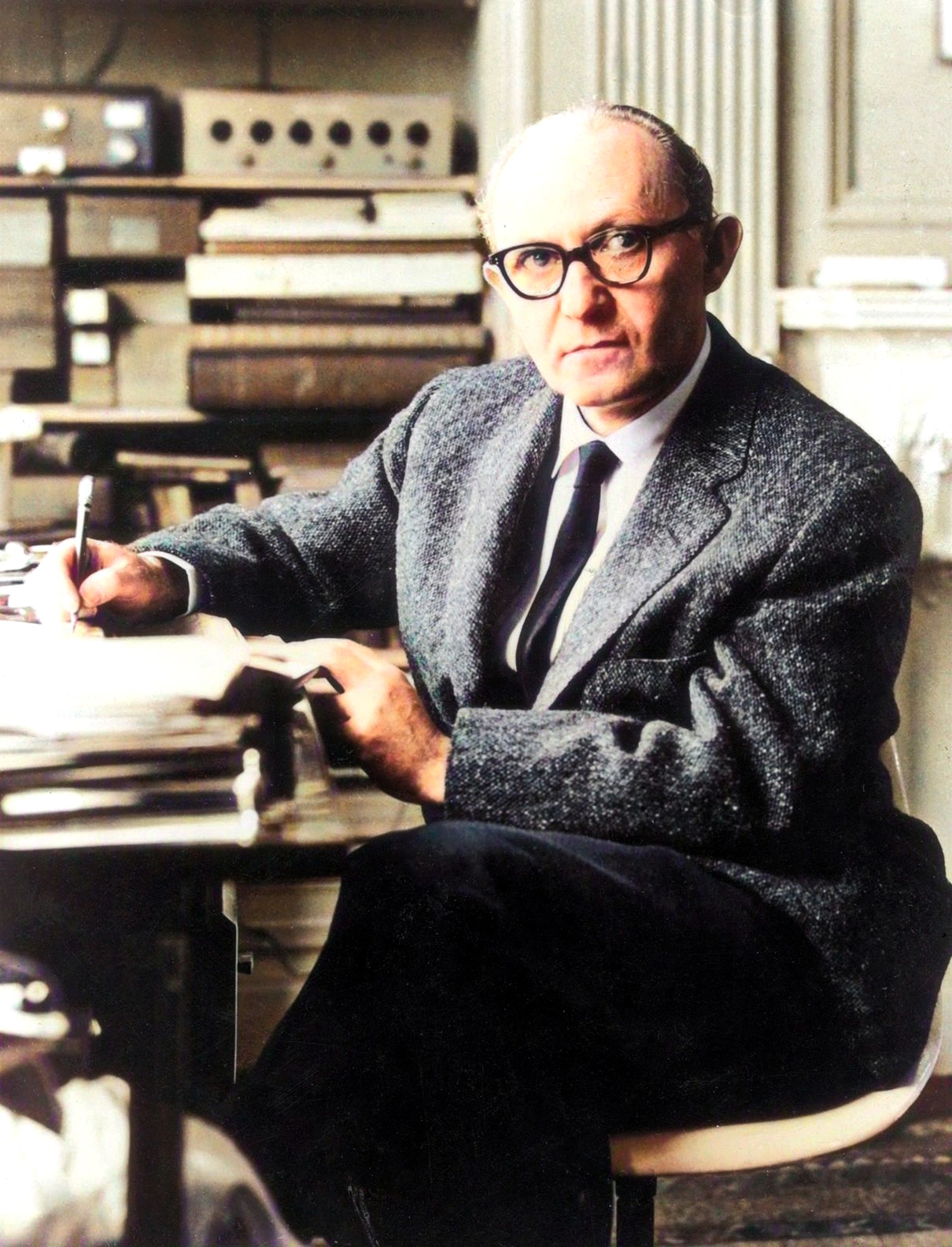
| 6 Quotes | |
| Born as | Israel Strassberg |
| Occup. | Director |
| From | USA |
| Spouse | Paula Strasberg |
| Born | November 17, 1901 Budzanów, Kingdom of Galicia and Lodomeria, Austria-Hungary (now Ukraine) |
| Died | February 17, 1982 New York City, New York, USA |
| Cause | Heart attack |
| Aged | 80 years |
| Cite | |
Citation Formats
APA Style (7th ed.)
Lee strasberg biography, facts and quotes. (2026, February 11). FixQuotes. https://fixquotes.com/authors/lee-strasberg/
Chicago Style
"Lee Strasberg biography, facts and quotes." FixQuotes. February 11, 2026. https://fixquotes.com/authors/lee-strasberg/.
MLA Style (9th ed.)
"Lee Strasberg biography, facts and quotes." FixQuotes, 11 Feb. 2026, https://fixquotes.com/authors/lee-strasberg/. Accessed 5 Mar. 2026.
Early Life and Background
Lee Strasberg was born Israel Strassberg on November 17, 1901, in Budzanow, then in the Austro-Hungarian province of Galicia, a borderland of shifting sovereignties and tight-knit Jewish life. His earliest years were shaped by the pressures of migration and the fragility of community in an era that pushed millions toward the Atlantic. The sense of being remade by circumstance - of needing to learn new codes while carrying an older self inside - would later rhyme with his insistence that acting begins in private truth, not public display.He immigrated to the United States as a child and grew up in New York City, where Yiddish theater, immigrant politics, and the crowded energy of the Lower East Side created an informal conservatory. In that world, performance was not an ornament but a means of survival and self-definition, and the theater offered a place where an outsider could become legible. The tension between assimilation and authenticity became a lifelong inner problem he tried to solve onstage: how to be transformed without becoming false.
Education and Formative Influences
Strasberg entered the American theater as it was modernizing under European influence, gravitating toward the new seriousness of Konstantin Stanislavski's ideas as they reached New York through touring productions, translations, and teachers hungry to replace declamation with behavior. He developed within the experimental ecosystem that produced the Theatre Guild and the American Laboratory Theatre, and he was drawn to actors who treated rehearsal as research. The young Strasberg learned to distrust tricks, to listen for organic impulse, and to treat craft as a discipline that could be analyzed, taught, and refined.Career, Major Works, and Turning Points
In the 1920s he became a founding member of the Group Theatre (1931), the insurgent collective that sought an American equivalent to the Moscow Art Theatre, staging socially alert plays during the Depression and training actors to work as an ensemble. Strasberg directed key early productions and, more lastingly, trained performers, but internal conflicts and his own exacting standards helped fracture the group. His central institutional home became the Actors Studio, where he served as artistic director from 1951 until his death, shaping postwar American acting for stage and film. The "Method" - a shifting shorthand that often simplified his teachings - became associated with alumni like Marlon Brando, James Dean, Montgomery Clift, Marilyn Monroe, Anne Bancroft, Dustin Hoffman, Al Pacino, and Robert De Niro, and with a broader cultural turn toward psychological realism.Philosophy, Style, and Themes
Strasberg treated acting as a full-body art in which biography, physiology, and memory are not obstacles to overcome but instruments to be tuned. He argued that technique must penetrate habit, because the performer is not an abstract instrument but a person with fixed patterns that can deaden responsiveness: “Acting is the most personal of our crafts. The make-up of a human being - his physical, mental and emotional habits - influence his acting to a much greater extent than commonly recognized”. His exercises in relaxation, concentration, and sense memory were meant to strip away armored social behavior and replace it with specific, repeatable access to feeling - not confession, but controlled availability. That aim reveals his psychology as teacher: suspicious of falseness, protective of privacy, yet determined to make the private usable.He also insisted that the actor is not merely interpreting literature but generating lived experience in real time, making performance a craft of embodiment rather than illustration: “The actor creates with his own flesh and blood all those things which all the arts try in some way to describe”. This elevated the actor's dignity and also increased the ethical burden - if the material is the self, then work can cost. His pedagogy pushed students to imagine beyond their present limitations, linking artistic ambition to moral imagination: “If we cannot see the possibility of greatness, how can we dream it?” In an America increasingly dominated by film close-ups and celebrity, Strasberg sought a paradoxical humility - obedience to moment-to-moment truth - that could produce a new kind of greatness without theatrical grandstanding.
Legacy and Influence
Strasberg died on February 17, 1982, in New York, having turned actor training into a defining language of mid-century American culture. Admirers credit him with legitimizing inner life as a technical problem and giving generations a pathway into psychological realism; critics argue that the Method became a brand that encouraged self-absorption or mannered intensity. Yet the enduring influence lies in how thoroughly his assumptions entered rehearsal rooms, acting schools, and camera acting: the idea that behavior, not rhetoric, is drama; that emotion can be summoned through craft; and that truthful detail can carry an entire scene. In shaping both performers and the public's expectations of authenticity, Strasberg helped rewrite what American acting looks like when it is most alive.Our collection contains 6 quotes written by Lee, under the main topics: Motivational - Art.
Other people related to Lee: Paul Newman (Actor), Stella Adler (Actress), Jane Fonda (Actress), Sally Field (Actress), Sally Kirkland (Actress), Clifford Odets (Playwright), Rod Steiger (Actor), Steven Hill (Actor), Doug McClure (Actor), Cheryl Crawford (Actress)
Source / external links