
Lee Trevino Biography Quotes 34 Report mistakes
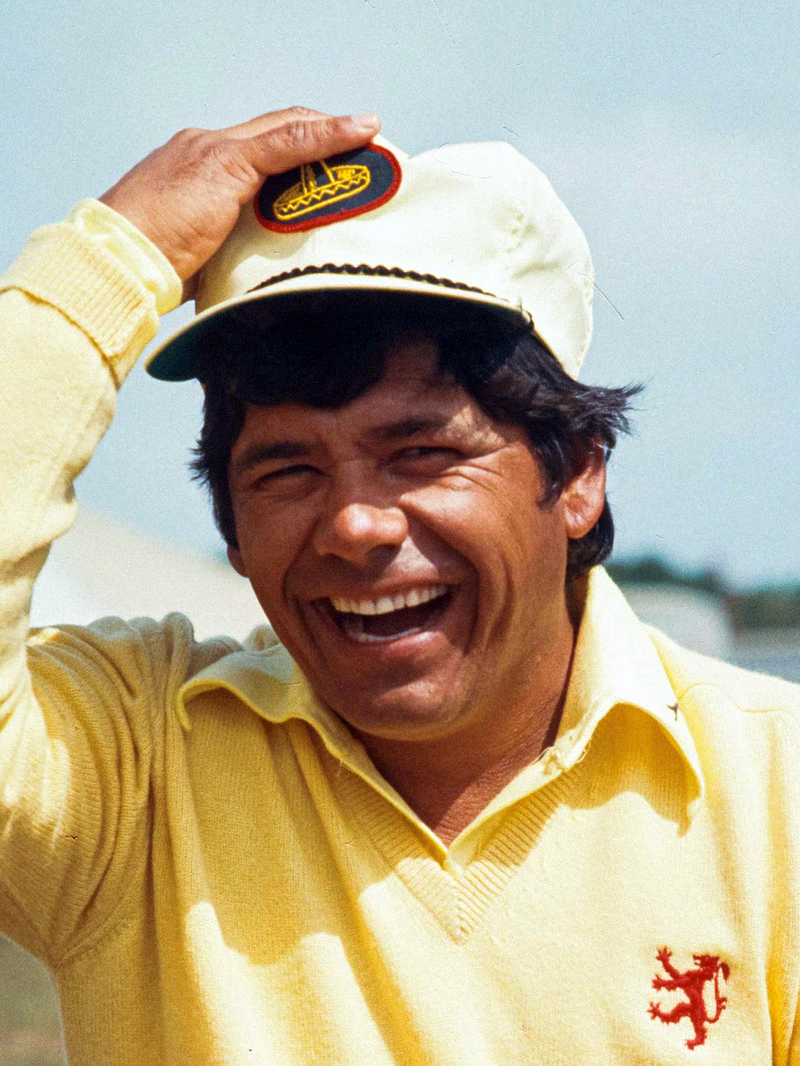
Attr: Texas Golf Hall of Fame
| 34 Quotes | |
| Occup. | Athlete |
| From | USA |
| Born | December 1, 1939 Dallas, Texas, USA |
| Age | 86 years |
| Cite | |
Citation Formats
APA Style (7th ed.)
Lee trevino biography, facts and quotes. (2026, February 11). FixQuotes. https://fixquotes.com/authors/lee-trevino/
Chicago Style
"Lee Trevino biography, facts and quotes." FixQuotes. February 11, 2026. https://fixquotes.com/authors/lee-trevino/.
MLA Style (9th ed.)
"Lee Trevino biography, facts and quotes." FixQuotes, 11 Feb. 2026, https://fixquotes.com/authors/lee-trevino/. Accessed 23 Mar. 2026.
Early Life and Background
Lee Buck Trevino was born on December 1, 1939, in Garland, Texas, into a Mexican American family shaped by Depression-era scarcity and segregated opportunity. Raised largely by his mother, Juanita, and his grandfather, he grew up in the borderland reality of working-class Texas where money was counted in hours, not hopes. His father was largely absent, and Trevino learned early that charm and toughness were not personality traits so much as survival skills.He left school young to help support the household, taking whatever labor he could find and gravitating to the local golf economy as a caddie. On public and semi-private courses around Dallas, he absorbed the game from the ground up - not through lessons, but through observation, imitation, and relentless self-correction. That caddie-to-player apprenticeship made him unusually fluent in the daily psychology of golf: the small humiliations, the sudden luck, the long waits, and the necessity of laughing at your own errors.
Education and Formative Influences
Trevino's real education was practical and physical. He honed his swing by hitting hundreds of balls after work and by betting small sums he could not easily replace, a crucible that trained shot-making under consequence. Military service in the U.S. Marine Corps (late 1950s-early 1960s) further hardened his discipline and steadied his nerves, while also underscoring the class divide between leisure sport and a man who had to earn his rounds. He emerged from that period with a blue-collar identity he never abandoned: golf was beautiful, but it was also a job.Career, Major Works, and Turning Points
Turning professional in 1960, Trevino spent years in the grind of club jobs and mini-tours before his breakthrough: winning the 1968 U.S. Open at Oak Hill, where his shot-shaping and blunt charisma made him instantly legible to a television age hungry for characters. He followed with major victories at the Open Championship in 1971 and 1972, and the PGA Championship in 1974 and 1984, building a resume defined less by aesthetic perfection than by competitive stubbornness. His rivalry with Jack Nicklaus became a defining 1970s storyline, highlighted by their duel in the 1971 U.S. Open playoff. A near-fatal lightning strike in 1975 interrupted his prime and left lingering injuries, yet he returned to win again, later thriving on the senior circuit. Across decades he remained both elite performer and folk narrator of the tour, a man who could disarm a room while dismantling a golf course.Philosophy, Style, and Themes
Trevino's philosophy began with realism: golf was never a cathedral to him, but a workshop. He played with a controlled, repeatable action and a preference for shaping the ball with intention rather than chasing "perfect" mechanics. His most famous technical epigram - “You can talk to a fade but a hook won't listen”. - reveals the core of his mind: humility before physics, a craftsman's suspicion of anything uncontrollable, and a willingness to build strategy around his miss. That pragmatism also made him an unusually good pressure player, because he framed stress in terms of livelihood, not legacy: “Pressure is playing for ten dollars when you don't have a dime in your pocket”. The line is not a joke so much as autobiography; it locates nerve in economic memory, explaining how he could swing freely when the stakes were supposedly highest.His humor functioned as armor and as truth-telling. After surviving the lightning strike that nearly ended him, his jokes about danger - including the deadpan 1-iron quip - were a way of asserting agency over vulnerability and reminding audiences that fear can be laughed into proportion. Even his nostalgia is strategic rather than sentimental: “The older I get the better I used to be!” is a comedian's line that also sketches a competitor's private grief, the knowledge that the body changes while the mind still remembers every shot it once owned. In Trevino, comedy does not dilute seriousness; it makes seriousness bearable.
Legacy and Influence
Trevino endures as one of golf's clearest examples of merit wrested from circumstance: a self-taught technician, five-time major champion, and cultural bridge figure for Mexican American visibility in a sport long coded as exclusive. He expanded the acceptable image of a champion - witty, working-class, and unvarnished - while influencing generations of players who learned that shot-shaping, course management, and emotional resilience can beat prettier swings. In an era when televised golf was becoming corporate and polished, Trevino remained human-scaled, reminding the game that excellence can carry an accent, a caddie's hands, and a survivor's grin.Our collection contains 34 quotes written by Lee, under the main topics: Witty One-Liners - Motivational - Victory - Sports - Parenting.
Other people related to Lee: Raymond Floyd (Athlete)