
Leigh Hunt Biography Quotes 14 Report mistakes
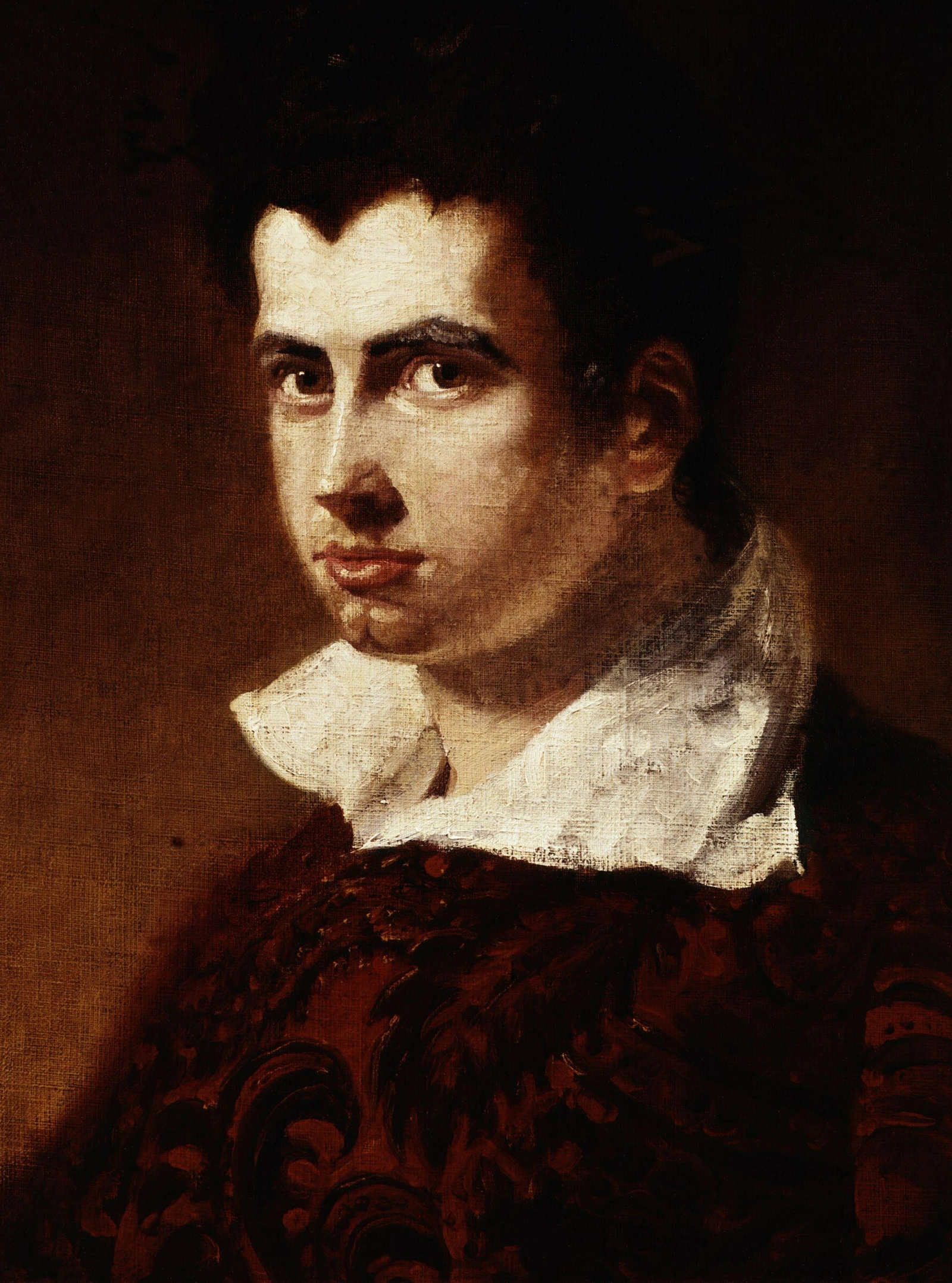
| 14 Quotes | |
| Born as | James Henry Leigh Hunt |
| Occup. | Poet |
| From | England |
| Born | October 19, 1784 Southgate, London |
| Died | August 28, 1859 Putney, London |
| Aged | 74 years |
| Cite | |
Citation Formats
APA Style (7th ed.)
Leigh hunt biography, facts and quotes. (2026, February 11). FixQuotes. https://fixquotes.com/authors/leigh-hunt/
Chicago Style
"Leigh Hunt biography, facts and quotes." FixQuotes. February 11, 2026. https://fixquotes.com/authors/leigh-hunt/.
MLA Style (9th ed.)
"Leigh Hunt biography, facts and quotes." FixQuotes, 11 Feb. 2026, https://fixquotes.com/authors/leigh-hunt/. Accessed 26 Mar. 2026.
Early Life and Background
James Henry Leigh Hunt was born on October 19, 1784, in Southgate, Middlesex, into a family whose fortunes and anxieties trained him early in alertness. His father, Isaac Hunt, a Barbadian-born clergyman and schoolmaster, and his mother, Mary Shewell, raised him within a dissenting-tinged household that prized words, conscience, and public argument. The household moved in the orbit of London print culture, but never securely; money was uncertain, and the young Hunt learned how reputation could be made and unmade by the press.That sense of precariousness shaped an inner life both ardent and defensive. Hunt developed a lifelong stammer and a sensitivity to ridicule, yet he also cultivated a sociable warmth that turned conversation into a kind of refuge. The city around him was transforming under war with Revolutionary and Napoleonic France, tightening censorship, and the rise of a mass-reading public. Hunt grew up as the British state grew more suspicious of radicals, and he would make his name by insisting that political liberty and literary pleasure belonged together.
Education and Formative Influences
Hunt was educated at Christ's Hospital, the London charity school that produced Coleridge and Lamb, where classical training met the rough democracy of boarding life. He absorbed Augustan clarity and the rhythms of Pope, but he also learned how institutions discipline the body and the tongue - a lesson that later fed his distrust of authority and his sympathy for outsiders. Early poems and essays already show the mixture that became his signature: moral argument carried by an air of urbane talk, as if persuasion worked best when it sounded like a friend thinking aloud.Career, Major Works, and Turning Points
After early literary attempts, Hunt became a central journalist of the Regency by co-founding the weekly Examiner in 1808 with his brother John. Its attacks on government corruption and the Prince Regent led to Hunt's 1813 conviction for libel; he served about two years in Surrey Gaol, where he turned imprisonment into a salon-like assertion of civil society, receiving visitors and writing. He published poems, criticism, and essays that helped clear a path for Romantic taste, including The Story of Rimini (1816) and later the expansive imagination of Imaginary Conversations (1824-1835). He befriended and promoted younger radicals and poets - Keats, Shelley, and later Byron - though these alliances were emotionally costly, entangled in money, loyalty, and the brutal gossip of literary London. His later years brought financial strain, prolix but influential memoir writing such as Lord Byron and Some of His Contemporaries (1828), and, at last, a Civil List pension granted in 1847, a late recognition that did not erase decades of insecurity.Philosophy, Style, and Themes
Hunt's thought was shaped by a liberal belief that the imagination is not a luxury but a civic instrument: it humanizes politics. He distrusted solemnity when it hardened into cruelty, and he mistrusted cheerfulness when it became denial; his best prose and verse aim for a humane middle register, cordial but exact. That balance is voiced in his conviction that “The person who can be only serious or only cheerful, is but half a man”. The line reads like self-diagnosis: Hunt knew how easily his temperament could swing between exhilaration and dejection, and he wrote as if the mind's health depended on keeping both faculties in play, criticism tempered by delight.His style favors intimacy - essays that feel like letters, poems that court the reader with sensuous particulars - because he believed feeling could correct power. “There are two worlds: the world we can measure with line and rule, and the world that we feel with our hearts and imagination”. This is also a quiet manifesto for his career as editor and tastemaker: he argued that law and policy must answer to sympathy, and that culture expands the moral sense. Even his famous bookishness is ethical, not antiquarian: “It is books that teach us to refine our pleasures when young, and to recall them with satisfaction when we are old”. Behind the genial voice lies a man repeatedly bruised by scandal and penury, using art as a discipline of gratitude - a way to keep pleasure from curdling into entitlement, and memory from becoming mere regret.
Legacy and Influence
Hunt died on August 28, 1859, in London, having outlived the explosive Romantic moment he helped midwife and having watched Victorian respectability reshape the very public sphere he once fought to free. His enduring influence is less a single masterpiece than a model of literary citizenship: the editor as advocate, the critic as encourager, the essayist as moral companion. By championing Keats early, by insisting that taste and liberty were allied, and by practicing a prose of approachable intelligence, Hunt helped make modern English literary culture - a culture in which conversation, criticism, and the pleasures of reading are themselves forms of public life.Our collection contains 14 quotes written by Leigh, under the main topics: Witty One-Liners - Ethics & Morality - Wisdom - Nature - Book.
Other people related to Leigh: John Keats (Poet), Barry Cornwall (Poet)
Leigh Hunt Famous Works
- 1847 Men, Women, and Books (Essay Collection)
- 1844 Imagination and Fancy (Criticism)
- 1834 Abou Ben Adhem (Poetry)
- 1828 Lord Byron and Some of His Contemporaries (Biography)
- 1816 Story of Rimini (Poetry)
- 1814 Feast of the Poets (Poetry)
Source / external links