
Len G. Murray Biography Quotes 12 Report mistakes
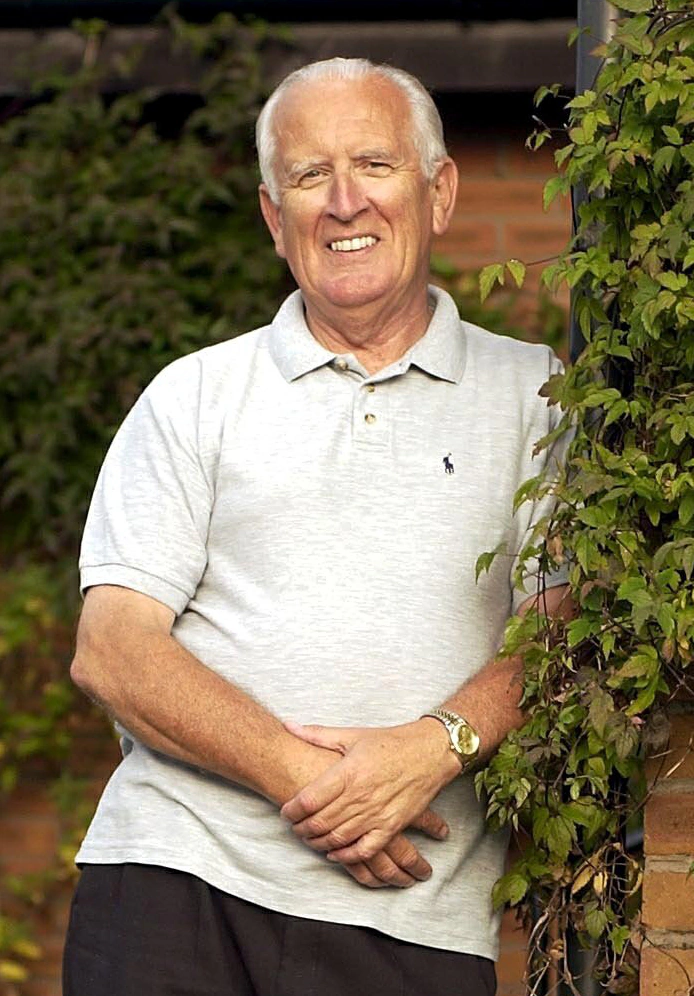
| 12 Quotes | |
| Known as | Len Murray |
| Occup. | Lawyer |
| From | United Kingdom |
| Born | September 17, 1925 Glasgow, Scotland, United Kingdom |
| Died | December 20, 2004 London, England, United Kingdom |
| Aged | 79 years |
| Cite | |
Citation Formats
APA Style (7th ed.)
Len g. murray biography, facts and quotes. (2026, February 11). FixQuotes. https://fixquotes.com/authors/len-g-murray/
Chicago Style
"Len G. Murray biography, facts and quotes." FixQuotes. February 11, 2026. https://fixquotes.com/authors/len-g-murray/.
MLA Style (9th ed.)
"Len G. Murray biography, facts and quotes." FixQuotes, 11 Feb. 2026, https://fixquotes.com/authors/len-g-murray/. Accessed 12 Feb. 2026.
Early Life and Background
Len G. Murray was born on 17 September 1925 in the United Kingdom, coming of age between the privations of interwar Britain and the total mobilization of the Second World War. For his cohort, adulthood arrived early: the state demanded discipline, families improvised around rationing, and the very idea of "career" was inseparable from public need. That atmosphere produced a particular kind of pragmatism - less the romance of vocation than the hard calculation of what would be useful, stable, and morally defensible in a damaged world.Murray lived long enough to watch Britain remake itself several times over: the postwar welfare settlement, the late-century turn toward marketized services, and the increasingly managerial, compliance-driven culture that reached deep into professional life. The legal profession in Scotland - especially in Glasgow, where civil and commercial disputes reflected the stresses of deindustrialization - became a front row seat to that transformation. The arc of his life, ending on 20 December 2004, spans a period when law shifted from a smaller world of personal reputation and clubbable networks to one more frequently defined by specialization, formal regulation, and sharper institutional antagonisms.
Education and Formative Influences
As a British lawyer of his generation, Murray was shaped by the postwar expansion of professional education and by the Scottish legal tradition that prizes both doctrine and practical judgment. The formative influences most likely included the ethos of service that followed the war, the civic-minded ideal of the learned profession, and the distinctly Scottish sense that law is not merely a technical craft but part of a national culture - with literature, history, and public ritual never far from view. Those influences later surfaced in his instinct to explain law through character and community rather than through abstract policy alone.Career, Major Works, and Turning Points
Murray built his reputation through practice rather than celebrity, working within the demanding rhythms of litigation and the client-driven realities of a changing economy. His career coincided with major procedural and professional shifts: the rise of formalized training, increasing pressure on time and fees, and the gradual widening of advocacy rights that altered the traditional boundary between solicitor and advocate. He became, in effect, a witness to the profession's internal renegotiation of status, craft identity, and public purpose - a steady practitioner whose authority derived from experience and from a reflective temperament, rather than from ideological showmanship.Philosophy, Style, and Themes
Murray's inner life, as glimpsed through his reflections, balanced satisfaction with an unsentimental eye for roads not taken. He could admit contingency without self-dramatization: "If I was starting off now, I would probably have taken one or two different turnings along the way". The sentence is revealing not for regret, but for its controlled modesty - the psychological stance of someone who accepts that careers are partly shaped by timing and structural change, not solely by merit or will. In that same spirit he observed, with a practitioner's precision, how professional reforms arrive unevenly: "The option of solicitor advocacy came on the scene a bit too late for me". It is an oblique comment on institutional lag - and on how individual ambition is often negotiated through what the system makes possible in a given decade.His style of thought returned repeatedly to the moral ecology of legal work: trust, reciprocity, and the belief that adversarial roles need not imply personal hostility. "Besides, I always thought that one of the great attractions of practising law was what I like to call the collegiality of the profession and I think that duty of collegiality applies even when we are retired". Taken seriously, the line reads like a credo against the corrosion of professional solidarity by faction, branding, and "win-at-all-costs" incentives. For Murray, law was a social practice as much as a technical one - a craft sustained by shared norms that outlast any single case, client, or era.
Legacy and Influence
Murray's legacy is best understood as the legacy of the conscientious practitioner: a model of how to inhabit a profession without being consumed by it, and how to critique institutional drift without romanticizing the past. In an age when legal culture increasingly rewarded speed, specialization, and public posture, his emphasis on timing, restraint, and collegial obligation preserved an older civic ideal - one that still matters to younger lawyers navigating a more fragmented and pressurized system. His influence endures less through landmark published works than through the ethical vocabulary he left behind: a reminder that competence is not only knowledge of rules, but also the maintenance of a professional community capable of administering justice with dignity.Our collection contains 12 quotes written by Len, under the main topics: Music - New Beginnings - Poetry - Work - Contentment.