
Lennox Lewis Biography Quotes 4 Report mistakes
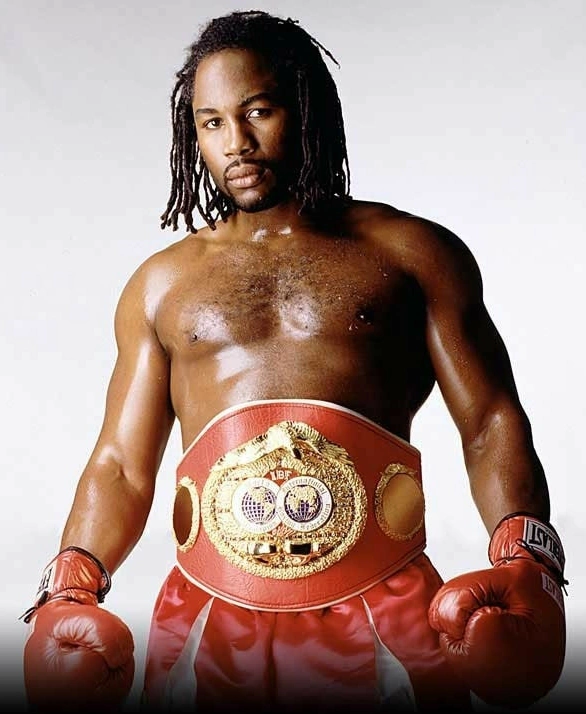
| 4 Quotes | |
| Born as | Lennox Claudius Lewis |
| Occup. | Athlete |
| From | England |
| Born | September 2, 1965 West Ham, London, England |
| Age | 60 years |
| Cite | |
Citation Formats
APA Style (7th ed.)
Lennox lewis biography, facts and quotes. (2026, February 19). FixQuotes. https://fixquotes.com/authors/lennox-lewis/
Chicago Style
"Lennox Lewis biography, facts and quotes." FixQuotes. February 19, 2026. https://fixquotes.com/authors/lennox-lewis/.
MLA Style (9th ed.)
"Lennox Lewis biography, facts and quotes." FixQuotes, 19 Feb. 2026, https://fixquotes.com/authors/lennox-lewis/. Accessed 6 Mar. 2026.
Early Life and Background
Lennox Claudius Lewis was born on September 2, 1965, in West Ham, London, to Jamaican parents, Marie and Fitzroy Lewis, in a Britain wrestling with postwar immigration, class strain, and the bruising austerity that still shadowed many neighborhoods. His early childhood was marked by fracture and motion: his parents separated, and the sense of instability would later harden into an athlete's need to control variables - pace, distance, tempo - inside a ring where everything else could be made predictable.In 1973 his mother moved with him to Kitchener, Ontario, part of a wider Caribbean diaspora seeking safer streets and steadier work. Tall, shy, and observant, Lewis gravitated toward sports as a language that did not require explanation. He played Canadian football and basketball, but boxing offered something more private: a craft where solitude could be trained into authority. Even before fame, he carried himself like a man rehearsing composure, learning early that the world judges bodies quickly and forgives them slowly.
Education and Formative Influences
Lewis attended Cameron Heights Collegiate Institute in Kitchener and learned the discipline of routine in local gyms before returning to Britain as a young adult to accelerate his amateur career. Under coaches who emphasized fundamentals over bravado, he refined the building blocks that would define him - a long jab, measured footwork for a big man, and the willingness to win rounds rather than chase drama. The late Cold War amateur circuit, still heavily shaped by Soviet-style schooling and scoring, rewarded exactly that kind of clarity, and Lewis absorbed it.Career, Major Works, and Turning Points
Lewis rose through the Canadian amateur system to the 1988 Seoul Olympics, where he won super-heavyweight gold, a victory that announced him as a thinking heavyweight in an era hungry for spectacle. Turning professional soon after, he developed into a championship force in the early 1990s, capturing a version of the heavyweight title and rebuilding after setbacks with an unusual patience. His defining professional arc was less about undefeated mythology than about correction: high-profile losses to Oliver McCall (1994) and Hasim Rahman (2001) exposed lapses of focus, and his immediate rematches - both decisive wins - became case studies in elite adaptation. The late 1990s and early 2000s saw his peak: a tactical, punishing victory over Evander Holyfield (1999) secured recognition as undisputed champion; later he subdued and stopped Mike Tyson (2002) in a fight that functioned as both cultural event and generational handoff; and he closed his career by twice defeating Vitali Klitschko, stopping him on cuts in 2003 before retiring with his status largely intact.Philosophy, Style, and Themes
Lewis fought like a strategist trained to distrust impulse. At his best he converted height and reach into geometry, making opponents walk through a jab that was less a punch than a boundary line. He was often labeled cold, yet the coldness was a method: minimize chaos, ration risk, and let the opponent's urgency create openings. When he said, “It's not rage that drives me, it's competition”. , he described the inner engine of his career - not romantic violence, but a professional appetite for measurement, hierarchy, and proof.That psychology also explains his controlled bravado. “The fight will last as long as I allow it to last, and then I will knock him out”. is not mere threat; it is a statement of agency from a man who built his identity around command of tempo. Even his blunt candor about prizefighting's business core - “If the money's right, I'm happy to bust up the other side of his face... No problem”. - reads less as cruelty than as realism, a fighter refusing to pretend the ring is separate from contracts, promotion, and legacy markets. In Lewis, the heavyweight as artisan merges with the heavyweight as negotiator: violence disciplined by planning, and ambition disciplined by calculation.
Legacy and Influence
Lewis left the sport as one of the most complete heavyweights of the modern era - Olympic champion, lineal champion, and a model of how intellect can be weaponized in a division stereotyped as simple power. His career helped normalize the idea that a heavyweight could win with structure: establish the jab, choose exchanges, and treat championship boxing as an exercise in decision-making under pressure. In the generations that followed - from the Klitschko era to more recent champions who prioritize range control and ring IQ - Lewis stands as a reference point: proof that dominance can be engineered, and that setbacks, when met with honest adjustment, can sharpen rather than tarnish greatness.Our collection contains 4 quotes written by Lennox, under the main topics: Motivational - Victory - Sports.
Other people related to Lennox: Frank Bruno (Athlete), Larry Merchant (Writer)
Source / external links