
Leo Buscaglia Biography Quotes 28 Report mistakes
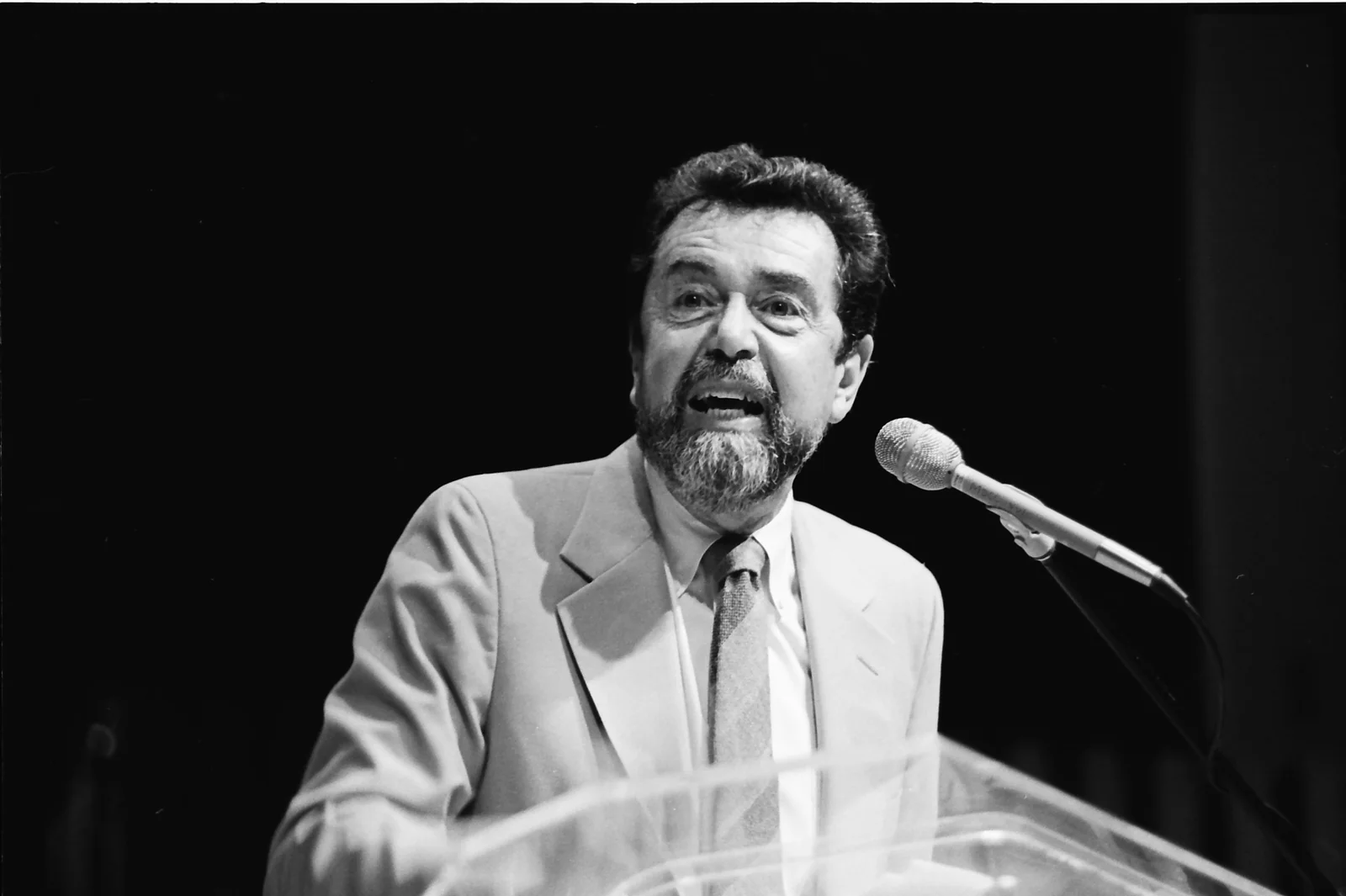
| 28 Quotes | |
| Occup. | Author |
| From | USA |
| Born | March 31, 1924 |
| Died | June 11, 1998 |
| Aged | 74 years |
| Cite | |
Citation Formats
APA Style (7th ed.)
Leo buscaglia biography, facts and quotes. (2026, February 2). FixQuotes. https://fixquotes.com/authors/leo-buscaglia/
Chicago Style
"Leo Buscaglia biography, facts and quotes." FixQuotes. February 2, 2026. https://fixquotes.com/authors/leo-buscaglia/.
MLA Style (9th ed.)
"Leo Buscaglia biography, facts and quotes." FixQuotes, 2 Feb. 2026, https://fixquotes.com/authors/leo-buscaglia/. Accessed 26 Mar. 2026.
Early Life and Background
Leo F. Buscaglia was born on March 31, 1924, in Los Angeles, California, the son of Italian immigrant parents whose household mixed Old World warmth with the anxieties of working-class America between the wars. Growing up amid the pressures of the Great Depression and the intense civic mobilization of World War II, he absorbed two lessons that later fused into his public persona: life can change abruptly, and the human spirit survives best through connection. The family emphasis on affection, food, storytelling, and mutual obligation gave him a lived vocabulary for what he would later call love, not as sentiment but as daily practice.Those early years also formed his sensitivity to loneliness and social invisibility. In a sprawling, rapidly modernizing Los Angeles, he watched people share sidewalks yet remain strangers, and he noticed how easily institutions could reduce individuals to roles. That tension - between communal craving and emotional isolation - became the engine of his later work as an educator who insisted that teaching was inseparable from caring, and that the inner life was neither private trivia nor a luxury.
Education and Formative Influences
Buscaglia served in the U.S. Navy during World War II, an experience that sharpened his sense of impermanence and the cost of emotional restraint. After the war he completed degrees at the University of Southern California, ultimately earning a doctorate in education, and began to frame human development as a moral, psychological, and relational project rather than a purely academic one. His early professional reading drew from humanistic psychology and the postwar turn toward personal growth - currents that challenged behaviorist rigidity and treated empathy, authenticity, and self-acceptance as legitimate subjects of serious study.Career, Major Works, and Turning Points
At the University of Southern California, Buscaglia became a professor of education whose lectures were unusually personal for the era, blending research, storytelling, and emotional candor. The pivotal moment came after a student suicide reportedly jolted him into creating an experimental course often remembered as "Love 1A", a class that treated love, loss, and interpersonal responsibility as learnable skills. As word spread, he moved from campus phenomenon to national figure through public speaking and bestselling books, most famously Love (1972), followed by titles such as Loving Each Other and Living, Loving and Learning; his TV appearances turned him into an emblem of 1970s-1980s self-help culture, yet his core method remained pedagogical - he taught people to rehearse tenderness, honesty, and presence as disciplines, not moods.Philosophy, Style, and Themes
Buscaglia argued that emotional life was not an accessory to education but its hidden infrastructure, and his work tried to make that infrastructure visible. His central premise was direct and existential: “Love is life. And if you miss love, you miss life”. The line reads like a slogan, but in his hands it functioned as a diagnosis of modern malaise - a culture busy with achievement yet numb to meaning. He treated apathy as a social illness that could look like sophistication, professionalism, or self-protection, and he pushed audiences to notice how easily they postponed intimacy until it was too late.His style fused the confessional with the didactic: short parables, jokes, sudden seriousness, and repeated imperatives to practice connection now. Psychologically, he often wrote as a man wary of emotional anesthesia, insisting that the true enemy was not conflict but indifference: “I have a very strong feeling that the opposite of love is not hate - it's apathy. It's not giving a damn”. He also resisted possessive romance, recasting love as agency and generosity rather than bargain-making: “Love is always bestowed as a gift - freely, willingly and without expectation. We don't love to be loved; we love to love”. Beneath the exuberant surface was an ethical seriousness: love, for him, required courage, boundaries, and accountability, not mere warmth.
Legacy and Influence
Buscaglia died on June 11, 1998, in the United States, leaving behind a body of work that helped normalize emotional literacy in classrooms, counseling, and popular discourse. Critics sometimes filed him under inspirational entertainment, yet his enduring influence lies in how he smuggled humanistic education into mass media and made interpersonal care sound like a civic duty. For readers and listeners across decades, his insistence that love is a verb - a practiced stance toward self and others - continues to function as both comfort and provocation, especially in periods when isolation masquerades as independence and cynicism as intelligence.Our collection contains 28 quotes written by Leo, under the main topics: Motivational - Wisdom - Love - Mortality - Freedom.
Leo Buscaglia Famous Works
- 1992 Born for Love (Book)
- 1986 Personhood (Book)
- 1982 Living, Loving and Learning (Book)
- 1982 The Fall of Freddie the Leaf (Book)
- 1972 Love (Book)
Source / external links