
Leo Tolstoy Biography Quotes 36 Report mistakes
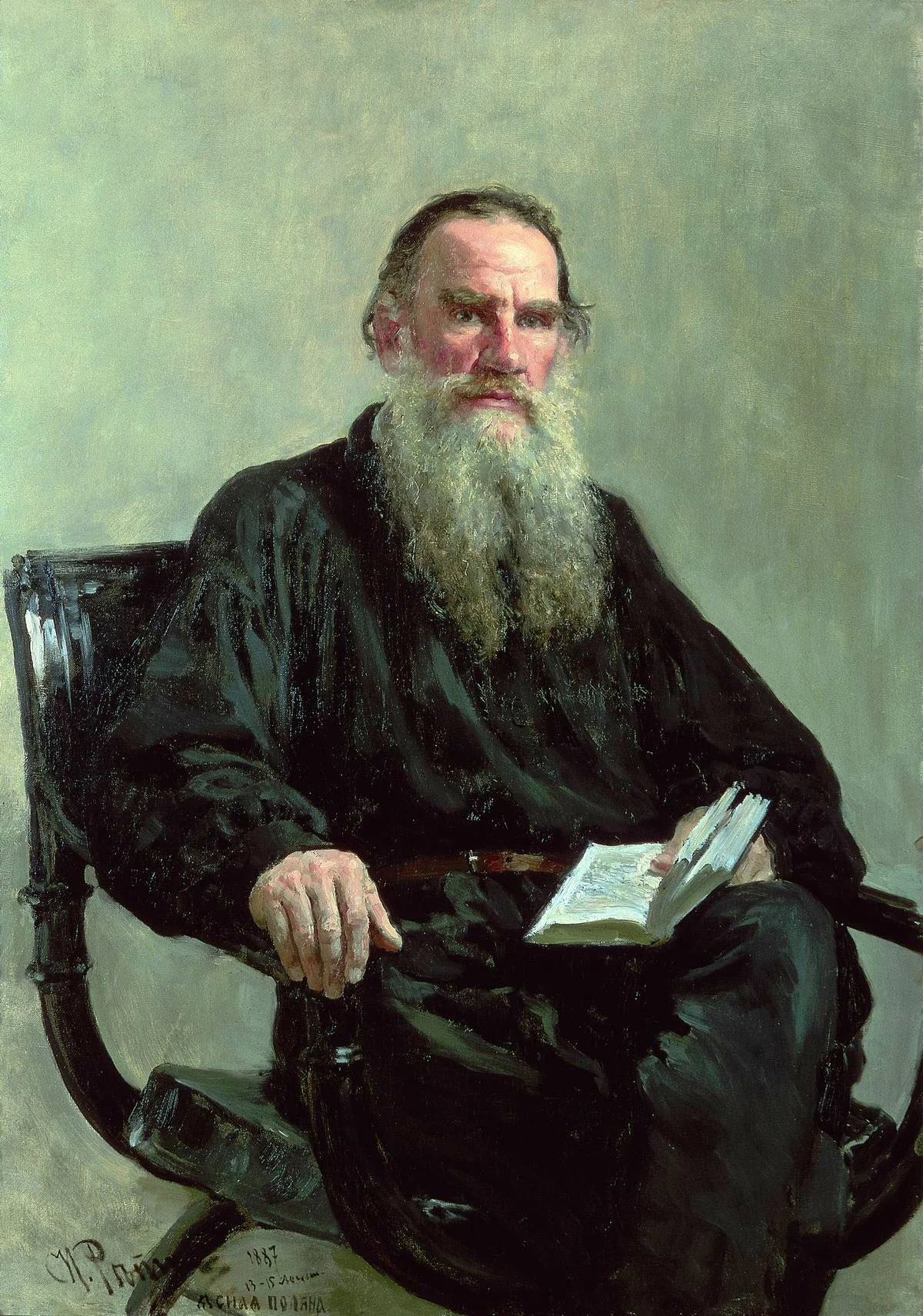
| 36 Quotes | |
| Born as | Lev Nikolayevich Tolstoy |
| Occup. | Novelist |
| From | Russia |
| Born | September 9, 1828 Yasnaya Polyana, Russian Empire |
| Died | November 20, 1910 Astapovo, Russian Empire |
| Aged | 82 years |
| Cite | |
Citation Formats
APA Style (7th ed.)
Leo tolstoy biography, facts and quotes. (2026, February 2). FixQuotes. https://fixquotes.com/authors/leo-tolstoy/
Chicago Style
"Leo Tolstoy biography, facts and quotes." FixQuotes. February 2, 2026. https://fixquotes.com/authors/leo-tolstoy/.
MLA Style (9th ed.)
"Leo Tolstoy biography, facts and quotes." FixQuotes, 2 Feb. 2026, https://fixquotes.com/authors/leo-tolstoy/. Accessed 28 Feb. 2026.
Early Life and Background
Lev Nikolayevich Tolstoy was born on 1828-09-09 at Yasnaya Polyana, the Tolstoy family estate south of Moscow, into an old noble lineage whose privileges were inseparable from the labor of serfs. Orphaned young - his mother died when he was two and his father when he was nine - he grew up amid a household of guardians, cousins, and servants where tenderness and hierarchy coexisted. That early mixture of intimacy and coercion became a lifelong wound: he loved the rhythms of rural life while feeling implicated in the violence that sustained it.The Russia of Nicholas I formed the air he breathed: autocracy, Orthodox piety, censorship, and the vast moral distance between gentry and peasantry. Even before he could name it, Tolstoy was absorbing a central contradiction of his era - the educated elite speaking of virtue while resting on inherited power. His later genius would lie in turning that contradiction inward, making the private conscience answer for the public order.
Education and Formative Influences
Tolstoy entered Kazan University in 1844, drifting through Oriental languages and then law, but the real education was self-directed and volatile - Rousseau, moral diaries, gambling debts, and attempts at self-reform that repeatedly collapsed. He left without a degree in 1847, returned to Yasnaya Polyana, and began experimenting with how a landowner might live honestly among peasants. Those early failures of will, documented with almost clinical candor, taught him the psychological machinery he would later give to characters like Pierre Bezukhov and Levin: the mind that yearns for purity yet keeps rediscovering its own evasions.Career, Major Works, and Turning Points
In 1851 he joined his brother in the Caucasus and entered the army; the Crimean War and the siege of Sevastopol (1854-55) yielded the Sevastopol Sketches, where heroism is stripped of romance and replaced by fear, chance, and moral confusion. He rose to fame with Childhood, Boyhood, Youth, then turned to pedagogy at Yasnaya Polyana, founding a school and writing on education before traveling in Western Europe and returning skeptical of its industrial "progress". Marriage to Sofya Andreevna Behrs in 1862 stabilized his working life long enough for the great novels: War and Peace (1865-69), a reimagining of Russia under Napoleon, and Anna Karenina (1875-77), a merciless anatomy of desire and social judgment. In the late 1870s an existential and religious crisis redirected him toward moral philosophy and polemic - A Confession, What Is to Be Done?, The Kingdom of God Is Within You - and toward late fiction such as The Death of Ivan Ilyich and Hadji Murat. His final rupture was domestic and spiritual: hounded by fame, family conflict over copyrights, and his own demand for renunciation, he fled home in 1910 and died on 1910-11-20 at Astapovo station, a world celebrity seeking anonymity.Philosophy, Style, and Themes
Tolstoy built his art from the premise that the inner life is not an ornament but the battlefield where history happens. He distrusted official explanations - the grand man theory, patriotic myth, ecclesiastical authority - because he had watched how readily they excuse cruelty. That moral x-ray vision fuels Anna Karenina's opening verdict on domestic life: “All happy families resemble one another, each unhappy family is unhappy in its own way”. The sentence is not just epigram; it is Tolstoy diagnosing how private arrangements become moral ecosystems, and how a single hidden fracture - pride, boredom, hypocrisy - can make suffering uniquely patterned and therefore hard to confess.After his crisis, he sharpened the accusation toward himself and his class. He could describe privilege as parasitism with humiliating clarity: “I sit on a man's back, choking him and making him carry me, and yet assure myself and others that I am very sorry for him and wish to ease his lot by all possible means - except by getting off his back”. That is Tolstoy the penitent anatomist, exposing the sentimental alibis of benevolence, and it explains his drift toward asceticism, manual labor, vegetarianism, and a radical Christian nonviolence that rejected courts, prisons, and war. His prose style mirrors the ethic: concrete detail, physical gesture, and the unpretty fact that breaks self-deception. Even when confronting death, he insisted on a stubborn rational honesty - “Even in the valley of the shadow of death, two and two do not make six”. - meaning that terror and sanctimony cannot repeal truth. Across his novels and essays, the recurring theme is the search for an unlied life, achieved not by brilliance but by moral attention, patience, and a refusal to let society outsource the soul.
Legacy and Influence
Tolstoy's influence is double: he expanded what the novel can contain, and he made literature answerable to conscience. As an artist, he shaped modern realism and psychological narration, influencing writers from Chekhov and Gorky to Joyce, Woolf, and Faulkner; as a thinker, his insistence on nonviolent resistance and the primacy of inward reform traveled far beyond Russia, directly affecting Mohandas K. Gandhi and later civil rights leaders. The contradictions remain part of the legacy - the prophet who could wound his family, the aristocrat who preached poverty - but they are also why he endures: Tolstoy did not offer a cleaned-up saint, he offered a human being using genius to interrogate his own complicity, and in doing so he made millions feel the pressure of an awakened conscience.Our collection contains 36 quotes written by Leo, under the main topics: Witty One-Liners - Ethics & Morality - Wisdom - Art - Justice.
Other people related to Leo: Jane Smiley (Writer)
Leo Tolstoy Famous Works
- 1899 Resurrection (Novel)
- 1889 The Kreutzer Sonata (Novella)
- 1886 The Death of Ivan Ilyich (Novella)
- 1877 Anna Karenina (Novel)
- 1869 War and Peace (Novel)
- 1863 The Cossacks (Novel)
Source / external links