
Leonard Peltier Biography Quotes 6 Report mistakes
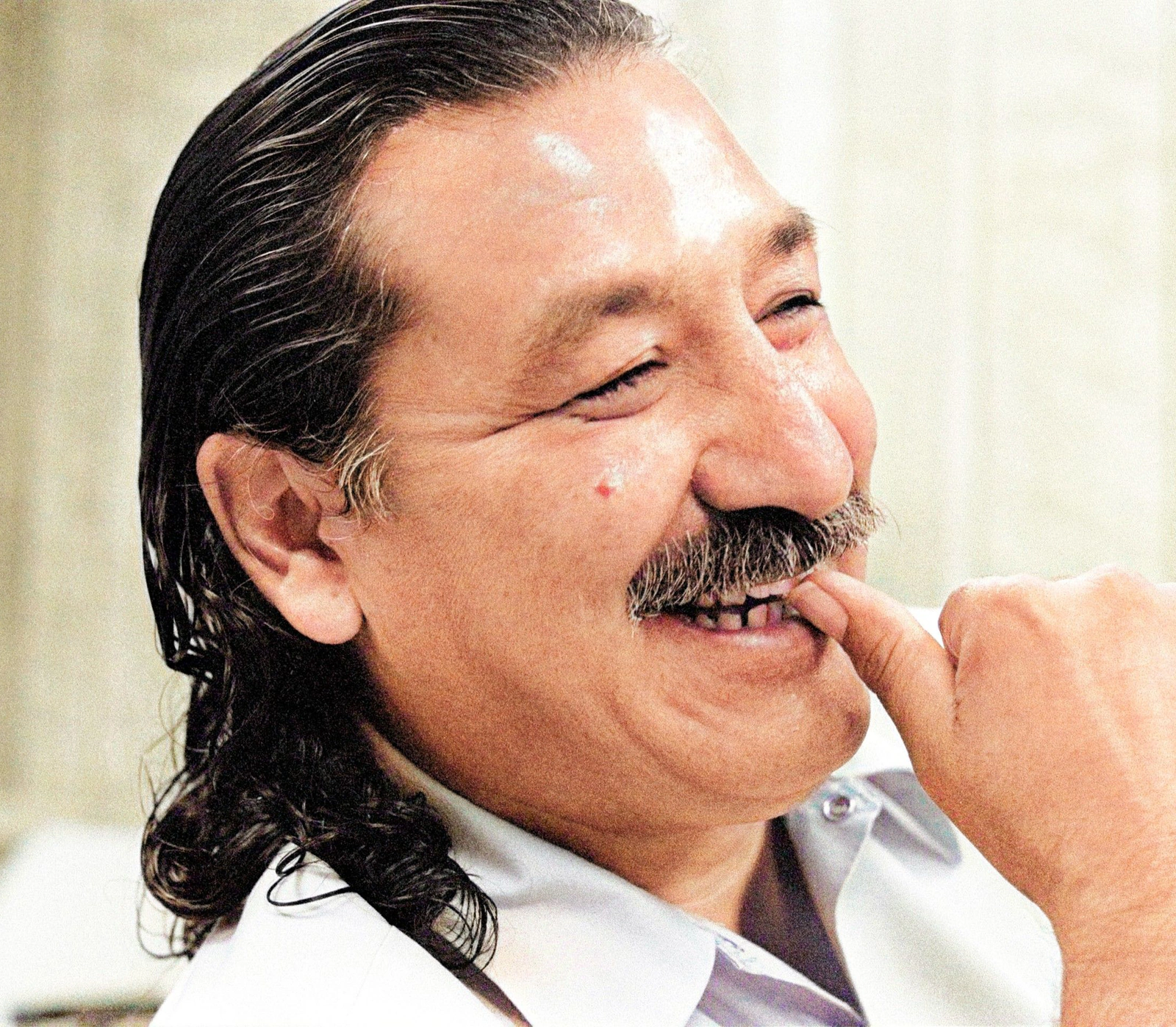
| 6 Quotes | |
| Occup. | Activist |
| From | Ojibwe |
| Born | September 12, 1944 Belcourt, North Dakota, USA |
| Age | 81 years |
| Cite | |
Citation Formats
APA Style (7th ed.)
Leonard peltier biography, facts and quotes. (2026, February 11). FixQuotes. https://fixquotes.com/authors/leonard-peltier/
Chicago Style
"Leonard Peltier biography, facts and quotes." FixQuotes. February 11, 2026. https://fixquotes.com/authors/leonard-peltier/.
MLA Style (9th ed.)
"Leonard Peltier biography, facts and quotes." FixQuotes, 11 Feb. 2026, https://fixquotes.com/authors/leonard-peltier/. Accessed 5 Mar. 2026.
Early Life and Background
Leonard Peltier was born on September 12, 1944, into an Ojibwe (Anishinaabe) family on the Turtle Mountain Indian Reservation in North Dakota, a borderland of prairie farms, federal jurisdiction, and reservation poverty that shaped his early sense of how power worked. His childhood unfolded under the long shadow of U.S. Indian policy after the Indian Reorganization Act and into the era of termination-and-relocation pressures, when Native communities were pushed toward wage labor and away from land-based life while still being policed as wards of the state.Like many Native children of his generation, Peltier was caught between home culture and institutions designed to assimilate. He later described the everyday vulnerability Native people felt in towns and courts around the reservation, where violence and humiliation could pass without consequence, and where families learned to expect the law to be something done to them rather than for them. Those formative experiences hardened into a political identity: not abstract ideology, but a memory of what it cost to be visibly Indian in mid-century America.
Education and Formative Influences
Peltier attended federal Indian boarding school programs, including the Wahpeton Indian School in North Dakota, part of a system that disciplined language, kinship, and ceremony out of children while promising opportunity. The dissonance between civic ideals taught in classrooms and the racial hierarchy he saw outside them helped push him toward the rising currents of Red Power in the 1960s, when Native activists reframed treaty rights, sovereignty, and police accountability as urgent national issues.Career, Major Works, and Turning Points
By the late 1960s and early 1970s, Peltier became active in Native organizing and worked with the American Indian Movement (AIM), a militant-rights formation that paired community programs with high-visibility protest, amid confrontations over treaty enforcement and jurisdiction. The central turning point was the 1975 shootout on the Pine Ridge Reservation at Oglala, South Dakota, during a period of intense violence tied to political factionalism and federal law-enforcement pressure; two FBI agents, Jack Coler and Ronald Williams, were killed, as was a young Native man, Joe Stuntz. Peltier was extradited from Canada, tried in 1977 in Fargo, North Dakota, and convicted in the agents deaths, receiving two consecutive life sentences. His case became internationally contested, with supporters alleging coercive extradition affidavits, suppressed or disputed ballistics evidence, and a trial climate shaped by the broader campaign against AIM.Philosophy, Style, and Themes
Peltier has consistently framed his story as an anatomy of colonial law: a system that claims neutrality while operating through unequal credibility, aggressive prosecution, and political messaging. His rhetoric returns to the lived asymmetry of violence and accountability, insisting that Native suffering was historically normalized: “In them days, it was just still not illegal to kill an Indian. If you killed an Indian, you'd be very unfortunate if you got probation - most of them were released immediately”. The psychological force of the line is not only anger, but a bleak fluency in how institutions signal whose lives count.A second theme is the inversion of constitutional ideals - due process, presumption of innocence, equal protection - into what he describes as burden-shifting punishment. “The United States government can indict you on something, and now you've got to prove your innocence. And that's not the Constitution of the United States”. Alongside this is a persistent insistence that his imprisonment is inseparable from the state response to Native mobilization: “A political prisoner is someone who is out fighting for his or her people's rights and freedom and is imprisoned for that alone”. Across essays, statements, and prison writings, his style is plainspoken and accusatory, built less on abstract theory than on testimony, with faith in collective memory as evidence when courts feel foreclosed.
Legacy and Influence
Peltier became one of the most enduring symbols of Native rights struggles in the United States, a figure invoked in debates over FBI conduct, treaty-era sovereignty, and the legitimacy of political prosecutions in the aftermath of 1970s militancy. Advocacy for his clemency or release has spanned decades, drawing support from Indigenous leaders, human-rights organizations, artists, and public figures, while opponents maintain the convictions are justified by the deaths of the agents. Whatever ones verdict on culpability, his case helped fix Pine Ridge 1975 in the public conscience as a flashpoint where federal power, reservation politics, and the unfinished business of U.S.-Native relations collided - and it continues to shape how activists define state violence, political imprisonment, and the costs of dissent.Our collection contains 6 quotes written by Leonard, under the main topics: Justice - Freedom.
Other people related to Leonard: Peter Matthiessen (Writer)
Frequently Asked Questions
- What was Leonard Peltier tribe? Leonard Peltier is a member of the Ojibwe (Anishinaabe) tribe.
- What happened to Leonard Peltier? Leonard Peltier was convicted of the murder of two FBI agents in 1977, and he is serving two consecutive life sentences in federal prison.
- Where is Leonard Peltier now? Leonard Peltier is currently incarcerated at the United States Penitentiary in Coleman, Florida.
- Leonard Peltier pardon 2021: As of now, Leonard Peltier has not been granted a pardon in 2021.
- How old is Leonard Peltier? He is 81 years old
Source / external links