
Leonhard Euler Biography Quotes 4 Report mistakes
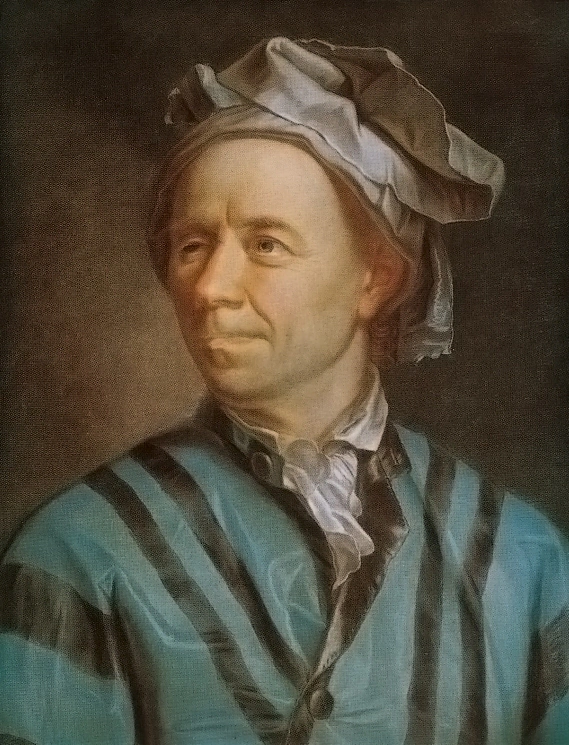
| 4 Quotes | |
| Occup. | Mathematician |
| From | Switzerland |
| Born | April 15, 1707 Basel, Switzerland |
| Died | September 18, 1783 Saint Petersburg, Russian Empire |
| Aged | 76 years |
| Cite | |
Citation Formats
APA Style (7th ed.)
Leonhard euler biography, facts and quotes. (2026, February 11). FixQuotes. https://fixquotes.com/authors/leonhard-euler/
Chicago Style
"Leonhard Euler biography, facts and quotes." FixQuotes. February 11, 2026. https://fixquotes.com/authors/leonhard-euler/.
MLA Style (9th ed.)
"Leonhard Euler biography, facts and quotes." FixQuotes, 11 Feb. 2026, https://fixquotes.com/authors/leonhard-euler/. Accessed 12 Feb. 2026.
Early Life and Background
Leonhard Euler was born on April 15, 1707, in Basel, in the Swiss Confederation, a city where Reformed piety coexisted with a brisk republic of letters. His father, Paul Euler, was a Protestant pastor with mathematical training, and his mother, Margaretha Brucker, came from a Basel family tied to civic life. The household joined theology, discipline, and book learning - an atmosphere that made abstraction feel like a moral vocation rather than an indulgence.Soon after his birth the family moved to Riehen, a village outside Basel, where Euler's earliest education was partly domestic and partly local. The boy's talent emerged in a culture that prized clarity of argument and thrift of expression; even before his fame, he learned to treat knowledge as something to be worked at daily, like a craft. This early blend of devout routine and intellectual ambition helped form the paradox that would define him: an inner life of religious certainty paired with a restless appetite for technical invention.
Education and Formative Influences
Euler entered the University of Basel as a teenager, first aiming toward theology to satisfy family expectations, but he quickly gravitated to mathematics under the decisive mentorship of Johann Bernoulli. Bernoulli recognized an unusual capacity for sustained calculation and originality, guided Euler through the new analysis of Leibniz and Newton, and set him problems that trained both speed and rigor. A critical formative bond also grew with Johann's sons, Daniel and Nicolaus Bernoulli, whose careers would later intersect with Euler's in the scientific courts of St. Petersburg; their correspondence introduced him to the European network where talent could outrun national borders.Career, Major Works, and Turning Points
Euler's career unfolded across two great centers of Enlightenment science: the Imperial Academy of Sciences in St. Petersburg (from 1727) and the Prussian Academy in Berlin (from 1741), before his return to St. Petersburg in 1766. In Russia he rose quickly from junior appointments into the academy's mathematical engine, producing foundational work in calculus, mechanics, and number theory; in Berlin, under Frederick II, he became the period's most prolific scientific author while also navigating court politics and philosophical fashions that often distrusted his plainspoken piety. His major books - including "Mechanica" (1736), "Introductio in analysin infinitorum" (1748), "Institutiones calculi differentialis" (1755), and "Institutiones calculi integralis" (1768-1770) - did more than report discoveries: they standardized notation, reorganized entire fields, and made advanced methods teachable. A personal turning point came with the gradual loss of sight, accelerated by illness and a later cataract; yet even near-total blindness did not halt his output, as he relied on memory, dictation, and a household structured around work.Philosophy, Style, and Themes
Euler's guiding conviction was that nature, mind, and mathematics shared a legible architecture. He did not treat faith as separate from science but as a warrant for intelligibility and economy in explanation: "For since the fabric of the universe is most perfect and the work of a most wise Creator, nothing at all takes place in the universe in which some rule of maximum or minimum does not appear". Psychologically, this reveals more than doctrinal belief - it shows a temperament that sought order not only in theorems but in the world, leaning toward principles that could compress complexity into a single extremal rule. The same impulse shaped his work in variational ideas, mechanics, and optics: a trust that the correct formulation would make the result feel inevitable.His style was similarly anti-mystifying. Where contemporaries sometimes wrapped infinitesimals in metaphysical fog, Euler preferred a working clarity that let calculation proceed and students learn: "To those who ask what the infinitely small quantity in mathematics is, we answer that it is actually zero. Hence there are not so many mysteries hidden in this concept as they are usually believed to be". That sentence captures his intellectual personality - impatient with rhetorical awe, confident in method, and willing to domesticate the infinite into rules that could be taught. Yet he was not naively triumphalist: confronted with the primes, he conceded deep limits to pattern-hunting, writing that "Mathematicians have tried in vain to this day to discover some order in the sequence of prime numbers, and we have reason to believe that it is a mystery into which the human mind will never penetrate". The tension between optimistic system-building and sober humility runs through his oeuvre, from the clean elegance of his analytic functions to the stubborn irregularity of arithmetic.
Legacy and Influence
Euler died in St. Petersburg on September 18, 1783, after a final day that reportedly included work and conversation, a fitting end for a life organized around production. His legacy is both technical and cultural: modern mathematics and theoretical physics still speak his language through standard symbols (like e, i, and the widespread use of f(x)), through the Euler-Lagrange tradition in mechanics, through graph theory's origin in the Konigsberg bridges problem, and through results and objects bearing his name across analysis, number theory, topology, and geometry. Equally enduring is the model of scientific character he embodied - disciplined, lucid, and almost industrially creative - proving that genius can look less like romantic eccentricity and more like steadfast attention applied for decades.Our collection contains 4 quotes written by Leonhard, under the main topics: Witty One-Liners - Deep - Reason & Logic.
Other people related to Leonhard: William Emerson (Mathematician)
Leonhard Euler Famous Works
- 1911 Opera Omnia (Book)
- 1769 Dioptrica (Book)
- 1768 Institutiones calculi integralis (Book)
- 1760 De seriebus divergentibus (Book)
- 1755 Institutiones calculi differentialis (Book)
- 1748 Introductio in analysin infinitorum (Book)
- 1744 Theoria motuum planetarum et cometarum (Book)
- 1744 Methodus Inveniendi Lineas Curvas Maximi Minimive Proprietate Gaudentes (Book)
- 1736 Mechanica (Book)
Source / external links