
Leslie Stephen Biography Quotes 6 Report mistakes
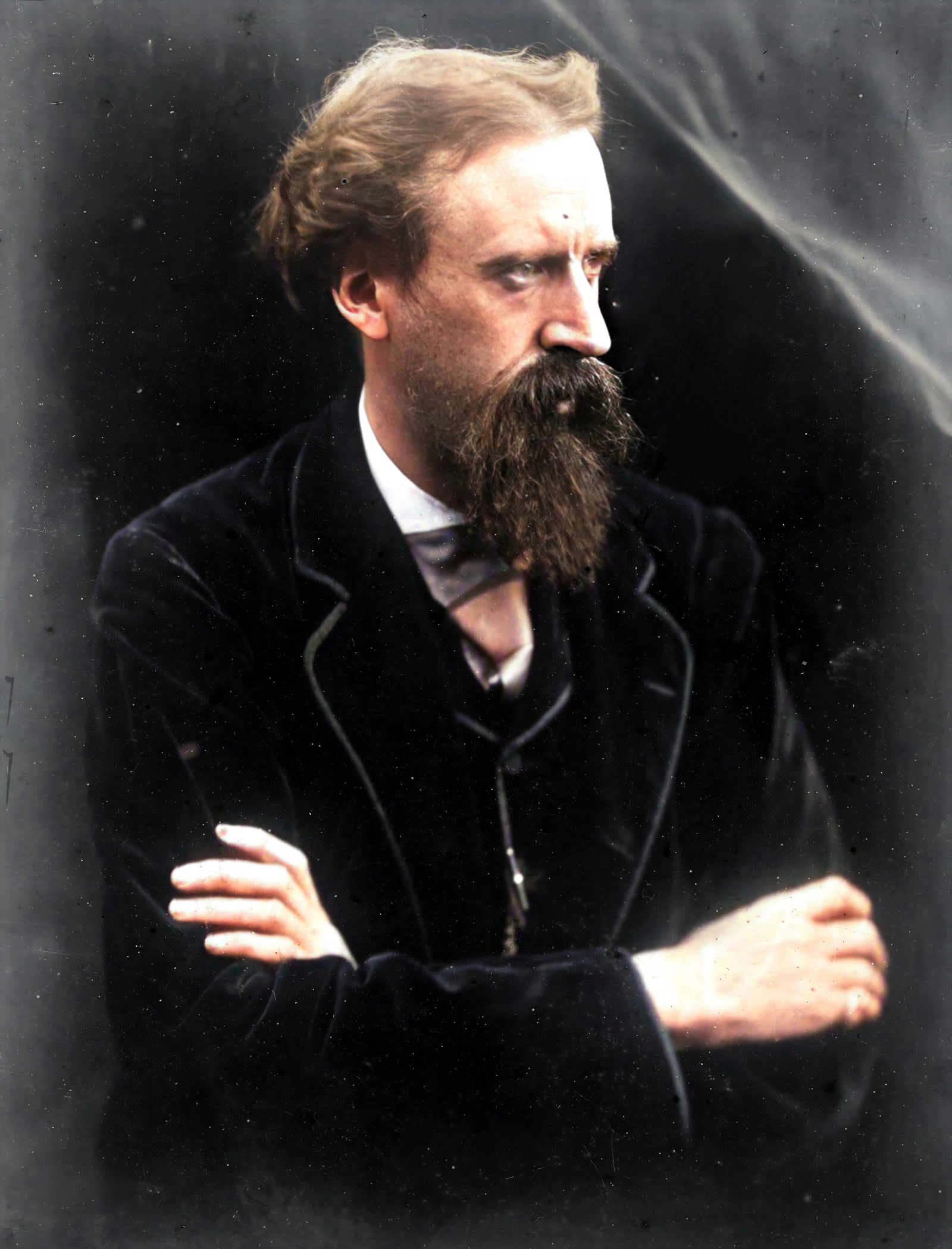
| 6 Quotes | |
| Born as | Sir Leslie Stephen |
| Occup. | Author |
| From | England |
| Born | November 28, 1832 Kensington Gore, London, England |
| Died | February 22, 1904 Kensington, London, England |
| Cause | Heart failure |
| Aged | 71 years |
| Cite | |
Citation Formats
APA Style (7th ed.)
Leslie stephen biography, facts and quotes. (2026, March 9). FixQuotes. https://fixquotes.com/authors/leslie-stephen/
Chicago Style
"Leslie Stephen biography, facts and quotes." FixQuotes. March 9, 2026. https://fixquotes.com/authors/leslie-stephen/.
MLA Style (9th ed.)
"Leslie Stephen biography, facts and quotes." FixQuotes, 9 Mar. 2026, https://fixquotes.com/authors/leslie-stephen/. Accessed 25 Mar. 2026.
Early Life and Background
Leslie Stephen was born on 28 November 1832 into an intellectually ambitious, evangelical, and professional English family whose moral seriousness marked him for life. He was the son of Sir James Stephen, a colonial official and legal thinker deeply tied to the Clapham Sect tradition, and Jane Catherine Venn, daughter of the influential evangelical divine John Venn. The household joined piety, scholarship, reformist conscience, and emotional reserve - a distinctly early Victorian blend. Stephen grew up amid expectation rather than ease: religion was not merely belief but atmosphere, and duty was the native language of the home. Yet the same environment that trained his mind also gave him something to resist. His later skepticism, impatience with cant, and preference for tested fact over inherited dogma all have roots in this setting.
He was also formed by loss, by the burdens of a large family, and by the complicated social mobility of the educated English elite. Several of his siblings became notable, and the Stephens moved within circles where literature, administration, and moral argument overlapped. Physically robust, restless, and drawn to mountains and long walks, Leslie developed early the contrast that would define him: a severe intellect housed in an active, outdoors-loving temperament. That combination mattered. He never became a cloistered man of letters. Even when writing criticism or philosophy, he retained the manner of someone who had tested ideas against weather, grief, institutions, and the stubborn surfaces of ordinary life.
Education and Formative Influences
Stephen was educated at Eton and then at Trinity Hall, Cambridge, where he became a fellow and for a time moved toward the clerical path expected of a man of his upbringing. Cambridge sharpened both his analytical habits and his independence. He absorbed classical learning, history, moral philosophy, and the argumentative discipline of dons' society, but he also encountered the unsettling force of modern criticism, science, and historical scholarship. The crisis of faith that overtook many serious Victorians overtook him fully. By the 1860s he had abandoned holy orders, a decision that cost him security but gave him intellectual honesty. Thinkers such as Mill, Comte, and Darwin helped reshape his mind, though he was never a simple disciple of any one system. What emerged was a moralist without orthodoxy: austere, empirical, humane, and increasingly convinced that truth required intellectual courage even when it dissolved inherited consolations.
Career, Major Works, and Turning Points
After leaving Cambridge, Stephen made himself in London as a journalist, essayist, critic, and man of letters of unusual range. He wrote for major periodicals, became editor of The Cornhill Magazine from 1871 to 1882, and established himself as one of the central arbiters of late Victorian literary culture. His books included Studies of a Biographer, Hours in a Library, History of English Thought in the Eighteenth Century, The Science of Ethics, and English Utilitarians; together they show a mind committed to biography as moral inquiry, criticism as historical placement, and philosophy as a disciplined account of conduct without theology. He was also a pioneering mountaineer and one of the first great public interpreters of Alpine climbing, notably in The Playground of Europe. His private life was marked by piercing sorrow: his first wife, Harriet Marion Thackeray, daughter of William Makepeace Thackeray, died in 1875; his second wife, Julia Jackson Duckworth, whom he married in 1878, died in 1895. Those bereavements deepened the grave tenderness visible beneath his dry manner. As founding editor of the Dictionary of National Biography from 1882 to 1891, he performed a monumental act of Victorian cultural organization, shaping how Britain would remember its dead. He was knighted in 1902 and died on 22 February 1904, having become both a representative Victorian sage and, through his daughter Virginia Woolf's later recollections, a more intimate and vulnerable figure.
Philosophy, Style, and Themes
Stephen's writing was driven by the conviction that clear thought was a moral act. He distrusted metaphysical fog, rhetorical self-display, and any creed that survived by refusing scrutiny. “Chance is a name for our ignorance”. is characteristic not only as an aphorism but as a habit of mind: he sought causes, contexts, and human limits rather than superstition or easy explanation. Equally revealing is his insistence that “The truth cannot be asserted without denouncing the falsehood”. That severity could make him seem combative, yet it arose less from relish for controversy than from ethical impatience with evasion. Having himself passed through religious crisis, he treated belief historically and psychologically, not sentimentally. His unbelief was not jaunty rebellion but an earned austerity - a refusal to say more than evidence allowed.
At the same time, Stephen was too alive to reduce man to a reasoning machine. His essays repeatedly return to character, habit, and the moral uses of culture. “Walking is the natural recreation for a man who desires not absolutely to suppress his intellect, but to turn it out to play for a season. All great men of letters have therefore been enthusiastic walkers”. The sentence captures his entire style: balanced, witty, embodied, anti-romantic yet full of feeling. Movement, for him, released thought from stiffness; biography rescued abstraction by restoring men and women to time, body, and circumstance. He admired candor, endurance, and disciplined sympathy. Even his skepticism was social rather than merely destructive: it aimed to build a humane ethics from shared experience, intellectual honesty, and the recognition that human beings are finite creatures who still owe one another seriousness, courage, and truth.
Legacy and Influence
Leslie Stephen's legacy works on several levels at once. As editor of the Dictionary of National Biography, he helped codify the modern biographical enterprise in English, joining scholarship, compression, and evaluative judgment in a form that remains foundational. As critic and historian of ideas, he translated Victorian intellectual upheaval - Darwinism, secularization, utilitarianism, historical method - into lucid prose for a broad educated public. As a mountaineering writer, he gave physical adventure a reflective, literary dignity. And as father of Virginia Woolf and Vanessa Bell, as well as central presence in the Stephen household remembered in Bloomsbury memoir and fiction, he passed into cultural history not only as author but as atmosphere: formidable, melancholy, affectionate, exacting. Later generations often saw him as the exemplary late Victorian rationalist, yet that label is too narrow. He endures because he united skepticism with moral earnestness, intellect with lived experience, and criticism with a biographer's humane sense that ideas are always carried by vulnerable lives.
Our collection contains 6 quotes written by Leslie, under the main topics: Witty One-Liners - Truth - Wisdom - Writing - Honesty & Integrity.
Other people related to Leslie: Edward Whymper (Explorer), Henry Austin Dobson (Poet), James Payn (Novelist)
Leslie Stephen Famous Works
- 1905 Hours in a Library (Collection of Essays)
- 1904 English Literature and Society in the Eighteenth Century (Book)
- 1898 Studies of a Biographer (Collection of Essays)
- 1893 An Agnostic's Apology (Book)
- 1882 The Science of Ethics (Book)
- 1880 Alexander Pope (Biography)
- 1876 History of English Thought in the Eighteenth Century (Book)
- 1871 The Playground of Europe (Book)
Source / external links