
Lester B. Pearson Biography Quotes 29 Report mistakes
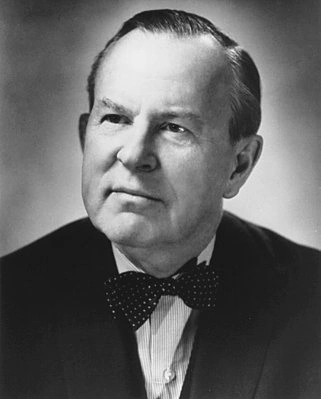
| 29 Quotes | |
| Born as | Lester Bowles Pearson |
| Occup. | Politician |
| From | Canada |
| Born | April 23, 1897 Newtonbrook, Toronto, Ontario |
| Died | December 27, 1972 Ottawa, Ontario |
| Aged | 75 years |
| Cite | |
Citation Formats
APA Style (7th ed.)
Lester b. pearson biography, facts and quotes. (2026, February 11). FixQuotes. https://fixquotes.com/authors/lester-b-pearson/
Chicago Style
"Lester B. Pearson biography, facts and quotes." FixQuotes. February 11, 2026. https://fixquotes.com/authors/lester-b-pearson/.
MLA Style (9th ed.)
"Lester B. Pearson biography, facts and quotes." FixQuotes, 11 Feb. 2026, https://fixquotes.com/authors/lester-b-pearson/. Accessed 5 Apr. 2026.
Early Life and Background
Lester Bowles Pearson was born on April 23, 1897, in Newtonbrook, Ontario, then a village on the edge of Toronto. He grew up in a Protestant parsonage as the son of Rev. Edwin Arthur Pearson, an Anglican minister, and Anne Sarah Bowles, in a household where duty, self-control, and public service were assumed to be virtues rather than choices. Canada in his youth still leaned on Britain for identity and strategy, yet it was also discovering its own institutions and voice - a tension that would become the central stage of his adult life.The First World War reached Pearson not as an abstraction but as a test of character and belonging. He enlisted, served with the Canadian Army Medical Corps and later in the Royal Flying Corps, and was injured in a training accident, ending his prospects of combat flying. The experience left him with a lifelong suspicion of martial romanticism and a practical sense of how quickly ideals are swallowed by bureaucracy, miscalculation, and luck - lessons he later translated into a diplomacy that sought to prevent crises from hardening into wars.
Education and Formative Influences
Pearson studied at Victoria College at the University of Toronto, then at Oxford University (St. Johns College), where he absorbed the habits of debate, compromise, and institutional loyalty that marked the Anglo-Atlantic world between the wars. He briefly taught history at the University of Toronto and coached hockey, combining scholarly temperament with a team-centered view of leadership; the interwar era of fragile treaties, economic turmoil, and rising authoritarianism formed his conviction that peace required planning and systems, not moral appeals alone.Career, Major Works, and Turning Points
Joining Canadas Department of External Affairs in 1928, Pearson rose quickly through postings that taught him the mechanics of alliance politics, then served at the United Nations after 1945 and became secretary of state for external affairs in 1948 under Louis St. Laurent. He helped design Canadas postwar posture: Atlanticist but not submissive, multilateral but not naive, committed to NATO while pushing for arms control and the legitimacy of the UN. His defining turning point came in 1956 during the Suez Crisis, when he proposed a UN Emergency Force to separate combatants - a concept that professionalized modern peacekeeping and won him the 1957 Nobel Peace Prize. Entering domestic politics more fully, he became Liberal leader in 1958 and prime minister (1963-1968), steering minority governments through the adoption of the maple leaf flag (1965), the Canada Pension Plan, and the Medical Care Act, while struggling to keep national unity intact amid Quebecs accelerating Quiet Revolution and the rise of a more assertive Canadian nationalism.Philosophy, Style, and Themes
Pearsons public persona - calm, conciliatory, procedural - could mask the steel of a negotiator who believed that stable outcomes were made, not discovered. He understood politics as a craft practiced with imperfect instruments and imperfect people: “Politics is the skilled use of blunt objects”. That sentence captures his psychology: less the crusader than the patient engineer, prepared to trade clarity for durability if it prevented institutions from collapsing under pressure. His best work came when he treated diplomacy and parliamentary bargaining as related arts - both depend on keeping opponents inside rules they did not write.Underneath the pragmatism ran an anxious moral realism shaped by two world wars and the nuclear age. Pearson repeatedly framed modern conflict as a civilizational trap: “The grim fact is that we prepare for war like precocious giants, and for peace like retarded pygmies”. He distrusted utopian disarmament, yet he also rejected the notion that security could be bought indefinitely with weapons and threats; to him, peacekeeping was not sentimentalism but an instrument to widen the space for negotiation. His most urgent warning was existential rather than ideological - “The choice, however, is as clear now for nations as it was once for the individual: peace or extinction”. That starkness reveals a man haunted by escalation and determined to build international habits that could restrain it.
Legacy and Influence
Pearson died on December 27, 1972, in Ottawa, leaving behind a Canadian state more confident in social citizenship at home and more distinct in voice abroad. He did not invent multilateralism, but he gave it an operational Canadian signature: peacekeeping as a middle power tool, alliance membership paired with independent judgment, and a belief that legitimacy is a form of power. Institutions and airports bear his name, but his deeper legacy is a method - a disciplined preference for negotiated order over heroic rupture - that continues to shape how Canada imagines itself when the world turns dangerous.Our collection contains 29 quotes written by Lester, under the main topics: Witty One-Liners - Ethics & Morality - Equality - War - Peace.
Other people related to Lester: John Turner (Statesman)
Source / external links