
Lewis Carroll Biography Quotes 51 Report mistakes
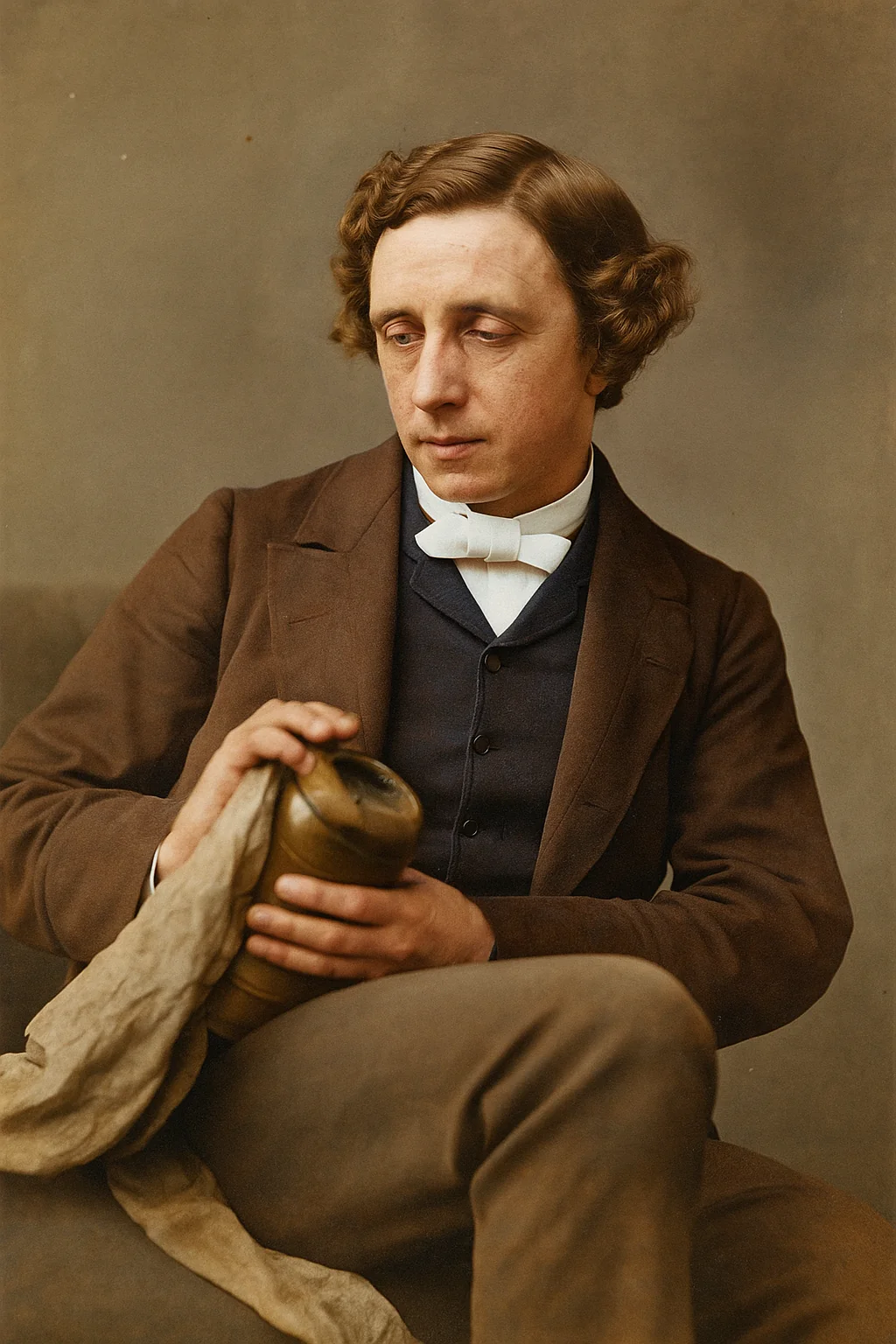
Attr: Oscar Gustave Rejlander
| 51 Quotes | |
| Born as | Charles Lutwidge Dodgson |
| Occup. | Author |
| From | England |
| Born | January 27, 1832 Daresbury, Cheshire, England |
| Died | January 14, 1898 Guildford, Surrey, England |
| Aged | 65 years |
| Cite | |
Citation Formats
APA Style (7th ed.)
Lewis carroll biography, facts and quotes. (2026, February 2). FixQuotes. https://fixquotes.com/authors/lewis-carroll/
Chicago Style
"Lewis Carroll biography, facts and quotes." FixQuotes. February 2, 2026. https://fixquotes.com/authors/lewis-carroll/.
MLA Style (9th ed.)
"Lewis Carroll biography, facts and quotes." FixQuotes, 2 Feb. 2026, https://fixquotes.com/authors/lewis-carroll/. Accessed 25 Mar. 2026.
Early Life and Background
Charles Lutwidge Dodgson, later known to the world as Lewis Carroll, was born on 27 January 1832 in Daresbury, Cheshire, into the large, bookish family of the Rev. Charles Dodgson, an Anglican clergyman, and Frances Jane Lutwidge. In 1843 the family moved to Croft-on-Tees in North Yorkshire, a rectory world of sermons, parlor games, and improvised theatricals that trained the boy in performance and invention. He grew up with a stammer that could make adult society punishing, yet in letters and family magazines he controlled pace and cadence perfectly, already discovering that on the page he could become fluent.Victorian England offered both security and strictness: the Church, the university, and the household were moral engines, and the imagination was expected to serve order. Dodgson absorbed that ethos while quietly resisting it. He was shy, meticulous, and sensitive to social exposure, but also fascinated by puzzles, parody, and the comic violence of logic pushed one step too far. The tension between outward propriety and inward play became the hinge of his later art - a private theatre where anxiety could be transformed into nonsense, and nonsense could reveal how thin the veneer of certainty really was.
Education and Formative Influences
After schooling at Rugby, he entered Christ Church, Oxford, in 1851, excelling in mathematics and winning a studentship; he later became a lecturer in mathematics there (from 1855) and was ordained deacon in 1861, though he never proceeded to priesthood. Oxford gave him a lifetime habitat: collegiate routine, formal dinners, and a library of classical texts and contemporary debates, alongside the era's emerging sciences and a growing interest in photography. His formative influences braided logic with lyricism - Euclid and syllogisms on one side, the theater of language on the other - and he learned to treat reasoning not just as a tool but as a subject with comic potential.Career, Major Works, and Turning Points
Dodgson published mathematical work and inventive pamphlets on logic and voting, but his lasting fame came through fiction written as Lewis Carroll. A pivotal day was 4 July 1862, when he told an improvised story on the River Isis to Alice Liddell and her sisters; the tale became Alice's Adventures in Wonderland (1865), followed by Through the Looking-Glass (1871). He also wrote the comic epic "The Hunting of the Snark" (1876) and the two-part Sylvie and Bruno (1889, 1893), while maintaining a serious parallel career as photographer and Oxford don. His relationships - especially with children in his circle - gave him a receptive audience and a testing ground for tone, yet his diaries suggest a man who guarded privacy fiercely, choosing controlled intimacy over public ease. He died on 14 January 1898 in Guildford, Surrey, at the home of his sisters, after influenza.Philosophy, Style, and Themes
Carroll's inner life is best approached through his method: he turns the mind's need for rules into a drama, then watches rules collapse under their own precision. Wonderland is not random; it is a laboratory where definitions, time, size, and identity are stressed until they squeal. His humor often masks a discomfort with incoherence, a longing for a world that will finally click into place: “It would be so nice if something made sense for a change”. The sentence is funny because it is true - not only for Alice, but for a creator who lived amid Victorian systems and still felt the private vertigo of contradictions.Language, in Carroll, is both toy and weapon. He stages semantic power as a kind of tyranny: “'When I use a word, ' Humpty Dumpty said in rather a scornful tone, 'it means just what I choose it to mean - neither more nor less.'”. Behind the joke lies a fear that meaning is not discovered but imposed, and that authority can rewrite reality by decree. At the same time, he grants the individual a bleak freedom when goals dissolve: “Alice came to a fork in the road. 'Which road do I take?' she asked. 'Where do you want to go?' responded the Cheshire Cat. 'I don't know, ' Alice answered. 'Then, ' said the Cat, 'it doesn't matter”. This is Carroll's existential logic in miniature: without a chosen end, even perfect reasoning cannot choose a path. His style - riddles, reversals, invented words, and childlike candor - becomes a way to domesticate dread, turning the unstable self into a heroine who keeps asking questions.
Legacy and Influence
Carroll helped define modern fantasy by fusing a child's viewpoint with adult intellectual play, and by making nonsense a precision instrument rather than mere whim. The Alice books reshaped children's literature, inspired generations of illustrators (beginning with John Tenniel), and became a deep reservoir for theater, film, art, psychology, and philosophy; they also seeded techniques later embraced by surrealists and language poets. His influence persists because he made the mind's contradictions visible - the wish for certainty, the thrill of paradox, the ache of not knowing - and gave them a form so memorable that it still feels like a private dream shared across cultures.Our collection contains 51 quotes written by Lewis, under the main topics: Witty One-Liners - Motivational - Ethics & Morality - Funny - Wisdom.
Other people related to Lewis: Mervyn Peake (Writer), Martin Gardner (Mathematician), David Del Tredici (Composer)
Frequently Asked Questions
- Lewis Carroll pronunciation: Lewis Carroll is pronounced LOO-iss KAIR-uhl.
- Lewis Carroll famous works: His most famous works are Alice’s Adventures in Wonderland, Through the Looking-Glass, and the nonsense poem The Hunting of the Snark.
- Lewis Carroll interesting facts: He was a mathematician at Oxford, loved photography, invented word games and puzzles, used a pen name for his fiction, and based Alice on a real girl, Alice Liddell.
- Lewis Carroll real name: Lewis Carroll’s real name was Charles Lutwidge Dodgson.
- Lewis Carroll Alice in Wonderland: Lewis Carroll wrote Alice’s Adventures in Wonderland in 1865, a fantasy tale about a girl named Alice who falls into a magical world filled with strange characters and wordplay.
- Lewis Carroll wife: Lewis Carroll never married and had no wife.
- Lewis Carroll books: Lewis Carroll wrote Alice’s Adventures in Wonderland, Through the Looking-Glass, The Hunting of the Snark, Sylvie and Bruno, and many mathematical and logic works.
- How old was Lewis Carroll? He became 65 years old
Lewis Carroll Famous Works
- 1896 Symbolic Logic, Part I (Non-fiction)
- 1895 What the Tortoise Said to Achilles (Essay)
- 1893 Sylvie and Bruno Concluded (Novel)
- 1890 The Nursery "Alice" (Children's book)
- 1889 Sylvie and Bruno (Novel)
- 1886 The Game of Logic (Non-fiction)
- 1885 A Tangled Tale (Collection)
- 1876 The Hunting of the Snark: An Agony in Eight Fits (Poetry)
- 1871 Through the Looking-Glass, and What Alice Found There (Novel)
- 1869 Phantasmagoria and Other Poems (Poetry)
- 1865 Alice's Adventures in Wonderland (Novel)
- 1862 A Book of Nonsense (Poetry)
- 1857 Hiawatha's Photographing (Poetry)
Source / external links