
Leymah Gbowee Biography Quotes 18 Report mistakes
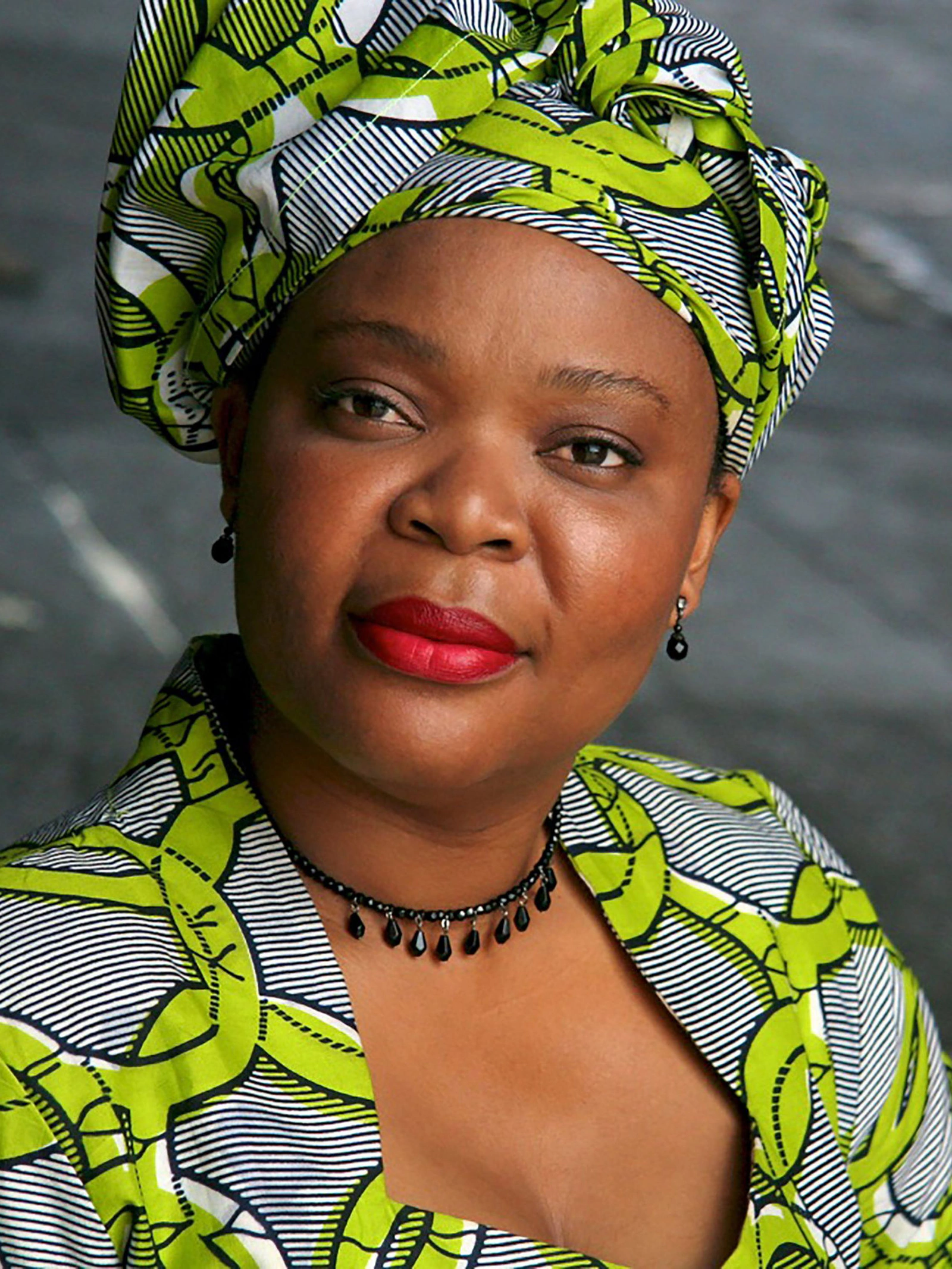
Attr: Leymah Gbowee
| 18 Quotes | |
| Born as | Leymah Roberta Gbowee |
| Occup. | Activist |
| From | Liberia |
| Born | February 1, 1972 Monrovia, Liberia |
| Age | 54 years |
| Cite | |
Citation Formats
APA Style (7th ed.)
Leymah gbowee biography, facts and quotes. (2026, February 15). FixQuotes. https://fixquotes.com/authors/leymah-gbowee/
Chicago Style
"Leymah Gbowee biography, facts and quotes." FixQuotes. February 15, 2026. https://fixquotes.com/authors/leymah-gbowee/.
MLA Style (9th ed.)
"Leymah Gbowee biography, facts and quotes." FixQuotes, 15 Feb. 2026, https://fixquotes.com/authors/leymah-gbowee/. Accessed 10 Mar. 2026.
Early Life and Background
Leymah Roberta Gbowee was born in 1972 in central Liberia and grew up as her country slid from fragile stability into rupture. Her childhood memories were shaped by ordinary ambitions - school, family, church life - increasingly interrupted by the atmosphere of fear that followed Samuel Doe's coup and the approach of civil war. When the First Liberian Civil War erupted in 1989, Monrovia became a city of checkpoints, rumors, and sudden violence, and adolescence turned into a daily calculation about safety, food, and movement.The wars did not only destroy buildings; they recalibrated what it meant to be an adult. Gbowee lived through displacement and the brutalization of community ties, seeing how combatants preyed on civilians and how women carried the hidden logistics of survival - finding water, keeping children alive, navigating soldiers. This proximity to collapse formed her moral compass: politics was no longer abstract, and peace was not a slogan but the difference between life continuing and life stopping.
Education and Formative Influences
After the conflict fractured Liberia's institutions, Gbowee sought training that could translate trauma into action, studying social work and later specializing in trauma healing and peacebuilding through programs connected to regional and international partners. Her formative influences were practical rather than ideological: counselors teaching how to listen without flinching, faith communities insisting that public life had a conscience, and the example of Liberian women who had long organized markets, churches, and kin networks as parallel systems when the state failed. The work of reconciliation in a wounded society taught her that peace required both emotional repair and political pressure.Career, Major Works, and Turning Points
Gbowee began as a practitioner in Liberia's postwar humanitarian landscape, working with war-affected children and former combatants and quickly learning that "rehabilitation" meant little if leaders kept restarting war. Her turning point came during the Second Liberian Civil War (1999-2003) when she helped catalyze the Women of Liberia Mass Action for Peace, a coalition that crossed Christian and Muslim lines and mobilized mothers, traders, and professionals into sustained nonviolent protest - sit-ins, vigils, strategic public shaming, and relentless demands for a ceasefire. The movement pushed Charles Taylor's government and rebel factions toward negotiations in Accra, Ghana, and became famous for disciplined pressure at the peace talks. After the 2003 Accra Comprehensive Peace Agreement, she continued to advocate for accountable governance and women's political participation, telling the story in the memoir "Mighty Be Our Powers" (2011, with Carol Mithers). In 2011 she shared the Nobel Peace Prize with Ellen Johnson Sirleaf and Tawakkol Karman, recognition that elevated a grassroots campaign into a global model.Philosophy, Style, and Themes
Gbowee's philosophy begins with a refusal of the pity frame. She insists that power is not granted from above but organized from below, especially by people dismissed as "ordinary". “It is time for the world to put away the image of African women as victims and see them as the everyday heroes they are”. That sentence is not branding; it is autobiography. It reveals a psychology forged in emergency: she watched women keep families and neighborhoods functioning while armed men claimed the spotlight, and she learned to convert that invisible competence into visible political leverage.Her style is moral urgency paired with tactical realism. She speaks in imperatives that leave little room for spectatorship because she understands how quickly fatigue turns into resignation. “We had nothing to lose, we had to step out”. The line captures the pivot from private suffering to public risk, a decision made when fear is already everywhere and action becomes the only remaining agency. At the same time, her inner life is sustained by a stubborn ethic of perseverance: “You are not at liberty to give up”. This is both self-command and movement discipline - a way to hold a coalition together through setbacks, threats, and the slow grind of negotiation. Across her work, peace is not sentimental; it is organized compassion, enforced by collective presence.
Legacy and Influence
Gbowee's enduring influence lies in proving that nonviolent mass action led by women can alter the behavior of armed men and the calculations of politicians, even in a devastated state. The Liberian women's movement helped create conditions for a transition away from war and for the election of Africa's first elected female head of state, while also setting a template for cross-faith, cross-class coalition building. Internationally, her life has become a case study in trauma-informed leadership: she shows how those who have survived conflict can refuse both revenge and passivity, insisting instead on civic courage, accountability, and the everyday labor of peace.Our collection contains 18 quotes written by Leymah, under the main topics: Motivational - Never Give Up - Hope - Resilience - Equality.
Source / external links