
Lillian Smith Biography Quotes 9 Report mistakes
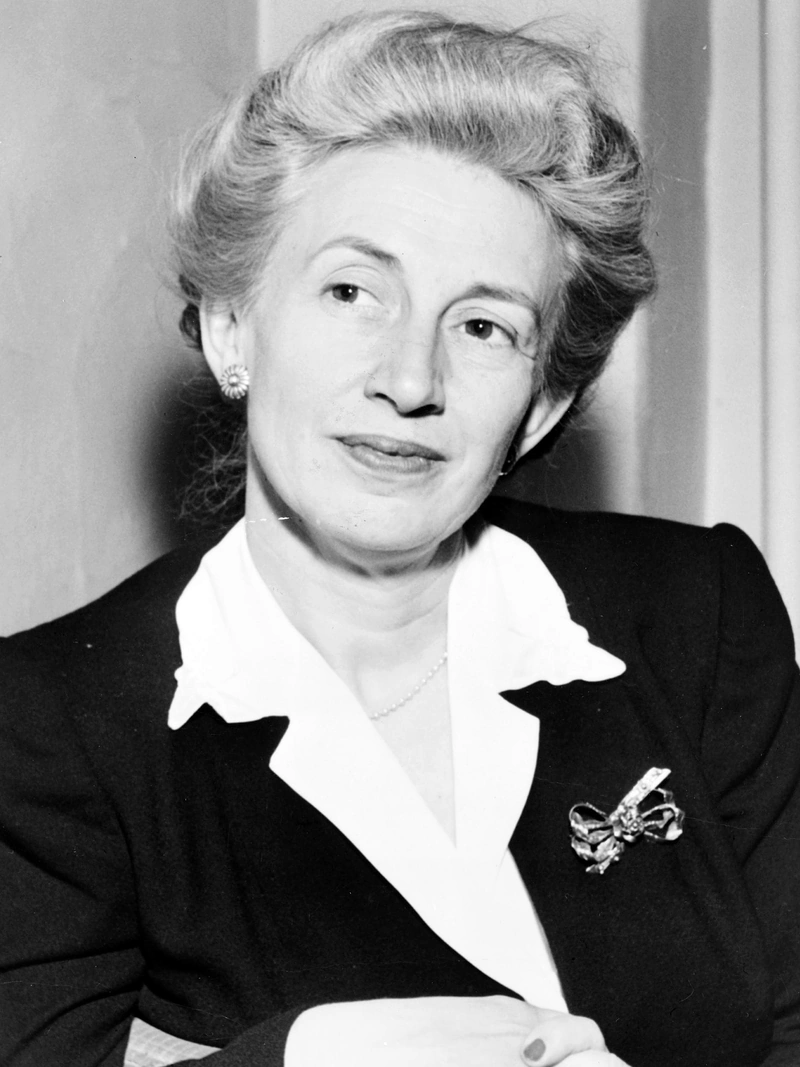
| 9 Quotes | |
| Born as | Lillian Eugenia Smith |
| Occup. | Author |
| From | USA |
| Born | December 12, 1897 Jasper, Florida, USA |
| Died | September 28, 1966 Atlanta, Georgia, USA |
| Cause | Cancer |
| Aged | 68 years |
| Cite | |
Citation Formats
APA Style (7th ed.)
Lillian smith biography, facts and quotes. (2026, February 11). FixQuotes. https://fixquotes.com/authors/lillian-smith/
Chicago Style
"Lillian Smith biography, facts and quotes." FixQuotes. February 11, 2026. https://fixquotes.com/authors/lillian-smith/.
MLA Style (9th ed.)
"Lillian Smith biography, facts and quotes." FixQuotes, 11 Feb. 2026, https://fixquotes.com/authors/lillian-smith/. Accessed 26 Mar. 2026.
Early Life and Background
Lillian Eugenia Smith was born on December 12, 1897, in Jasper, Florida, into a Southern Methodist family whose economic fortunes rose and fell with the rural New South. Her father, a businessman and civic booster, struggled with health and financial instability; her mother carried the practical labor of keeping the household intact. Smith grew up amid the racial order of Jim Crow, where segregation was not merely law but a daily script enforced by churches, schools, and neighborly surveillance. Early, she learned how white community belonging was purchased through silence.In 1915 the family settled in the mountains of north Georgia, near Clayton, and established Laurel Falls Camp, a summer camp for white girls. The camp became Smiths laboratory of conscience: she watched generations of young Southerners rehearse ideals of gentility while absorbing the region's unspoken violences. Chronic illness and recurring nervous exhaustion shadowed her adult life, intensifying her inwardness and sharpening her sense that repression - sexual, emotional, and moral - was a political force as real as any statute.
Education and Formative Influences
Smith studied at Piedmont College in Demorest, Georgia, and later took courses at Peabody Conservatory in Baltimore, training in music and performance with an artists attention to voice and rhythm. Her formal schooling was intermittent, shaped by family needs and health, but she educated herself widely in psychology, theology, and modern literature, absorbing the social critique of the interwar years. The Great Depression, the rise of fascism abroad, and the Southern churches effort to sanctify segregation at home pushed her toward a lifetime project: to name the emotional habits by which ordinary people cooperate with cruelty.Career, Major Works, and Turning Points
In 1936 Smith and her longtime companion Paula Snelling founded Pseudopodia, later renamed The North Georgia Review, a small magazine that became an unlikely clearinghouse for anti-racist thought in the region, publishing writers such as Eleanor Roosevelt, Mary McLeod Bethune, and Negro and white Southern critics rarely welcomed in local print. Her breakthrough came with Strange Fruit (1944), a novel of interracial love set in a Georgia town, which was banned in Boston and attacked across the South while selling nationally. She followed with the essay-memoir Killers of the Dream (1949, expanded 1961), her most enduring work, diagnosing segregation as a damage done first to the inner life of whites and then inflicted outward as policy and terror; later books such as Now Is the Time (1955) and Our Faces, Our Words (1964) aligned her with the modern Civil Rights Movement, even as her independence kept her outside any single organizational discipline.Philosophy, Style, and Themes
Smith wrote like a moral psychologist with a novelists ear, moving between confession, sermon, reportage, and dream-analysis. She treated the South not as scenery but as a training ground in dissociation - teaching children to love their neighbors in theory while refusing them at the lunch counter. For Smith, the crisis of segregation was never only legal; it was a crisis of education in the deepest sense, because the region schooled feeling itself - what could be desired, feared, spoken, or remembered. “Education is a private matter between the person and the world of knowledge and experience, and has little to do with school or college”. The line clarifies her method: she aimed to re-educate perception, forcing readers to notice the lies they had been trained to call manners.Her most persistent theme is the return of the repressed - the way forbidden knowledge comes back as violence, hysteria, or heartbreak. She understood prejudice as a defense mechanism: a psychic bargain to avoid anguish by projecting it onto an invented inferior. “The human heart dares not stay away too long from that which hurt it most. There is a return journey to anguish that few of us are released from making”. That insight animates Killers of the Dream, where she traces how white children are initiated into taboo and doublethink, and how adulthood repeats the lesson until confronted. Yet she was not a nihilist; she insisted that ethical change requires courage to live with uncertainty. “Faith and doubt both are needed - not as antagonists, but working side by side to take us around the unknown curve”. In her best pages, faith is not piety but risk, and doubt is not cynicism but honesty.
Legacy and Influence
Smith died on September 28, 1966, in Atlanta, Georgia, after years of illness, having endured surveillance, hate mail, and political isolation for refusing the Souths demanded silence. Her work helped shift the literature of race from regional melodrama to an anatomy of conscience, influencing later Southern writers, feminist critics of patriarchy, and civil rights thinkers who recognized that law follows imagination. Strange Fruit remains a landmark of censorship and interracial narrative, but Killers of the Dream endures as her definitive legacy: an unsparing record of how a culture manufactures innocence, and a summons to break the spell by telling the truth about what we were taught to feel.Our collection contains 9 quotes written by Lillian, under the main topics: Witty One-Liners - Learning - Equality - Faith - Heartbreak.
Lillian Smith Famous Works
- 1949 Killers of the Dream (Non-fiction)
- 1944 Strange Fruit (Novel)
Source / external links