
Lincoln Steffens Biography Quotes 5 Report mistakes
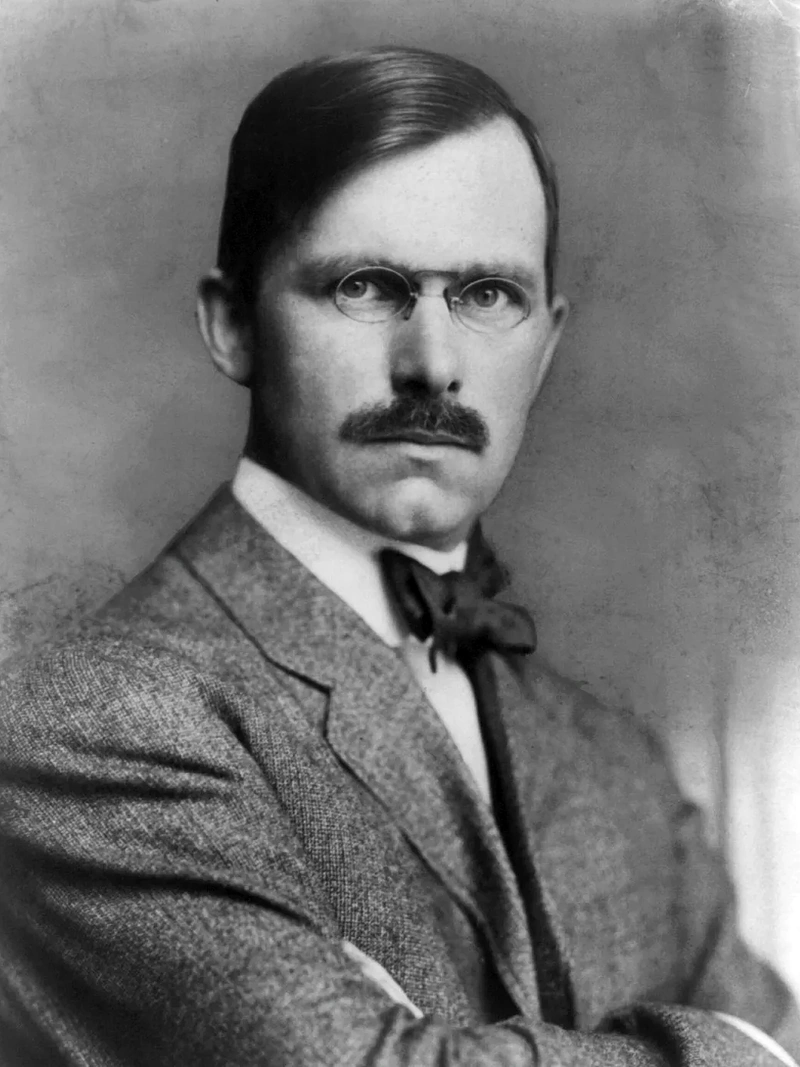
| 5 Quotes | |
| Born as | Lincoln Joseph Steffens |
| Occup. | Journalist |
| From | USA |
| Born | April 6, 1866 San Francisco, California, USA |
| Died | August 9, 1936 Carmel-by-the-Sea, California, USA |
| Aged | 70 years |
| Cite | |
Citation Formats
APA Style (7th ed.)
Lincoln steffens biography, facts and quotes. (2026, February 11). FixQuotes. https://fixquotes.com/authors/lincoln-steffens/
Chicago Style
"Lincoln Steffens biography, facts and quotes." FixQuotes. February 11, 2026. https://fixquotes.com/authors/lincoln-steffens/.
MLA Style (9th ed.)
"Lincoln Steffens biography, facts and quotes." FixQuotes, 11 Feb. 2026, https://fixquotes.com/authors/lincoln-steffens/. Accessed 28 Mar. 2026.
Early Life and Background
Lincoln Joseph Steffens was born on April 6, 1866, in Sacramento, California, as the United States was rebuilding after the Civil War and the West was being stitched to the nation by railroads, mining capital, and new municipal machines. His father, a prosperous businessman of immigrant stock, expected respectability and upward mobility; his mother provided a domestic culture that prized refinement. That combination - money earned in a raw boom environment, then laundered into gentility - gave Steffens an early, lifelong preoccupation with hypocrisy, especially the civic kind.Sacramento in the 1870s and 1880s was both a capital city and a frontier market: politicians, lobbyists, and speculators mingled in plain sight. Steffens absorbed the lesson that public virtue was often a costume worn over private deals, and he learned to read people through their incentives rather than their speeches. The moral pressure of a status-conscious household, set against the visible bargaining of local power, produced the tension that later drove his reporting: he was fascinated by corruption not as an exotic crime but as a normal social system.
Education and Formative Influences
Steffens studied at the University of California, Berkeley, then pursued graduate work in Europe, including at the University of Berlin in the early 1890s, where he encountered the prestige of German historical and social thought and the era's new confidence in scientific explanation of human behavior. Returning to the United States, he chose journalism over academic life, drawn to cities as laboratories of modernity and to newspapers as instruments that could turn private knowledge into public leverage.Career, Major Works, and Turning Points
After reporting and editing in New York, Steffens became a leading figure in the Progressive Era's investigative journalism, writing for McClure's Magazine at its peak. His municipal exposés - notably "Tweed Days in St. Louis" (1902) and a series on Minneapolis, Philadelphia, Chicago, and New York - were gathered as The Shame of the Cities (1904), a defining muckraking text that argued corruption was not only the work of bosses but also the product of respectable citizens who preferred convenience to accountability. He later widened his lens to national politics and labor conflict, and in 1919-1921 he traveled in revolutionary Russia, an experience that fed his controversial enthusiasm for the Bolshevik experiment and colored his later memoir, Autobiography of Lincoln Steffens (1931), where he portrayed himself as both participant and critic in the moral drama of reform.Philosophy, Style, and Themes
Steffens wrote as a diagnostician of systems: he hunted the quiet transactions between businessmen, police, courts, and party organizations, then narrated them as incentives made visible. His sentences were built for persuasion rather than ornament - plain, ironic, and prosecutorial - but his deeper subject was psychological: how ordinary people outsource conscience to institutions and then act surprised by the results. “Power is what men seek and any group that gets it will abuse it”. For Steffens this was not cynicism for its own sake; it was a working rule that explained why reform could not rely on good intentions alone.His most revealing theme is the uneasy relationship between freedom and righteousness. He distrusted compulsory virtue, whether preached by churches, enforced by moral crusaders, or encoded in performative civic piety, because he believed coerced goodness simply drove vice into more sophisticated channels. “Morality is only moral when it is voluntary”. That conviction helps explain both his admiration for energetic cities and his occasional impatience with middle-class reformers who wanted cleanliness without conflict. It also illuminates his flirtation with revolutionary governance abroad, where he briefly convinced himself that a new order might outgrow the old corrupt bargain. “I have been over into the future, and it works”. The line became famous partly because it captured the Progressive temperament - faith that history could be engineered - and partly because Steffens later embodied its disillusionments, as reports of repression complicated the utopian promise he had glimpsed.
Legacy and Influence
Steffens died on August 9, 1936, after living long enough to see Progressive ideals absorbed into the administrative state of the New Deal, and to see propaganda and mass politics sharpen the very tools he had used to educate the public. His lasting contribution is methodological: he helped establish the municipal investigation as a serious literary and civic form, showing that corruption is often a partnership between private money and public indifference. The Shame of the Cities remains a template for modern accountability reporting, from city-hall scandals to structural analyses of policing and procurement, and his career stands as a cautionary biography of the reformer's predicament - how a fierce hunger to expose abuses can coexist with, and sometimes slide into, overconfidence about the next system that promises to replace them.Our collection contains 5 quotes written by Lincoln, under the main topics: Ethics & Morality - Art - Justice - Sports - Optimism.
Other people related to Lincoln: Ida Tarbell (Journalist), Ernest Poole (Novelist)
Lincoln Steffens Famous Works
- 1931 The Autobiography of Lincoln Steffens (Autobiography)
- 1906 The Struggle for Self-Government (Non-fiction)
- 1904 The Shame of the Cities (Non-fiction)