
Lindsey Vonn Biography Quotes 12 Report mistakes
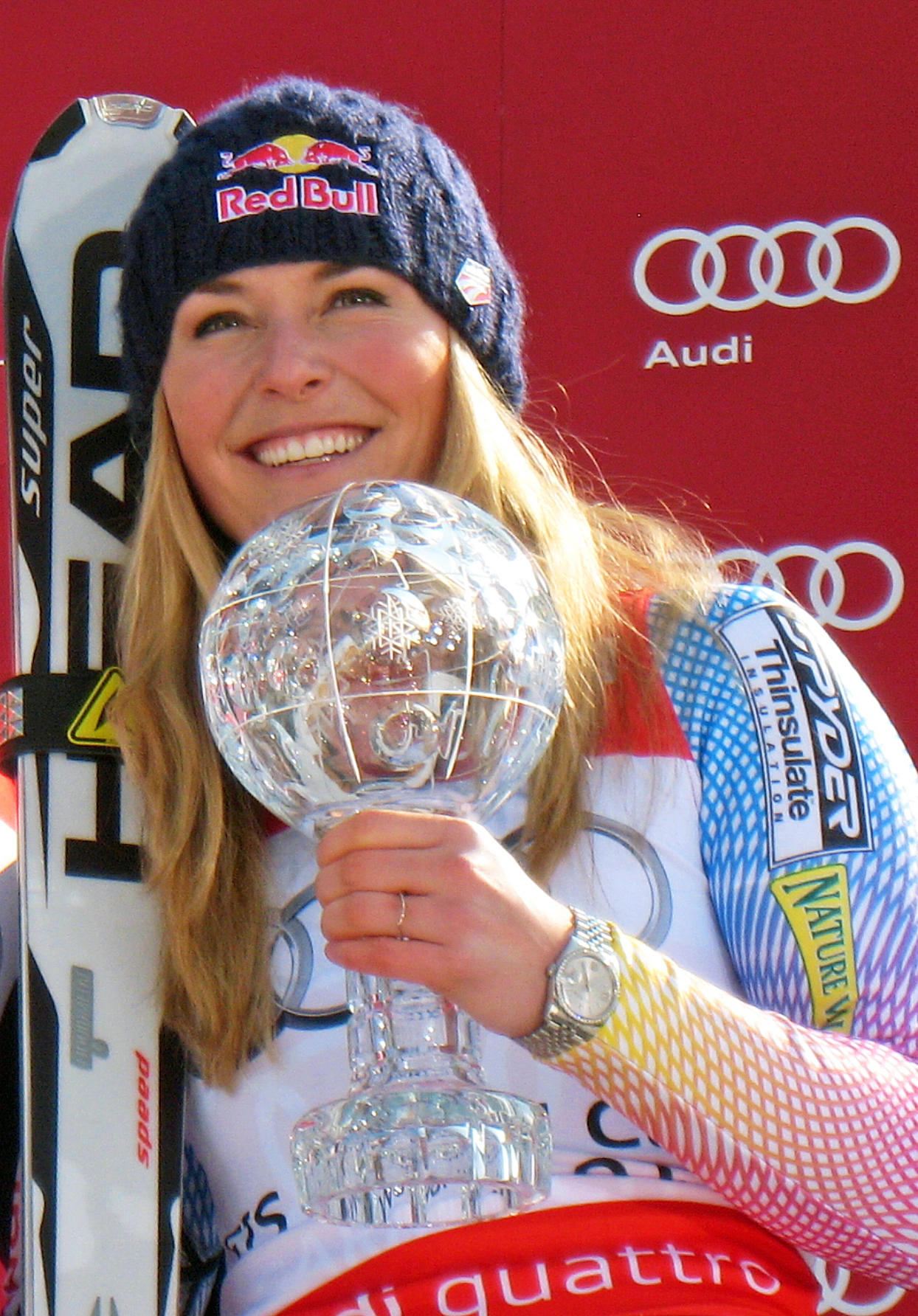
Attr: Doug Haney, CC BY 2.0
| 12 Quotes | |
| Born as | Lindsey Caroline Kildow |
| Occup. | Athlete |
| From | USA |
| Spouse | Thomas Vonn |
| Born | October 18, 1984 Saint Paul, Minnesota, USA |
| Age | 41 years |
| Cite | |
Citation Formats
APA Style (7th ed.)
Lindsey vonn biography, facts and quotes. (2026, February 11). FixQuotes. https://fixquotes.com/authors/lindsey-vonn/
Chicago Style
"Lindsey Vonn biography, facts and quotes." FixQuotes. February 11, 2026. https://fixquotes.com/authors/lindsey-vonn/.
MLA Style (9th ed.)
"Lindsey Vonn biography, facts and quotes." FixQuotes, 11 Feb. 2026, https://fixquotes.com/authors/lindsey-vonn/. Accessed 25 Mar. 2026.
Early Life and Background
Lindsey Caroline Kildow was born October 18, 1984, in Saint Paul, Minnesota, and grew up in the Minneapolis suburb of Burnsville in a family that treated snow and sport as ordinary facts of life. Her father, Alan Kildow, became her earliest coach and logistics manager, and her mother, Linda, helped hold together the household while the family chased winter across the Midwest. From the start, Lindsey showed an appetite for speed and risk that did not read as recklessness so much as a focused need to test edges - physical, emotional, and competitive.The American ski scene she entered was changing: the 1990s had made Olympic celebrity familiar, but alpine racing in the United States still demanded long travel, private sacrifice, and an unusually thick skin. Kildow's childhood was therefore both typical and extreme - school and family life braided with pre-dawn drives, repetitive training, and the constant evaluation of times. That early exposure to judgment, and to the idea that confidence could be engineered by preparation, would later shape how she explained her own success and survival.
Education and Formative Influences
Kildow attended Buck Hill, a small but influential Minnesota ski area that produced elite racers, training under coach Erich Sailer in a program known for discipline and relentless technical repetition. As a teenager she moved to Vail, Colorado, to pursue year-round development and, like many top juniors, balanced schooling with a life organized around gates, video review, conditioning, and travel. The formative influence was less academic than cultural: European-style seriousness applied to an American athlete, with her father and coaches constructing a professional routine before the world recognized her as one.Career, Major Works, and Turning Points
She debuted on the World Cup in 2000, reached the Olympics at Salt Lake City in 2002, and quickly became the defining American women's speed skier of her era; in 2007 she married fellow racer Thomas Vonn, taking the surname under which she would compete. Her breakthrough seasons culminated in the 2009 and 2010 overall World Cup titles and, at the Vancouver Olympics in 2010, a bronze medal in downhill - the first American woman to medal in the event - won after a training crash left her with a painful shin injury. Vonn collected four overall World Cup titles (2008, 2009, 2010, 2012) and a record number of World Cup wins for a woman at the time, thriving in downhill and super-G while also proving her versatility in combined and, earlier, giant slalom. Major injuries became recurring turning points: an ACL and MCL tear in 2013, fractures and further knee damage around 2014-2015, and a difficult build toward the 2018 PyeongChang Games, where she earned a downhill bronze before retiring from competition in 2019; in 2023 she announced plans for a return to racing after knee replacement surgery, underscoring how inseparable identity and effort remained in her story.Philosophy, Style, and Themes
Vonn's skiing was an argument in motion - a high-speed commitment to the fall line, late braking, and a willingness to let the skis run when caution tempted others to manage. The psychological center of that style was not bravado but self-directed pressure: “I'm not trying to prove anything to anyone. I'm just trying to push myself”. That sentence captures a private economy of motivation in which external praise is secondary to the internal metric of whether she met her own standard. It also helps explain why she could return, again and again, from surgeries that would have ended many careers: the opponent was time, fear, and the limits of the body, not a single rival.Her public candor about pain, nerves, and imperfection made her unusually legible for an athlete in a sport often packaged as glamour and poise. “Failure I can handle. It's fear of failure that paralyzes you”. In Vonn's case, fear was not denied; it was handled through preparation, routine, and an insistence on forward motion even when the body resisted. The recurring theme is resilience as practice rather than slogan, distilled in the ethic, “I don't give up. I fight to the end”. That mindset was not only competitive but existential - a way to keep agency when injury, media scrutiny, and the loneliness of individual sport threatened to reduce her to outcomes.
Legacy and Influence
Vonn's legacy sits at the intersection of records, representation, and a modern athlete's willingness to narrate the costs of excellence. She expanded what American audiences imagined possible in women's alpine speed, helped professionalize the image of the U.S. team on a European-dominated circuit, and became a reference point for later stars who treated strength and ambition as compatible with visibility. Through the Lindsey Vonn Foundation and her broader advocacy for girls' confidence and access to sport, she translated her own hard-won self-belief into a civic project, leaving an influence measured not only in World Cup points but in the language athletes now use to describe fear, injury, and the choice to continue.Our collection contains 12 quotes written by Lindsey, under the main topics: Motivational - Never Give Up - Failure - Perseverance - Confidence.
Other people related to Lindsey: Bode Miller (Athlete)
Source / external links