
Lionel Messi Biography Quotes 10 Report mistakes
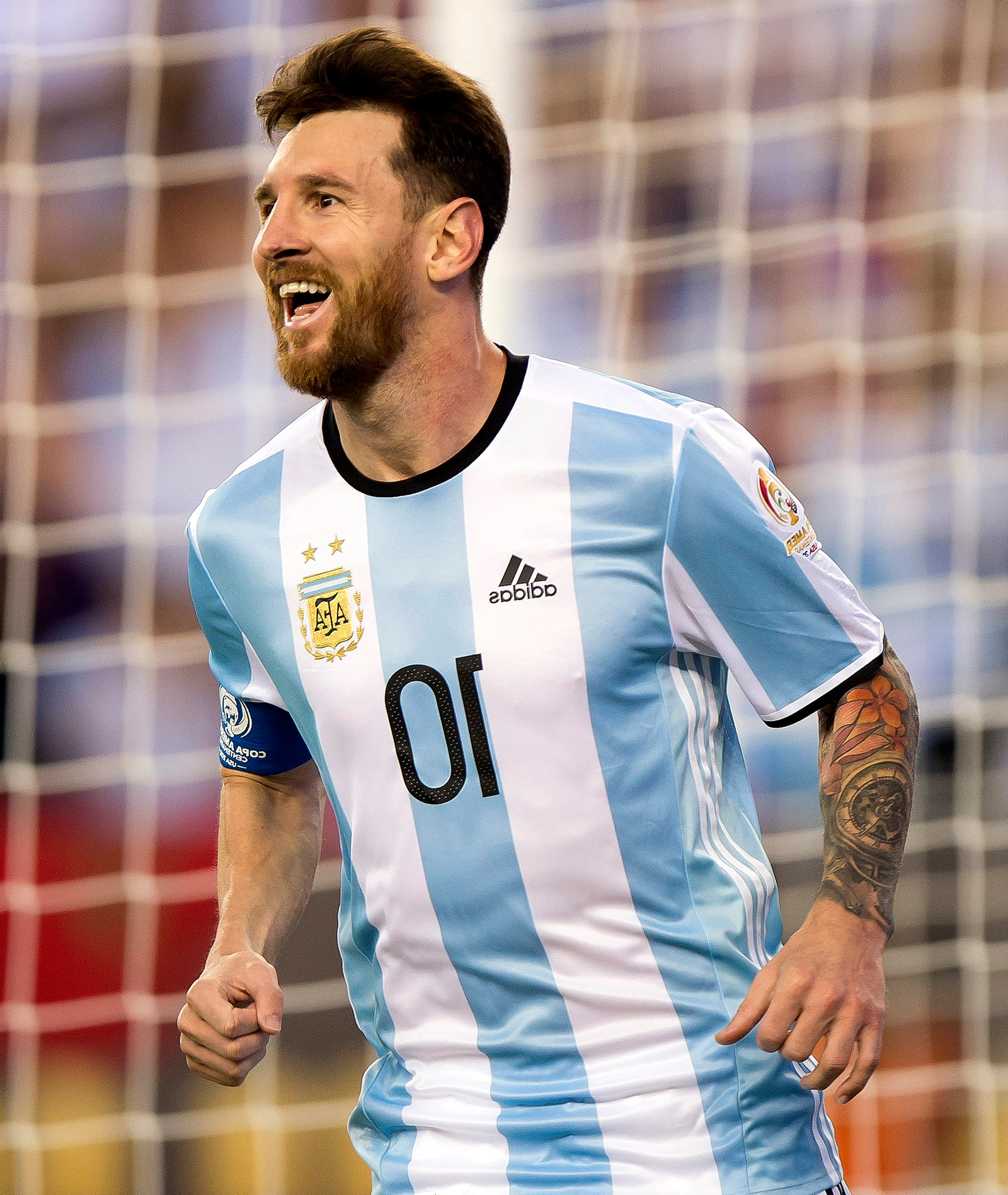
| 10 Quotes | |
| Born as | Lionel Andrés Messi |
| Occup. | Athlete |
| From | Argentina |
| Born | June 24, 1987 Rosario, Argentina |
| Age | 38 years |
| Cite | |
Citation Formats
APA Style (7th ed.)
Lionel messi biography, facts and quotes. (2026, February 11). FixQuotes. https://fixquotes.com/authors/lionel-messi/
Chicago Style
"Lionel Messi biography, facts and quotes." FixQuotes. February 11, 2026. https://fixquotes.com/authors/lionel-messi/.
MLA Style (9th ed.)
"Lionel Messi biography, facts and quotes." FixQuotes, 11 Feb. 2026, https://fixquotes.com/authors/lionel-messi/. Accessed 19 Mar. 2026.
Early Life and Background
Lionel Andres Messi was born on June 24, 1987, in Rosario, Santa Fe, Argentina, a river city where football culture runs through neighborhoods as naturally as the Parana runs past them. Raised in a close-knit family of working and lower-middle-class roots, Messi absorbed the game early through street play and the local club ecosystem that has long served as Argentina's informal academy. His small stature, later framed by global audiences as paradoxical to his dominance, was first simply a fact of childhood in Rosario - a boy with unusual balance and coordination who treated the ball as an extension of his body.At Newell's Old Boys, where he joined the youth system as a child, his gifts were obvious but so were the constraints of his body. Diagnosed with a growth hormone deficiency, he faced a problem common in poorer football geographies: talent outpacing access to specialized medical care. The family explored options as local support proved limited, and the decision that followed - to gamble on a move abroad - was as much about parental faith as about sport. That early tension between fragility and insistence became the private engine of his public career.
Education and Formative Influences
Messi's education was never separable from training; his formative curriculum was repetition, tactical instruction, and the emotional discipline demanded by elite youth football. Moving to Barcelona as a teenager, he entered La Masia, a system built on positional play, scanning, and collective responsibility, and he was shaped by coaches who valued decision-making over spectacle. The separation from Rosario - family, language rhythms, and childhood friends - matured him quickly, and the mix of Catalan institutional care and competitive pressure created a personality that seemed quiet off the pitch and relentlessly expressive on it.Career, Major Works, and Turning Points
Messi debuted for FC Barcelona's first team in 2004 and soon became the central figure of an era defined by trophies and a recognizable style: rapid combination play, high pressing, and surgical finishing. Under Pep Guardiola, Barcelona's 2008-2012 peak turned him into both scorer and playmaker, as his role evolved from wide attacker to false nine and then to a more flexible creator. He amassed unprecedented goal totals and multiple Ballon d'Or awards while anchoring a team that won La Liga and the UEFA Champions League repeatedly. With Argentina, his arc moved from prodigy burdened by comparison to Diego Maradona, through painful near-misses in the 2014 World Cup final and successive Copa America finals, to redemption: Copa America 2021, the 2022 Finalissima, and the 2022 World Cup in Qatar, where his leadership and late-career intelligence culminated in the one title that had long defined his national narrative. After leaving Barcelona in 2021 amid the club's financial crisis, he played for Paris Saint-Germain before joining Inter Miami in 2023, helping transform the visibility of Major League Soccer and winning the Leagues Cup.Philosophy, Style, and Themes
Messi's inner life, as it surfaces in interviews and body language, is built around labor, not mythology. He rejects the idea of effortless genius and recasts fame as the delayed consequence of monotony: “It took me 17 years and 114 days to become an overnight success”. The line reads like a self-defense against the external story people prefer - the miracle child - and it hints at a mind that finds safety in routine. That psychology also explains his most visible trait on the field: an almost clinical calm in chaos, produced by thousands of rehearsed micro-decisions rather than improvisation alone.His themes are sacrifice, collective purpose, and a dissatisfaction that keeps moving the horizon. “You have to fight to reach your dream. You have to sacrifice and work hard for it”. , he insists, and the biography behind the sentence is literal: leaving Argentina young, living inside an academy, and re-making himself socially while his body was still being medically managed. Yet for all the individual records, his stated moral center is team and decency: "I prefer to win titles with the team ahead of individual awards or scoring more goals than anyone else. I'm more worried about being a good person than being the best football player in the world
Our collection contains 10 quotes written by Lionel, under the main topics: Motivational - Success - Humility - Perseverance - Teamwork.
Source / external links