Lizzie Andrew Borden Biography Quotes 25 Report mistakes
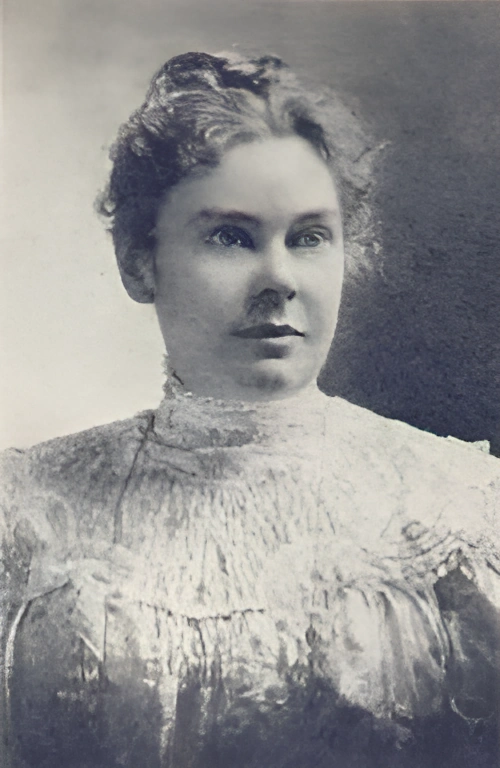
| 25 Quotes | |
| Occup. | Celebrity |
| From | USA |
| Born | July 19, 1860 |
| Died | June 1, 1927 |
| Aged | 66 years |
Lizzie Andrew Borden was born on July 19, 1860, in Fall River, Massachusetts, into a household that was both prominent and austere. Her father, Andrew Jackson Borden, built his fortune through real estate and banking, known in town as a disciplined, frugal man who preferred prudence to display. Her mother, Sarah Anthony Morse, died when Lizzie was a small child, a loss that shaped the family's inner life and left the girls largely in the care of others. In 1865 Andrew married again, taking Abby Durfee Gray as his wife, and the household settled into a routine on Second Street, away from the grander heights favored by the city's more socially ambitious families.
Family and Home
Lizzie grew up alongside her older sister, Emma Lenora Borden, with whom she would remain closely connected for decades. The sisters were active in the Central Congregational Church, and Lizzie took part in charitable and church-affiliated activities common to the era's respectable women. Despite Andrew Borden's wealth, the home was run with strict economy. The family employed a live-in domestic, Bridget Sullivan, an Irish immigrant who handled much of the cooking and housework. The household's rhythms were further influenced by extended kin; Andrew's brother-in-law, John Vinnicum Morse, remained a familiar figure, sometimes visiting and staying overnight. These relationships formed the everyday context of Lizzie's life, with expectations of modesty, duty, and careful conduct governing the family's public face.
Tensions and Social Context
Fall River in the late nineteenth century was a city of mills, fortunes, and vivid lines of class and neighborhood. Although Andrew's means could have allowed a move to the more fashionable residential areas, he kept the family in a practical, older home near the city center. Reports from acquaintances suggest that frictions developed within the household over matters of property, stepfamily relations, and independence. Abby Borden's relations, and questions about gifts and inheritances, were said to have caused strains. At the same time, Lizzie's activity in church circles and charitable work offered her a measure of visibility and purpose, even as the family's inward-looking habits limited her social life. Those who later speculated about her motives pointed to both class aspirations and domestic unease; those who defended her emphasized her religious commitments, her loyalty to Emma, and her dutiful life.
The Murders of 1892
On August 4, 1892, the Borden home became the scene of one of the most famous violent crimes in American history. Abby Borden was found dead in an upstairs guest room, killed by repeated blows from a hatchet-like weapon. Not long afterward, Andrew Borden was discovered murdered in the sitting room, similarly struck while resting on a sofa. At the time of the killings, the only people known to be at the house were Lizzie and Bridget Sullivan; Emma was away visiting friends, and John Morse had visited the previous day and departed earlier that morning. The sequence of events was confused almost from the start, with neighbors arriving as Lizzie raised the alarm and the family physician, Dr. Seabury Bowen, summoned to the scene. The house, carefully ordered in ordinary times, became a place of frantic searches, whispered suspicions, and rapidly mounting public attention.
Investigation and Arrest
Police struggled to reconcile the timeline of Abby's death with the later attack on Andrew, and the lack of obvious forced entry focused attention inward. The discovery of a broken-handle hatchet head in the basement, the account of Bridget Sullivan's movements as she labored through household chores, and the presence and later departure of John Morse all entered the public record. A friend of Lizzie's, Alice Russell, told authorities she had witnessed Lizzie burning a dress in the kitchen days after the murders, an act Lizzie explained by saying it was stained with paint. Investigators also looked into claims that a local druggist had been approached by a woman resembling Lizzie seeking prussic acid shortly before the murders, though that claim would not become part of the trial evidence. Under intensifying scrutiny and after a formal inquest, Lizzie was arrested and jailed pending further proceedings, a development that stunned both her supporters and her detractors.
The Trial
The trial commenced in 1893, moved to New Bedford due to the extraordinary publicity surrounding the case in Fall River. Lizzie's defense was led by George D. Robinson, a former governor of Massachusetts, working alongside Andrew Jennings Jr. and Melvin Adams. The prosecution, led by District Attorney Hosea Knowlton, sought to piece together a circumstantial case, arguing opportunity, inconsistent statements, and the improbability of an unknown intruder slipping in and out unobserved. The court's evidentiary rulings proved crucial. The judges excluded Lizzie's inquest testimony and declined to admit certain contested claims, forcing the jury to consider a pared-down narrative against a defendant who presented a reserved and, to some, sympathetic demeanor.
Acquittal and Immediate Aftermath
After weeks of testimony, the jury acquitted Lizzie Borden. The verdict did not erase doubt, but it ended the state's attempt to punish her. Freed, she returned to Fall River amid a storm of fascination and hostility. Public sentiment was divided, with some accepting her innocence and others convinced a grave injustice had been done. Legal disputes over Andrew Borden's estate led to arrangements that accounted for Abby's predeceasing Andrew, including settlements that recognized claims from Abby's relatives. With Emma, Lizzie left the Second Street house and acquired a more spacious residence on French Street, known as Maplecroft, a move that seemed to fulfill the long-deferred desire for a setting commensurate with the family's means.
Life at Maplecroft and Social Standing
At Maplecroft, Lizzie adopted the name Lizbeth A. Borden in some contexts and lived in greater comfort with household staff. Yet social acceptance remained elusive. Some former associates at the Central Congregational Church kept their distance, and invitations fell away. Still, she explored new interests and friendships. A significant chapter involved her connection with the stage actress Nance O Neil, whom she befriended and hosted. The friendship energized Lizzie, who enjoyed the theater and the company of artists, but it reportedly heightened tensions with Emma, whose temperament and expectations were more restrained. In 1905, following a dispute that neither sister fully explained, Emma left Maplecroft and the sisters' partnership fractured for good.
Enduring Notoriety
Despite the acquittal, Lizzie's name became a cultural shorthand for sensational crime. Newspapers, magazines, and popular verse ensured that the story circulated far beyond Massachusetts. The notorious rhyme, which began appearing in the years following the trial, invented a neat tally of blows and helped cast Lizzie in the public imagination as an axe-wielding figure. The legend overshadowed the complexity of the legal case, the constraints of evidence, and the everyday realities of a New England family negotiating status, piety, and privacy. Figures like Bridget Sullivan and Alice Russell, who had lived near the events and borne witness to their aftermath, faded into the background of public memory as the larger-than-life portrait of Lizzie took center stage.
Later Years
Lizzie's later life settled into a pattern of guarded independence. She continued to reside at Maplecroft, managed her affairs, and made occasional excursions. She remained a person of means, if not of easy society. Old confidants like her attorney Andrew Jennings Jr. remained part of her world in practical ways, even as the circle of intimates stayed small. Emma lived apart, their estrangement intact. Those who encountered Lizzie in these years often remarked on her composure and reserve, a demeanor consistent with the self-control that had sustained her through the ordeal of 1892 and the spectacle of the trial.
Death and Legacy
Lizzie Borden died on June 1, 1927, in Fall River. She was buried in the family plot at Oak Grove Cemetery, near her parents and sister. Emma died not long afterward, closing a family story that had held the nation's attention for a generation. In the decades following her death, interest in Lizzie Borden only intensified, spawning books, stage works, films, and ongoing historical inquiries. Her father, Andrew, and her stepmother, Abby, are remembered within that narrative not only as victims but as figures whose personalities and choices shaped the household's dynamic; Bridget Sullivan, John Morse, and Alice Russell are repeatedly reexamined as witnesses whose words and actions colored every interpretation of that fateful day. The case remains unresolved in the popular mind, less a settled chapter than a prism for questions about class, gender, media, and the limits of certainty. Lizzie's life, bracketed by ordinary duties and extraordinary accusations, continues to stand at the crossroads of history and folklore, her name a reminder of the enduring power of an unsolved story.
Our collection contains 25 quotes who is written by Lizzie, under the main topics: Witty One-Liners - Truth - Justice - Mother - Dark Humor.
Source / external links