
Lord Alfred Douglas Biography Quotes 5 Report mistakes
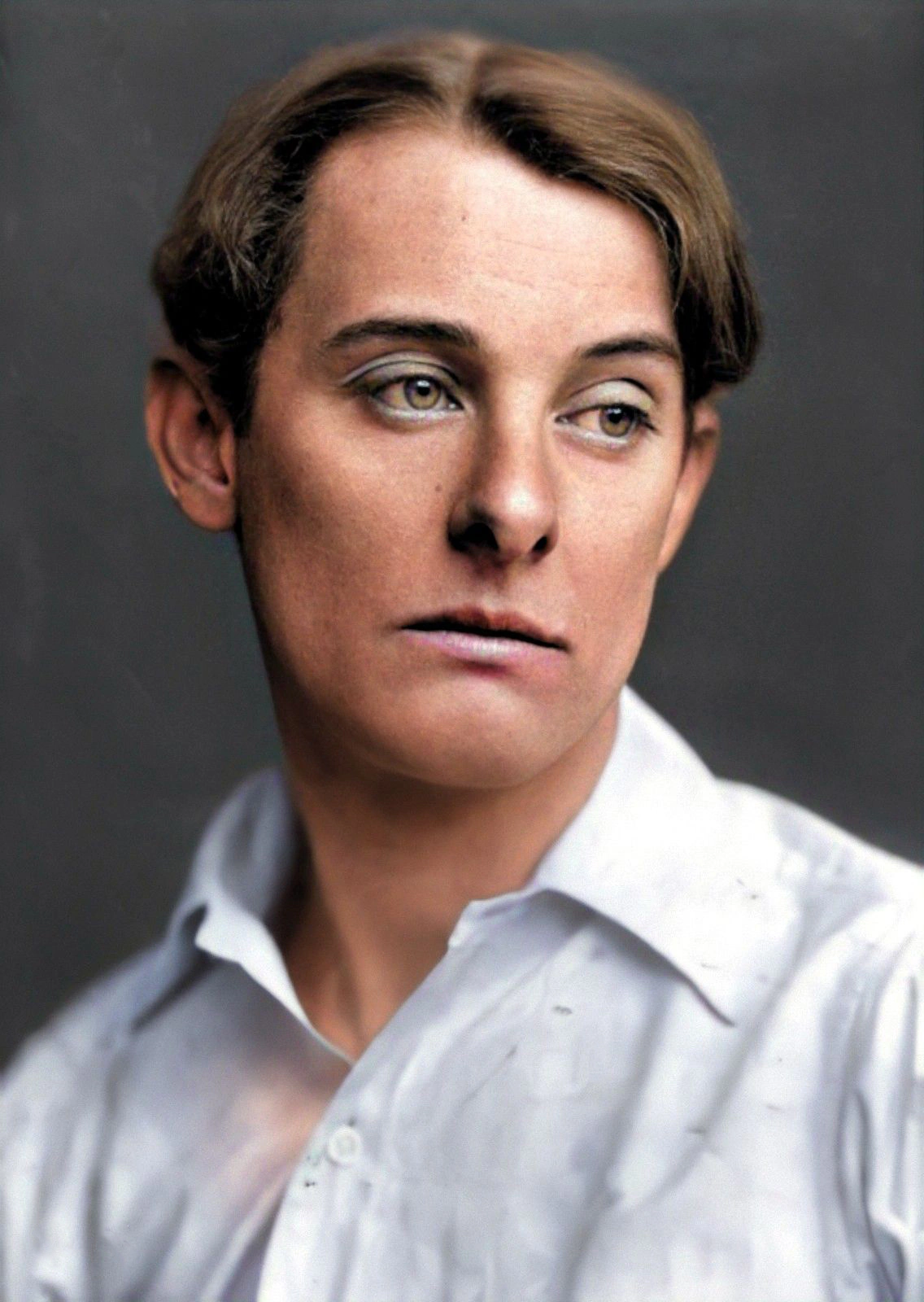
| 5 Quotes | |
| Known as | Bosie |
| Occup. | Poet |
| From | United Kingdom |
| Born | October 22, 1870 Powick, Worcestershire, England |
| Died | March 20, 1945 Lancing, West Sussex, England |
| Aged | 74 years |
| Cite | |
Citation Formats
APA Style (7th ed.)
Lord alfred douglas biography, facts and quotes. (2026, February 11). FixQuotes. https://fixquotes.com/authors/lord-alfred-douglas/
Chicago Style
"Lord Alfred Douglas biography, facts and quotes." FixQuotes. February 11, 2026. https://fixquotes.com/authors/lord-alfred-douglas/.
MLA Style (9th ed.)
"Lord Alfred Douglas biography, facts and quotes." FixQuotes, 11 Feb. 2026, https://fixquotes.com/authors/lord-alfred-douglas/. Accessed 6 Mar. 2026.
Early Life and Education
Lord Alfred Douglas, known throughout his life by the childhood nickname Bosie, was born in 1870 into the Douglas family of the British aristocracy, younger son of John Sholto Douglas, 9th Marquess of Queensberry. The turbulence of his family background, overshadowed by his father's notorious temper and public quarrels, shaped a proud, combative temperament in the son while also granting him entrée to elite schools and social circles. He was educated at Winchester College, where his precocious charm and literary flair emerged, and at Magdalen College, Oxford. At Oxford he gravitated to the aesthetic movement, contributed verse to undergraduate journals, and edited The Spirit Lamp, cultivating a circle of admirers who prized musical diction, classical allusion, and the fin-de-siecle shimmer of decadence.Literary Emergence
Douglas's early poems quickly won attention among aesthetes for their fluent lyricism and their idealization of beauty. He wrote with a deliberate classicism tempered by a languid, melancholy tone. His best-known poem, Two Loves, appeared in the mid-1890s and concluded with the now-famous phrase the love that dare not speak its name, a line that came to symbolize the coded language of same-sex desire in late Victorian England. He issued slim volumes of verse during the 1890s and contributed to small magazines allied with the movement, cultivating an image that was as much social and sartorial as it was literary. His sonnets and songs, though sometimes dismissed by critics as derivative of earlier models, found loyal admirers for their clarity of line and their unapologetic worship of beauty.Oscar Wilde and the Queensberry Affair
Douglas met Oscar Wilde in the early 1890s, and their intense attachment soon became the central drama of his life. Wilde, already celebrated for his wit and plays, encouraged Douglas's writing, while Douglas offered adoration and a volatile energy that both inspired and unsettled the older man. The liaison enraged Douglas's father, the Marquess of Queensberry, whose public campaign to expose Wilde culminated in the infamous calling card left at the Albemarle Club in 1895. Against the cautions of friends such as Robbie Ross and others in Wilde's circle, Douglas urged legal action. Wilde sued Queensberry for libel, but the case collapsed under evidence gathered by Queensberry's agents; Wilde was subsequently prosecuted and convicted for gross indecency. The trials destroyed Wilde's career and health, and they indelibly marked Douglas's reputation. From prison, Wilde wrote the long letter later published as De Profundis, reflecting bitterly on their relationship and its destructive spirals.Exile, Parting, and Aftermath
On Wilde's release in 1897, Douglas and Wilde reunited briefly in Naples, a precarious attempt at companionship stifled by financial pressure, family threats, and conditions set by Wilde's estranged wife, Constance Wilde. The reunion dissolved, and the men separated; Wilde died in Paris in 1900. In the years that followed, Douglas's attitude toward Wilde swung between devotion and denouncement. He quarreled fiercely with Robbie Ross, Wilde's friend and literary executor, and fought a series of libel actions. Notably, he sued the critic and novelist Arthur Ransome over a study of Wilde and lost, a defeat that deepened his financial difficulties and intensified his sense of grievance. Friendships with writers such as Ada Leverson, who had earlier offered kindness to both men amid the scandal, attest to the complicated loyalties of the circle surrounding Wilde's fall.Marriage, Faith, and Journalism
In 1902 Douglas married the poet Olive Custance. The marriage, like much in his life, alternated between ardor and estrangement; it produced a son, Raymond, but was also strained by money problems, lawsuits, and Douglas's quarrelsome public persona. Around this time his literary reputation shifted as he turned from youthful aestheticism toward more conventional criticism and polemic. He edited the literary weekly The Academy for a period in the years before the First World War, where he sought to uphold high standards and a conservative taste. In 1911 he was received into the Roman Catholic Church, a conversion that reshaped his self-understanding and public rhetoric. He repudiated the permissiveness of the fin-de-siecle, adopted a stern moral tone, and attempted to reconcile his past with an exacting ideal of faith.Campaigns, Lawsuits, and Prison
The postwar years found Douglas as a combative pamphleteer and journalist. He wrote for, and helped animate, polemical papers that specialized in controversy and conspiratorial accusation. In this climate he accused public figures of misconduct, most famously Winston Churchill, whom he charged with grave improprieties. The result was a 1924 conviction for criminal libel and a term of imprisonment. Confinement forced a reckoning: he wrote reflective verse, examined the cost of pride, and recalibrated his public stance. Yet the cycle of litigation, apology, and renewed combativeness remained a pattern, fueled by long-standing feuds and by the unhealed wound of the Wilde scandals.Later Writings and Final Years
In later decades Douglas published memoirs and collections of verse, including an autobiography in which he sought to arrange the wild disarray of his life into a story of artistic calling, moral error, and religious redemption. He revisited the history of his relationship with Wilde repeatedly, sometimes in a spirit of contrition, sometimes in counter-accusation, and sometimes in a tone of serene piety. His later poems, more chastened in ambition, prize lucidity and prayerful cadence. Financially precarious and often at odds with former allies, he nonetheless maintained pockets of loyal friendship and patronage within Catholic and literary circles. He died in 1945, having outlived nearly all the protagonists of the trials that had defined his youth.Legacy
History remembers Lord Alfred Douglas at once as a lyric poet of narrow but genuine gifts and as the volatile companion whose name is inseparable from Oscar Wilde's tragedy. His best poems, polished and musical, keep faith with the high aesthetic of the 1890s, while Two Loves remains a touchstone in the literature of desire. The wider arc of his life, from aristocratic privilege through scandal and courtroom defeats to religious conversion and late self-scrutiny, exposes the fault lines of a society moving from late Victorian moralism to the uncertainties of modern identity. Figures around him, his formidable father, the Marquess of Queensberry; Wilde and Robbie Ross; the supportive Ada Leverson; his wife, Olive Custance; and antagonists such as Arthur Ransome and Winston Churchill, shaped, challenged, and sometimes destroyed his self-fashioning. If his fame is forever entangled with Wilde's, his writings and his troubled pilgrimage also chart a singular passage through the culture wars of his age.Our collection contains 5 quotes written by Lord, under the main topics: Witty One-Liners - Art - Love - Writing.
Lord Alfred Douglas Famous Works
- 1929 The Autobiography of Lord Alfred Douglas (Book)
- 1914 Oscar Wilde and Myself (Book)
- 1906 The Placid Pug and Other Verses (Book)
- 1900 Sonnets (Book)
- 1899 The City of the Soul (Book)
- 1896 Poems (Book)
Source / external links