
Lord Byron Biography Quotes 107 Report mistakes
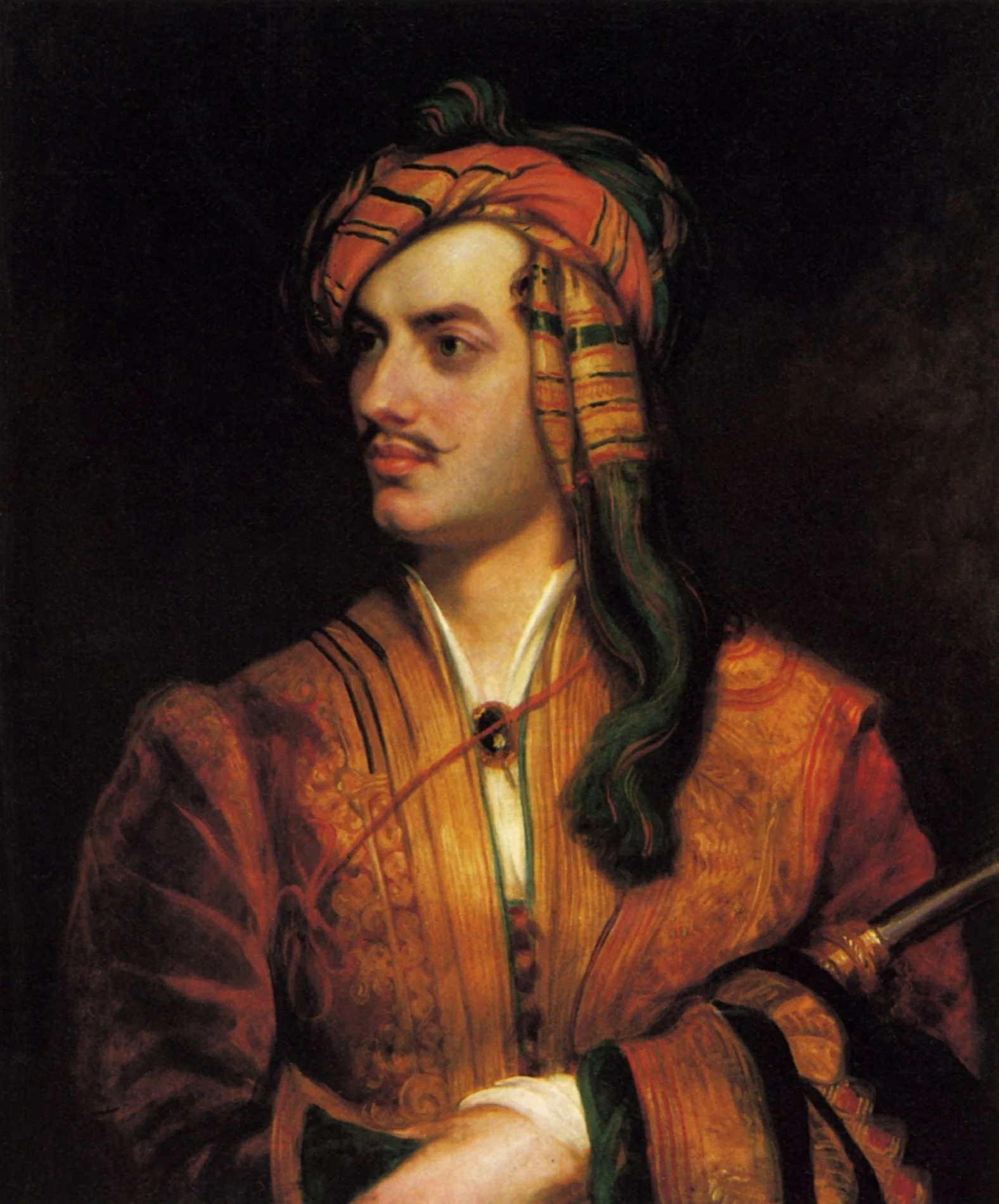
| 107 Quotes | |
| Born as | George Gordon Byron |
| Known as | George Byron |
| Occup. | Poet |
| From | United Kingdom |
| Born | January 22, 1788 London, Great Britain |
| Died | April 19, 1824 Missolonghi, Aetolia-Acarnania, Ottoman Empire |
| Aged | 36 years |
| Cite | |
Citation Formats
APA Style (7th ed.)
Lord byron biography, facts and quotes. (2026, February 2). FixQuotes. https://fixquotes.com/authors/lord-byron/
Chicago Style
"Lord Byron biography, facts and quotes." FixQuotes. February 2, 2026. https://fixquotes.com/authors/lord-byron/.
MLA Style (9th ed.)
"Lord Byron biography, facts and quotes." FixQuotes, 2 Feb. 2026, https://fixquotes.com/authors/lord-byron/. Accessed 27 Mar. 2026.
Early Life and Background
George Gordon Byron was born in London on 1788-01-22 into a family that carried an old title and chronic instability. His father, Captain John "Mad Jack" Byron, burned through money and reputations; his mother, Catherine Gordon of Gight, brought a diminished Scottish inheritance and a volatile tenderness that could turn to humiliation. The household was a study in reversals - pride without security, lineage without liquidity - and Byron learned early to treat identity as something both inherited and improvised.After a childhood split between England and Scotland, he grew up largely in Aberdeen, marked by a clubfoot that made the body feel like an adversary and performance a necessity. In 1798 he inherited the barony at ten, moving to Newstead Abbey near Nottingham, a half-ruined ancestral seat that suited his imagination: Gothic, echoing, and expensive to maintain. The boy lord absorbed a lesson he would never forget - that history can be a burden as much as a crown, and that glamour often rides on debt, secrecy, and pain.
Education and Formative Influences
Byron was educated at Harrow and then Trinity College, Cambridge, where he cultivated friendships, read voraciously, and began to shape his public self as a blend of aristocratic defiance and literary ambition. He admired Pope and the satiric line, devoured Enlightenment skepticism, and steeped himself in the romantic turn toward strong feeling and solitary heroism; the result was an early voice that could swing from polished couplets to storm-driven confession. When his youthful Hours of Idleness (1807) was attacked, he answered with English Bards and Scotch Reviewers (1809), a hard-edged satire that announced not only his talent but his willingness to fight for it.Career, Major Works, and Turning Points
In 1809-1811 Byron traveled through Portugal, Spain, Malta, Albania, and Greece, experiences that gave him landscapes, political anger, and a sense of exile as freedom; the first cantos of Childe Harold's Pilgrimage (1812) made him famous overnight in London. The following years produced narrative poems - The Giaour, The Bride of Abydos, The Corsair, Lara - and the verse drama Manfred, creating the "Byronic hero" as a cultural type: proud, wounded, self-prosecuting. Personal crisis accelerated the myth. His marriage to Annabella Milbanke collapsed in 1816 amid scandal and insinuations; he left Britain permanently, living first in Switzerland (where he wrote The Prisoner of Chillon and began the third canto of Childe Harold), then in Italy with the Guiccioli circle, composing Don Juan, Beppo, and Cain in a mode that fused comedy with metaphysical bite. In 1823 he sailed to Greece to support the War of Independence, spending money, organizing forces, and trying to broker unity; he died of fever at Missolonghi on 1824-04-19, a poet turning himself into a political symbol.Philosophy, Style, and Themes
Byron's inner life was built around contradiction: a craving for intimacy paired with a talent for flight, a moral imagination that distrusted moralists, and a hunger for liberty shadowed by self-contempt. He saw human agency as real but continually trapped in accident and power, capturing his bleak political psychology in the line, “Men are the sport of circumstances when it seems circumstances are the sport of men”. That sentence is not resignation so much as vigilance - a warning that history is a rigged stage where the strong pretend to improvise and the weak are told it was fate.Stylistically, he used speed, wit, and tonal agility as a way to stay emotionally honest without becoming sentimental. Don Juan in particular makes a philosophy out of refusing single meanings: desire is comic, cruelty is ordinary, idealism is necessary and dangerous. His suspicion of pious progress runs through his satire of modernity: “This is the patent age of new inventions for killing bodies, and for saving souls. All propagated with the best intentions”. Yet he also believed in chosen bonds as a counterweight to chaos, idealizing loyalty even while doubting permanence: “Friendship is Love without his wings!” The psychology behind these tensions is consistent - Byron trusted feeling when it was unsanctimonious, distrusted systems that claimed purity, and used laughter as armor against despair.
Legacy and Influence
Byron's influence spread faster than his lifetime and lasted longer than his scandals: he helped define European Romanticism, shaped the modern celebrity author, and left the Byronic hero as a template for rebels from Pushkin to Lermontov and beyond. Don Juan broadened what a long poem could do - mixing politics, sex, narrative, and philosophical mockery - while his life in exile offered later writers a model of art as lived argument with society. In Greece he became a martyr of liberal nationalism, proof that poetry could spend itself in action; in literature he remained a master of voice, the poet who turned personal ruin into a public instrument and made self-knowledge sound like speed, song, and fire.Our collection contains 107 quotes written by Lord, under the main topics: Witty One-Liners - Ethics & Morality - Truth - Wisdom - Art.
Other people related to Lord: Mary Wollstonecraft Shelley (Author), Lord Melbourne (Statesman), Countess of Blessington (Novelist), William Lamb Melbourne (Politician), John Crowley (Writer)
Frequently Asked Questions
- Lord Byron satire: Lord Byron often used satire in his works, particularly in his epic poem 'Don Juan,' which mocks society and its conventions.
- Darkness Lord Byron: 'Darkness' is a poem by Lord Byron, written in 1816, that presents an apocalyptic vision of a world without light.
- Where did Lord Byron live? Lord Byron lived in multiple places, including England, Switzerland, Italy, and Greece.
- Lord Byron famous poems: Some famous poems by Lord Byron include 'Don Juan,' 'Childe Harold's Pilgrimage,' 'She Walks in Beauty,' and 'Darkness.'
- Lord Byron wife: Lord Byron was married to Anne Isabella Milbanke, also known as Lady Byron.
- Lord Byron mary shelley: Lord Byron and Mary Shelley were friends who spent time together during the summer of 1816, which led to the creation of her novel Frankenstein.
- How old was Lord Byron? He became 36 years old
Lord Byron Famous Works
- 1822 The Vision of Judgment (Poetry)
- 1821 Sardanapalus (Play)
- 1821 The Two Foscari (Play)
- 1821 Marino Faliero (Play)
- 1821 Cain (Play)
- 1819 Don Juan (Poem)
- 1819 Mazeppa (Poetry)
- 1819 Don Juan (Poetry)
- 1818 Beppo (Poetry)
- 1817 Manfred (Poetry)
- 1817 Manfred (Dramatic poem)
- 1816 The Prisoner of Chillon (Poetry)
- 1816 Parisina (Poetry)
- 1816 The Siege of Corinth (Poetry)
- 1815 Hebrew Melodies (Collection)
- 1814 Lara (Poetry)
- 1814 The Corsair (Poetry)
- 1814 The Corsair (Poem)
- 1814 She Walks in Beauty (Poem)
- 1814 Ode to Napoleon Buonaparte (Poetry)
- 1813 The Bride of Abydos (Poetry)
- 1813 The Giaour (Poetry)
- 1812 Childe Harold's Pilgrimage (Poetry)
- 1812 Childe Harold's Pilgrimage (Poem)
- 1809 English Bards and Scotch Reviewers (Poetry)
- 1807 Hours of Idleness (Poetry)
Source / external links