
Lou Gehrig Biography Quotes 5 Report mistakes
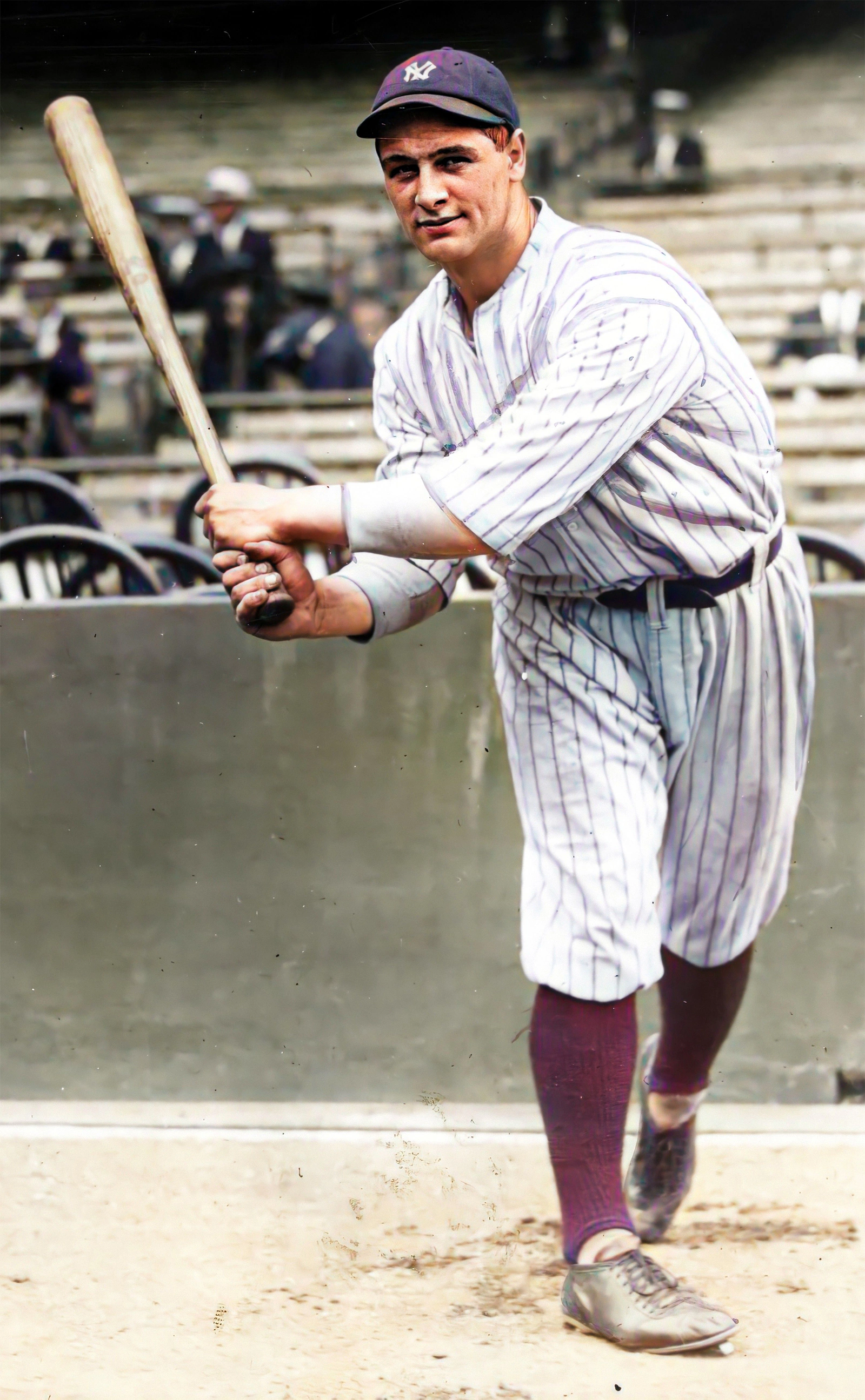
| 5 Quotes | |
| Born as | Henry Louis Gehrig |
| Occup. | Athlete |
| From | USA |
| Born | June 19, 1903 New York City, New York, USA |
| Died | June 2, 1941 Riverdale, Bronx, New York, USA |
| Cause | Amyotrophic lateral sclerosis (ALS) |
| Aged | 37 years |
| Cite | |
Citation Formats
APA Style (7th ed.)
Lou gehrig biography, facts and quotes. (2026, February 11). FixQuotes. https://fixquotes.com/authors/lou-gehrig/
Chicago Style
"Lou Gehrig biography, facts and quotes." FixQuotes. February 11, 2026. https://fixquotes.com/authors/lou-gehrig/.
MLA Style (9th ed.)
"Lou Gehrig biography, facts and quotes." FixQuotes, 11 Feb. 2026, https://fixquotes.com/authors/lou-gehrig/. Accessed 27 Mar. 2026.
Early Life and Background
Henry Louis Gehrig was born on June 19, 1903, in Yorkville on Manhattan's Upper East Side, the son of German immigrants Christina and Heinrich Gehrig. New York at the turn of the century was a city of crowded tenements, factory shifts, and striving families, and the Gehrigs lived close to that grind. His mother, in particular, loomed large - practical, protective, and determined that her only surviving child would not be swallowed by the same precarious labor that had injured and exhausted so many around them.Gehrig grew into an unusually powerful left-handed hitter with a quiet demeanor that could be mistaken for shyness. He worked various jobs as a boy and attended neighborhood schools while playing sandlot ball and for the New York School of Commerce. From the start, teammates noticed the paradox that would define his public life: immense physical force paired with a restrained, almost dutiful personality. That mix would later make him the Yankees' most reliable presence in an age that also prized spectacle and celebrity.
Education and Formative Influences
Gehrig attended Columbia University, recruited for football and baseball, and played first base for coach Frank "Buck" O'Neill. His time at Columbia sharpened the discipline behind his raw strength, but it also clarified his divided loyalties - between an immigrant family's expectations of stability and the pull of professional sport. In 1923, after a famed long home run in a college game against NYU and the persistent attention of scouts, he signed with the New York Yankees, leaving the academic path that had seemed like his mother's safest bet.Career, Major Works, and Turning Points
With the Yankees, Gehrig became the model of daily excellence: he took over at first base in 1925 and soon formed the core of a dynasty alongside Babe Ruth, later Joe DiMaggio, and a deep, well-run organization under manager Miller Huggins and then Joe McCarthy. From 1926 to 1939 he was a fixture in the heart of the order, winning the 1927 and 1936 American League MVP awards, batting .340 lifetime, and setting records for run production that stood as monuments to sustained power. His durability - 2, 130 consecutive games - earned him the name "Iron Horse", but it also trapped him in a personal ethic that equated absence with failure. In 1939 his body began to betray him: weakness, coordination loss, and fading speed that no amount of grit could reverse. Diagnosed with amyotrophic lateral sclerosis, he removed himself from the lineup on May 2, 1939, and delivered his farewell at Yankee Stadium on July 4. He died on June 2, 1941, in Riverdale in the Bronx, only 37, his decline public and yet intensely private.Philosophy, Style, and Themes
Gehrig's style at the plate was economical and devastating - a compact swing built for hard contact, with enough patience to punish mistakes and enough balance to adjust mid-pitch. He was not the loud architect of his own myth; he was, instead, a craftsman who treated baseball as a job to be done correctly every day. That temperament shows in his self-assessment of fielding: “In the beginning I used to make one terrible play a game. Then I got so I'd make one a week and finally I'd pull a bad one about once a month. Now, I'm trying to keep it down to one a season”. The line is funny, but it is also diagnostic - an anxiety harnessed into routine, a belief that mastery is simply errors made rarer through repetition.His inner life reads as a constant negotiation between humility and responsibility. Even at the center of the sport's brightest stage, he measured himself against the team's needs and against the gravitational fame of Ruth: “I'm not a headline guy. I know that as long as I was following Ruth to the plate I could have stood on my head and no one would have known the difference”. That self-effacing stance was not mere modesty; it was a chosen armor that let him focus on the controllable. When age and illness began to erode his gifts, he clung to mental poise as a last line of defense: “The ballplayer who loses his head, who can't keep his cool, is worse than no ballplayer at all”. In Gehrig, calm was not passive - it was an ethic, a way to keep fear from becoming performance.
Legacy and Influence
Gehrig endures as both a statistical titan and a moral symbol: the standard for consistency, for unshowy leadership, and for dignity under catastrophe. The Yankees retired his No. 4 in 1939, and the Hall of Fame elected him in a special vote the same year, recognizing that his life had shifted from season-to-season achievement to something larger - a public lesson in how to face the irreversible. His farewell speech, later paraphrased as "luckiest man", became American shorthand for gratitude amid loss, and ALS itself has long carried his name in public memory. For athletes, he remains the proof that greatness can be built not only on flair but on relentless, quiet competence - and that the hardest opponent may arrive long after the crowd has learned your name.Our collection contains 5 quotes written by Lou, under the main topics: Never Give Up - Sports - Equality - Training & Practice - Teamwork.
Other people related to Lou: Carl Hubbell (Athlete), Paul Waner (Athlete), Teresa Wright (Actress)
Source / external links