
Lou Holtz Biography Quotes 27 Report mistakes
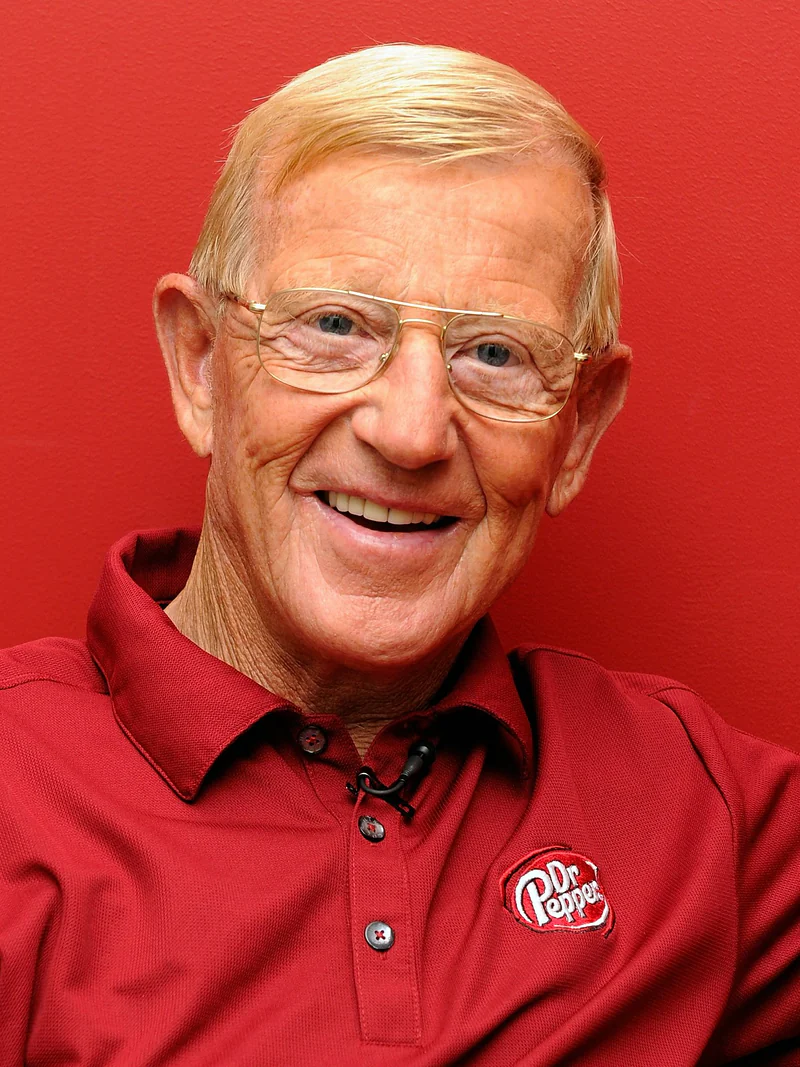
Attr: The New York Times
| 27 Quotes | |
| Born as | Louis Holtz |
| Occup. | Coach |
| From | USA |
| Born | January 6, 1937 Follansbee, West Virginia, USA |
| Age | 89 years |
| Cite | |
Citation Formats
APA Style (7th ed.)
Lou holtz biography, facts and quotes. (2026, February 11). FixQuotes. https://fixquotes.com/authors/lou-holtz/
Chicago Style
"Lou Holtz biography, facts and quotes." FixQuotes. February 11, 2026. https://fixquotes.com/authors/lou-holtz/.
MLA Style (9th ed.)
"Lou Holtz biography, facts and quotes." FixQuotes, 11 Feb. 2026, https://fixquotes.com/authors/lou-holtz/. Accessed 27 Mar. 2026.
Early Life and Background
Louis Leo Holtz was born on January 6, 1937, in Follansbee, West Virginia, and grew up in the hard-edged industrial valley culture along the Ohio River. His family later lived across the river in East Liverpool, Ohio, a pottery town where millwork, church, and high school sports shaped daily life. Small-town football was not entertainment so much as civic glue, and Holtz absorbed early the idea that a team could be a portable family - a refuge, but also a demanding standard.That background also gave him his lifelong suspicion of excuses. In a region where layoffs and setbacks were common, the admired adults were the ones who showed up anyway and carried responsibility without ceremony. Holtz turned that ethic into an identity: restless, exacting, and quick to link personal discipline to public performance. It would become the emotional engine of his coaching - equal parts self-protection and aspiration, a way to keep fear of failure from turning into paralysis.
Education and Formative Influences
Holtz attended Kent State University, where he played center and linebacker and began to see football as an organized language of leverage, timing, and will. After graduation he served as an officer in the U.S. Army, an experience that reinforced hierarchy, preparation, and the habit of turning anxiety into procedures. He entered coaching in the late 1950s and early 1960s, apprenticing as an assistant at programs such as William and Mary, Connecticut, and Ohio State, then under icons at Arkansas, where he learned the craft of recruiting, the politics of big-time college football, and how belief can be coached into young men before it is proven on the field.Career, Major Works, and Turning Points
Holtz became a head coach at William and Mary (1969-1971), then led North Carolina State (1972-1975) and Arkansas (1977-1983), building reputations for rapid turnarounds and volatile intensity, and then entered the NFL with the New York Jets (1976) in a brief, unhappy detour that clarified how deeply his methods depended on shaping an entire campus culture. After further college stops at Minnesota (1984-1985) and a revival at South Carolina (1999-2004), his defining era came at the University of Notre Dame (1986-1996), where he restored the program's national stature and won the 1988 national championship. His teams were known for disciplined special teams, situational awareness, and an insistence that leadership was not a title but a daily behavior - a message he later carried into broadcasting and public speaking after leaving the sideline.Philosophy, Style, and Themes
Holtz coached in an era when college football was becoming television theater and recruiting was becoming a national arms race, and he responded by making culture his competitive advantage. He preached that emotional control was a skill, not a temperament: “Life is ten percent what happens to you and ninety percent how you respond to it”. That line was less a slogan than a self-diagnosis - a way of refusing to let uncertainty, criticism, or a bad Saturday rewrite the inner story. He treated adversity as a proving ground, framing setbacks as information rather than verdicts, and he trained players to interpret pressure as privilege.His style married moral instruction to sharp-edged accountability. Holtz was famous for demanding preparation that outlasted doubt, and for ridiculing the posture of grievance: “The man who complains about the way the ball bounces is likely the one who dropped it”. Underneath that toughness was a paternal, almost pastoral ambition - to turn young athletes into adults who could carry responsibility without performance as their only identity. The ethic was simple, repeated until it became reflex: “Do right. Do your best. Treat others as you want to be treated”. In Holtz's world, character was not separate from winning; it was the only kind of winning that lasted, and it was also his answer to his own anxieties about control, reputation, and the fragility of success.
Legacy and Influence
Holtz remains one of the emblematic American coaches of the late 20th century - a builder of programs, a shaper of locker-room language, and a symbol of the older ideal that football could be a moral classroom without stopping being a ruthless competition. His Notre Dame revival, his later work at South Carolina, and his long second career as a broadcaster and motivational speaker helped fix his voice in the public imagination: urgent, didactic, and practical. Beyond championships, his enduring influence lives in the coaches and players who absorbed his conviction that standards are portable - that you can leave home, lose a game, change jobs, age out of the sideline, and still carry the same demands for effort, accountability, and decency into whatever comes next.Our collection contains 27 quotes written by Lou, under the main topics: Witty One-Liners - Motivational - Ethics & Morality - Wisdom - Sarcastic.
Other people related to Lou: Randy Moss (Athlete)