
Louis Nizer Biography Quotes 10 Report mistakes
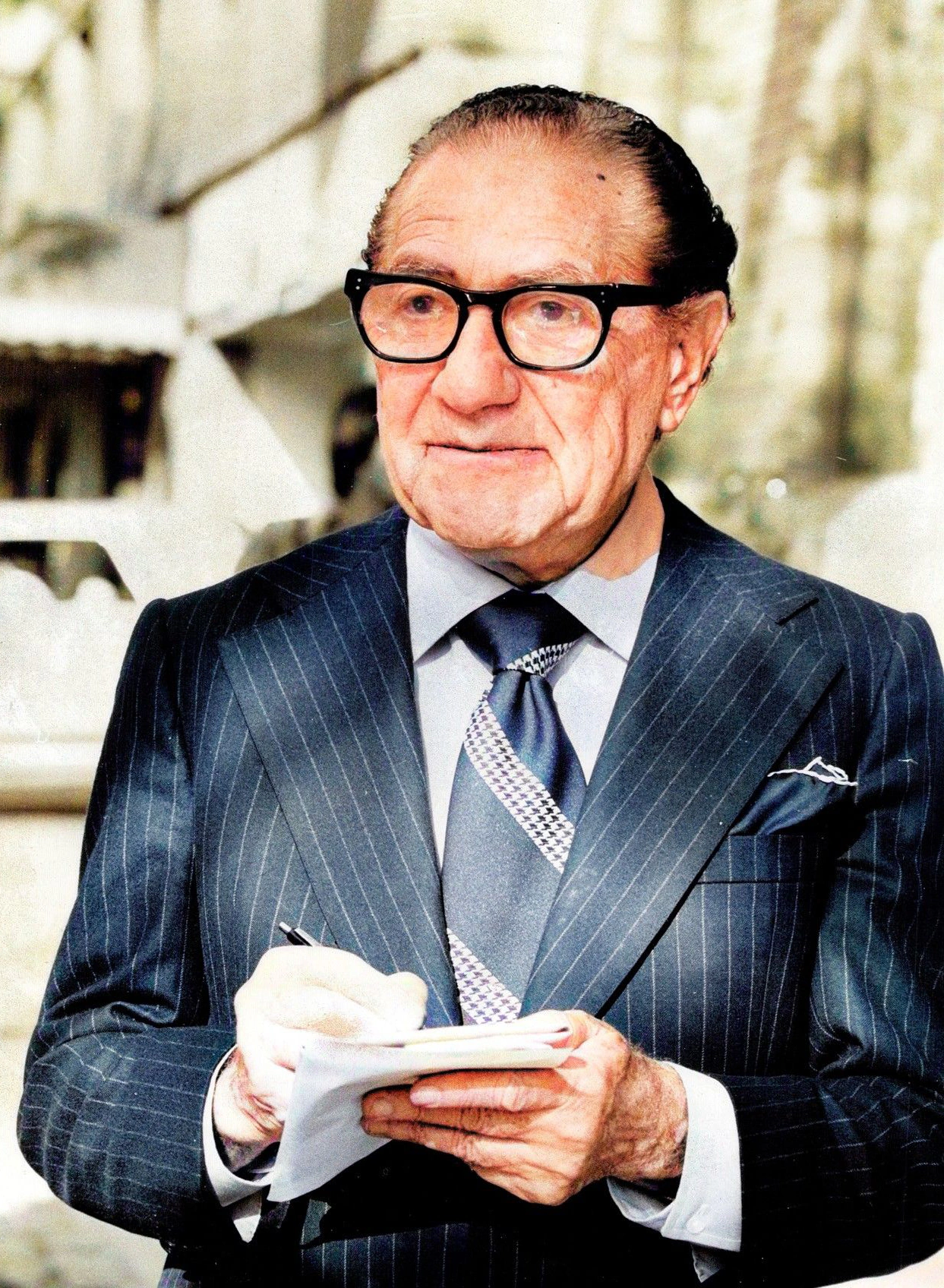
| 10 Quotes | |
| Occup. | Lawyer |
| From | England |
| Born | February 6, 1902 London, England |
| Died | December 9, 1994 New York City, USA |
| Aged | 92 years |
| Cite | |
Citation Formats
APA Style (7th ed.)
Louis nizer biography, facts and quotes. (2026, February 11). FixQuotes. https://fixquotes.com/authors/louis-nizer/
Chicago Style
"Louis Nizer biography, facts and quotes." FixQuotes. February 11, 2026. https://fixquotes.com/authors/louis-nizer/.
MLA Style (9th ed.)
"Louis Nizer biography, facts and quotes." FixQuotes, 11 Feb. 2026, https://fixquotes.com/authors/louis-nizer/. Accessed 28 Mar. 2026.
Early Life and Background
Louis Nizer was born on February 6, 1902, in London, England, into a Jewish family whose prospects were shaped by the pressures and possibilities of an Atlantic age. When he was still a child, his parents left Britain for the United States, part of the larger early-20th-century migration that sought stability and social mobility amid European antisemitism and economic strain. The shift from London to New York was not merely geographical. It placed him in a modern metropolis where newspapers, theater, and the courtroom all competed as public stages, and where an immigrant could learn quickly that language was leverage.Growing up in New York, Nizer absorbed the citys blend of grit and performance: the street-corner argument, the persuasive salesman, the political speech, the headlines that could elevate or ruin reputations overnight. The era trained him to think of public life as contested narrative. That early immersion in argument and image would later become central to his identity as a trial lawyer and public intellectual - someone who treated a case not only as a bundle of facts, but as a story that had to survive scrutiny in open court.
Education and Formative Influences
Nizer proved precocious, graduating from high school young and moving rapidly through higher education at New York University, where he earned degrees before turning to NYU School of Law. He entered the profession as American legal culture was professionalizing and as mass media was expanding the courtroom into a national spectacle. That combination - rigorous doctrine on one hand, a press-hungry public on the other - formed his lifelong preoccupation: how to reconcile due process with the emotional momentum of public opinion, and how to make persuasion ethical without making it bloodless.Career, Major Works, and Turning Points
He built a prominent New York practice, gaining a reputation for cross-examination, disciplined preparation, and an ability to translate complexity into the language of juries. His name became especially associated with major libel and reputation cases and with celebrity and publishing disputes, where the facts were inseparable from the stories people wanted to believe. Beyond the courtroom, he wrote and lectured widely, most famously in the book My Life in Court, which presented trial work as both craft and moral testing ground, and later in the controversial memoir The Implosion Conspiracy, a public bid to interpret a notorious Hollywood tragedy through the tools of adversarial reasoning. Across decades, Nizer moved between private advocacy and public commentary, navigating the mid-century tension between faith in institutions and suspicion that institutions could be gamed by rhetoric.Philosophy, Style, and Themes
Nizers writing and advocacy returned repeatedly to one psychological insight: people often protect their self-image by rejecting uncomfortable truths. “We are slow to believe that which if believed would hurt our feelings”. In court, he treated this not as cynicism but as a practical constraint - jurors, judges, witnesses, and lawyers all carry identities they want to preserve. His strategy was to anticipate the ego defenses that block evidence, then build pathways around them through narrative clarity, incremental proof, and an almost theatrical control of pacing.He also framed law as moral workmanship, refusing to romanticize mere cleverness. “Yes, there's such a thing as luck in trial law but it only comes at 3 o'clock in the morning. You'll still find me in the library looking for luck at 3 o'clock in the morning”. That line is less boast than credo: preparation as self-command, and stamina as the hidden engine of persuasion. At the same time, he argued that advocacy is finally about human repair as much as victory. “Words of comfort, skillfully administered, are the oldest therapy known to man”. Read in context of his career, it suggests a lawyer who understood litigation as an ordeal that fractures dignity - and who saw the skilled advocate as someone who can restore coherence to a clients story, even when the law cannot restore what was lost.
Legacy and Influence
Louis Nizer died on December 9, 1994, after a long public life that helped define the figure of the lawyer-as-author in modern America: a practitioner who not only tries cases but interprets the culture that surrounds them. He left an enduring model of trial craft grounded in exhaustive preparation, psychological realism, and a belief that language can both wound and heal. For later generations of litigators and legal writers, his example reinforced a central lesson of the 20th-century courtroom: facts matter, but the struggle over meaning - who is believed, who is forgiven, and whose version of events survives - is where law meets the inner life.Our collection contains 10 quotes written by Louis, under the main topics: Witty One-Liners - Truth - Art - Kindness - Book.
Source / external links