
Louis Theroux Biography Quotes 6 Report mistakes
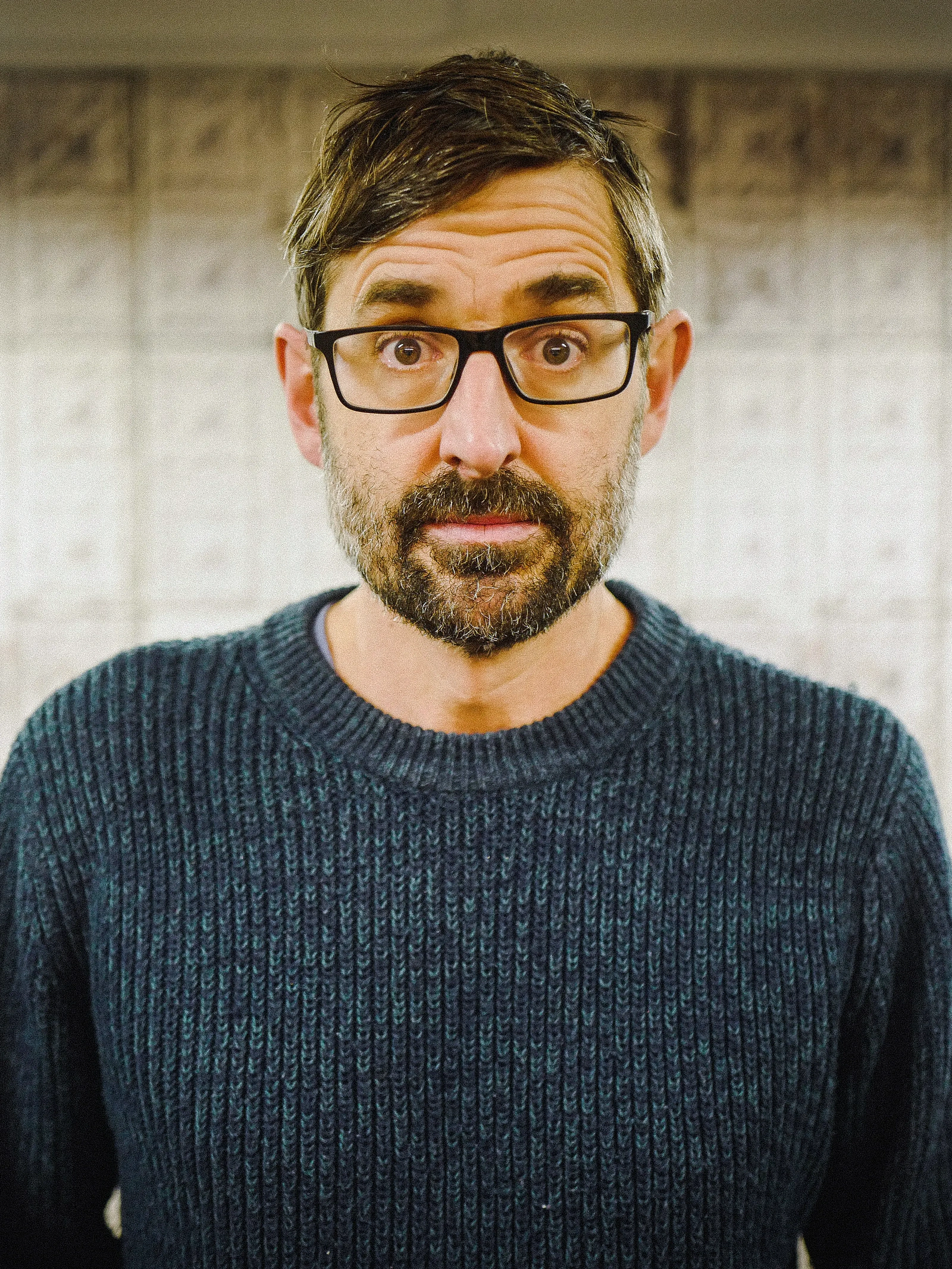
Attr: British GQ
| 6 Quotes | |
| Born as | Louis Sebastian Theroux |
| Occup. | Reporter |
| From | United Kingdom |
| Spouse | Nancy Strang |
| Born | May 20, 1970 Singapore |
| Age | 55 years |
| Cite | |
Citation Formats
APA Style (7th ed.)
Louis theroux biography, facts and quotes. (2026, March 23). FixQuotes. https://fixquotes.com/authors/louis-theroux/
Chicago Style
"Louis Theroux biography, facts and quotes." FixQuotes. March 23, 2026. https://fixquotes.com/authors/louis-theroux/.
MLA Style (9th ed.)
"Louis Theroux biography, facts and quotes." FixQuotes, 23 Mar. 2026, https://fixquotes.com/authors/louis-theroux/. Accessed 24 Mar. 2026.
Early Life and Background
Louis Sebastian Theroux was born on 20 May 1970 in Singapore, where his American father, the travel writer and novelist Paul Theroux, was then living and working. He grew up largely in London in an unusually literary, argumentative household shaped by movement between Britain and the United States. His mother, Anne Castle, was an English teacher; his father came from a prominent American family of writers and public intellectuals, including Louis's uncle Alexander Theroux and his older brother Marcel Theroux, who also became a writer and broadcaster. That inheritance gave him language, irony, and self-scrutiny early, but it also exposed him to the pressures of comparison, masculine performance, and the uneasy overlap between private life and public voice.His childhood was marked by privilege, curiosity, and fracture. The family eventually broke apart after his parents' separation, an experience that sharpened his sense that domestic surfaces often conceal difficult truths. The young Theroux was not the obvious extrovert-frontman type; by many accounts he was observant, cerebral, and awkwardly funny, someone who noticed tension in a room and often converted discomfort into wit. Those traits later became central to his screen persona: the mild questioner whose politeness made other people reveal more than they intended. Long before he entered television, he seemed to understand that intimacy and embarrassment are close relatives, and that modern identity is often a performance carried out under social pressure.
Education and Formative Influences
Theroux was educated at Westminster School, one of Britain's most demanding public schools, and then read modern history at Magdalen College, Oxford, graduating with first-class honors. History trained him to see institutions, belief systems, and social hierarchies not as abstractions but as forces embedded in everyday life. At Oxford he also wrote and edited student journalism, developing the precise, deadpan prose that later migrated into broadcast narration. After university he moved to the United States and worked in local journalism before joining Spy magazine, the satirical New York monthly whose mix of reporting, mockery, and cultural anthropology suited him exactly. A formative period in California expanded his sense of possibility beyond the script he had inherited from family and elite education; America, especially its fringes and self-inventions, became his great reporting field.Career, Major Works, and Turning Points
Theroux's television career began in the 1990s at Michael Moore's TV Nation, where he learned gonzo field reporting and the comic uses of apparent innocence. He soon developed his own method in the BBC series Louis Theroux's Weird Weekends, traveling into subcultures - survivalists, UFO believers, porn performers, wrestling devotees, white supremacists - with a mixture of bafflement, seriousness, and dry humor that made the shows both entertaining and morally searching. He matured further in long-form BBC documentaries including Louis and the Nazis, The Most Hated Family in America, the When Louis Met... profiles, and later a run of more somber films on prisons, sex work, alcoholism, dementia, and psychiatric care. His 2015 film My Scientology Movie was a turning point in visibility and controversy, using reconstruction and meta-documentary tactics to examine secrecy and intimidation. Another major turn came with the feature-length documentaries Savile and Forbidden America, where the playful outsider had become a grave anatomist of power, celebrity, digital extremism, and institutional failure. Across decades, he built one of British television's most distinctive bodies of work: journalism driven less by denunciation than by sustained proximity.Philosophy, Style, and Themes
Theroux's style depends on the productive use of vulnerability. He approaches people not with the hectoring certainty of an exposer but with the unsettling patience of someone willing to sit inside contradiction. His own self-description, “I'm a slightly awkward person, a fearful person, worry-prone”. is not incidental; it is the engine of the work. The awkwardness disarms, the fear keeps him alert to danger and self-deception, and the worry prevents cruelty from hardening into superiority. He has repeatedly shown that interviewing is not simply information extraction but a drama of ego, shame, self-mythology, and need. In that sense his documentaries are studies in misrecognition: people constructing identities before the camera while unintentionally exposing deeper motives.His best films return to the ethics of curiosity. “It's not rude to ask a question. It's rude to expect an answer”. summarizes his method better than any theory of journalism: probe firmly, accept refusal, and let silence reveal as much as speech. Just as central is his observation that “People don't see themselves the way other people see them”. That sentence explains his fascination with extremists, celebrities, offenders, and believers of every kind. He is less interested in catching hypocrisy than in documenting the gap between self-image and social reality. Even when confronting odious subjects, he tends to look for the human process by which people normalize the unacceptable. The result is a body of work that resists both cheap relativism and easy moral theater; it asks how delusion, charisma, loneliness, desire, and institutional permission produce the worlds we inhabit.
Legacy and Influence
Louis Theroux became one of the defining British documentarians of his generation by making seriousness look deceptively casual. His influence can be seen in a whole style of immersive interviewing that blends irony, self-exposure, and moral inquiry, though few imitators match his control of tone. He helped expand television documentary from issue-reporting into a subtler examination of performance, complicity, and the unstable border between observer and participant. In Britain he occupies a rare place: both a recognizable popular figure and a reporter trusted to enter difficult spaces - prisons, cults, online radical milieus, the aftermath of abuse scandals - without surrendering complexity. His work endures because it captures a late-20th- and early-21st-century truth: in media-saturated societies, people are always narrating themselves, and understanding them requires patience, skepticism, and the courage to keep looking after the first explanation fails.Our collection contains 6 quotes written by Louis, under the main topics: Honesty & Integrity - New Beginnings - Mental Health - Anxiety - Respect.
Source / external links