
Louise Brown Biography Quotes 27 Report mistakes
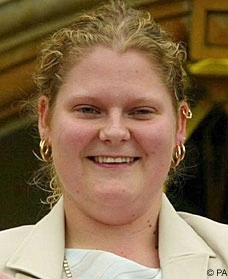
| 27 Quotes | |
| Occup. | Celebrity |
| From | England |
| Born | July 25, 1978 |
| Age | 47 years |
| Cite | |
Citation Formats
APA Style (7th ed.)
Louise brown biography, facts and quotes. (2026, February 15). FixQuotes. https://fixquotes.com/authors/louise-brown/
Chicago Style
"Louise Brown biography, facts and quotes." FixQuotes. February 15, 2026. https://fixquotes.com/authors/louise-brown/.
MLA Style (9th ed.)
"Louise Brown biography, facts and quotes." FixQuotes, 15 Feb. 2026, https://fixquotes.com/authors/louise-brown/. Accessed 23 Mar. 2026.
Early Life and Background
Louise Joy Brown was born on July 25, 1978, in Oldham, Greater Manchester, England, the first human conceived through in vitro fertilization (IVF). Her arrival came after years of infertility for her mother, Lesley Brown, and the determined collaboration of gynecologist Patrick Steptoe and physiologist Robert Edwards, working out of a small program based in and around Oldham and Cambridge. The birth - delivered by cesarean section at Oldham and District General Hospital - was instantly global news, not only for its medical novelty but for what it symbolized: the possibility of parenthood being wrested from biological misfortune by science.From her first days, Brown existed inside two overlapping realities: an ordinary family life in northern England and an extraordinary public narrative that treated her as proof, omen, or controversy. Britain in the late 1970s and 1980s was a country arguing about the limits of technology, faith, and the state; she was pulled into those arguments without choosing them. The attention could be affectionate, intrusive, or suspicious, and it placed unusual pressures on a child expected to represent a future she had not authored.
Education and Formative Influences
Raised primarily away from the institutions that created her, Brown grew up in a working-class household where normal routines mattered as a kind of refuge. She attended local schools, formed friendships under the shadow of recognition, and learned early the difference between being known and being understood. As the first "test-tube baby", she became a living case study during the very decades in which IVF shifted from scandal to standard practice, and the changing tone of public debate - from alarm to acceptance - shaped her sense of privacy and control.Career, Major Works, and Turning Points
Brown did not build fame through performance or art; she inherited celebrity through biography, becoming a frequent subject of documentaries, interviews, and commemorations of reproductive medicine. A key turning point arrived as IVF became widespread: the public story gradually stopped being about a singular miracle and became about a growing community of families. Another was her decision to claim an ordinary adulthood - work, marriage, and motherhood - on her own terms, refusing to remain a perpetual symbol. In adulthood she has participated selectively in public events tied to fertility medicine, balancing gratitude for the science involved with insistence on personal boundaries.Philosophy, Style, and Themes
Brown's public voice, when she has chosen to use it, is marked by pragmatism rather than spectacle. She has described how childhood curiosity about her origins eventually yielded to the steadying weight of everyday life: “I used to think about how I was conceived quite a lot when I was about 10 or 11, but I don't think about it at all now that so many other babies have been born in the same way”. Psychologically, the sentence is less about forgetting than about integration - a rare life event absorbed into identity until it no longer dominates. The "so many other babies" clause is also moral relief: uniqueness can be a burden, and normalization can be a kind of liberation.At the same time, her experience illuminates a modern dilemma: to be recognized without being known. She has noted the peculiar social blur of accidental fame - “People still come up to me and ask whether I am Louise Brown or if they've seen me somewhere else before”. That small uncertainty captures the texture of her celebrity: she is both specific and symbolic, a person mistaken for an idea. Her counsel toward individuality - “Remember that what you have is unique because it's your own special way of looking at the world”. - reads like self-defense transmuted into principle, a way of insisting that identity is more than origin, and that a life should not be reduced to the method by which it began.
Legacy and Influence
Brown's enduring influence lies less in any single public act than in what her existence made imaginable: the shift of IVF from ethical flashpoint to established medicine, and the redefinition of family-making across class, religion, and national borders. As the first person born from a technique that has since enabled millions of births, she stands at a hinge in late-20th-century history, when biomedical innovation began to reach into the most intimate parts of ordinary life. Her long, deliberately ordinary adulthood has become part of the legacy too - a quiet argument that scientific breakthroughs are ultimately measured not by headlines, but by the livable human lives that follow.Our collection contains 27 quotes written by Louise, under the main topics: Witty One-Liners - Wisdom - Never Give Up - Music - Writing.
Source / external links