
Ludovit Stur Biography Quotes 2 Report mistakes
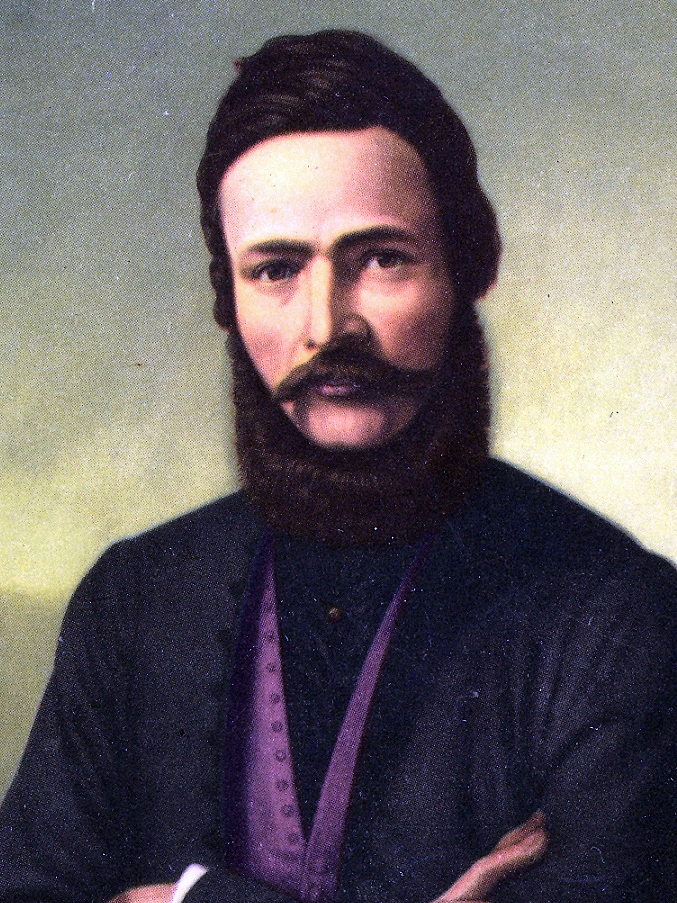
| 2 Quotes | |
| Native name | Ľudovít Štúr |
| Occup. | Politician |
| From | Slovakia |
| Born | October 28, 1815 Uhrovec, Trenčín County, Kingdom of Hungary |
| Died | January 12, 1856 Modra, Kingdom of Hungary |
| Cause | Injuries from an accidental gunshot wound sustained during a hunting accident |
| Aged | 40 years |
| Cite | |
Citation Formats
APA Style (7th ed.)
Ludovit stur biography, facts and quotes. (2026, March 8). FixQuotes. https://fixquotes.com/authors/ludovit-stur/
Chicago Style
"Ludovit Stur biography, facts and quotes." FixQuotes. March 8, 2026. https://fixquotes.com/authors/ludovit-stur/.
MLA Style (9th ed.)
"Ludovit Stur biography, facts and quotes." FixQuotes, 8 Mar. 2026, https://fixquotes.com/authors/ludovit-stur/. Accessed 8 Mar. 2026.
Early Life and Background
Ludovit Stur was born on 28 October 1815 in Uhrovec, in the Kingdom of Hungary within the Habsburg monarchy, and died on 12 January 1856 in Modra. He emerged from a Lutheran family in a multilingual, politically unequal world in which Slovaks lived without a state of their own and under strong Magyar political pressure. His father, Samuel Stur, was a teacher, and the household joined piety, discipline, and literacy with an awareness that language was not merely a tool of speech but a badge of dignity. The region around Trencin, where German, Hungarian, Czech, and Slovak influences met, gave him early experience of imperial complexity and social hierarchy.That setting shaped both his ambition and his temperament. Stur was not simply a romantic nationalist carried away by sentiment; he was formed by the practical humiliations of a people excluded from higher administration, schools, and public prestige. He belonged to the generation that came after Jan Kollar and Pavel Jozef Safarik, inheriting Slavic reciprocity yet confronting harsher political realities in the 1830s and 1840s. His inner life combined moral earnestness with severity. Friends and followers saw reserve, self-command, and an almost ascetic devotion to mission. He never built a domestic life around marriage or family; instead he converted personal solitude into public purpose, making national service the organizing principle of his identity.
Education and Formative Influences
He studied at the Lutheran Lyceum in Pressburg - today's Bratislava - the chief training ground of the Slovak Protestant intelligentsia. There he became active in the Czecho-Slav Society and came under the influence of Czech and Slovak literary culture, Enlightenment political thought, biblical rhetoric, and German idealism. He also studied at the University of Halle in 1838-1840, where he encountered modern philosophy, history, linguistics, and journalism in a broader European frame. The experience sharpened his sense that nations were historical actors, not folkloric remnants. Equally decisive was the example of Kollar's cultural Pan-Slavism, which he admired but gradually revised. Stur concluded that Slovaks could not survive by borrowing Czech literary norms indefinitely; they needed their own codified standard, their own press, and political spokesmen capable of acting inside the Hungarian diet and against Magyarization.Career, Major Works, and Turning Points
By the early 1840s Stur had become the central organizer of the Slovak national movement. Removed from his teaching post at the Pressburg Lyceum in 1843 because of his activism, he turned repression into momentum. In 1843, with Jozef Miloslav Hurban and Michal Miloslav Hodza, he agreed on the codification of literary Slovak based largely on central Slovak dialects - a foundational act in modern Slovak history. He edited the Slovenskje narodne novini and its literary supplement Orol tatranski from 1845, giving the movement a modern public voice. As a deputy to the Hungarian diet in 1847-1848 for Zvolen, he argued for civil liberties while denouncing the exclusion of non-Magyar peoples. During the revolutions of 1848 he helped formulate Slovak demands and participated in the Slovak volunteer campaign aligned with Vienna against the Hungarian revolutionary government, a choice that revealed both his tactical realism and the tragedy of small-nation politics. His major writings include Narodie a svet slovensky, the poetry collection Spevy a piesne, and the late political treatise Slovanstvo a svet buducnosti, written in the 1850s and published posthumously. After the failure of revolutionary hopes and the disappointments of neo-absolutism, he withdrew increasingly into reflection. A hunting accident in late 1855 led to the wound from which he died in Modra.Philosophy, Style, and Themes
Stur's thought joined language reform, moral idealism, historical pessimism, and a sacrificial concept of leadership. He believed a nation existed most fully when its speech became literature, journalism, education, and political claim. That conviction made codification for him less a philological exercise than an act of rescue. His prose is urgent, compressed, and prophetic; even when arguing policy, he sounds like a man trying to awaken a sleeping people before time runs out. He distrusted passivity, social vanity, and elite compromise. The recurring emotional undertone of his writings is disciplined anxiety - the fear that delay, imitation, or dependence would dissolve the Slovaks into stronger cultures before they achieved self-consciousness.At the same time, Stur's nationalism was framed by metaphysical and civilizational ideas. “The Creator has inscribed by the stars the statute of Love, and by the eternal course of His decrees through eternity has ordained its potence”. That sentence reveals a religious cast of mind in which politics remained answerable to providence and moral law. Yet his later political vision darkened under the pressure of 1848's failures and the stubborn structure of empire. “It is as clear as day that if the majority of her nations, the Slavs among them, were to turn against her, it would no longer be possible for her to resist them, and Austria would disappear from the face of the earth”. Here the tone is not merely analytical but apocalyptic, showing how he came to see the Habsburg monarchy as unstable unless it recognized its Slavic peoples. His psychology moved between faith and foreboding: he longed for harmony among nations, but he increasingly expected history to be decided by collective force, not benevolence.
Legacy and Influence
Stur remains one of the principal architects of modern Slovak identity - at once linguist, journalist, parliamentarian, and mythic patriot. The codified Slovak language associated with his name became the basis for national literature, education, and later statehood. Generations of Slovak activists, from the late 19th-century national revival through the 20th century, treated him as a founder because he converted scattered cultural feeling into institutions and program. His legacy is not without tension: his later Russophile leanings and austere nationalism have prompted debate, and some of his political judgments were shaped by the desperation of a stateless minority in an age of empires. Even so, his historical stature endures because he gave the Slovaks a modern vocabulary for selfhood. In him, biography and national awakening are inseparable: the solitary Lutheran intellectual from Uhrovec became the voice through which a people insisted on being named.Our collection contains 2 quotes written by Ludovit.
Source / external links