
Ludwig Mies van der Rohe Biography Quotes 9 Report mistakes
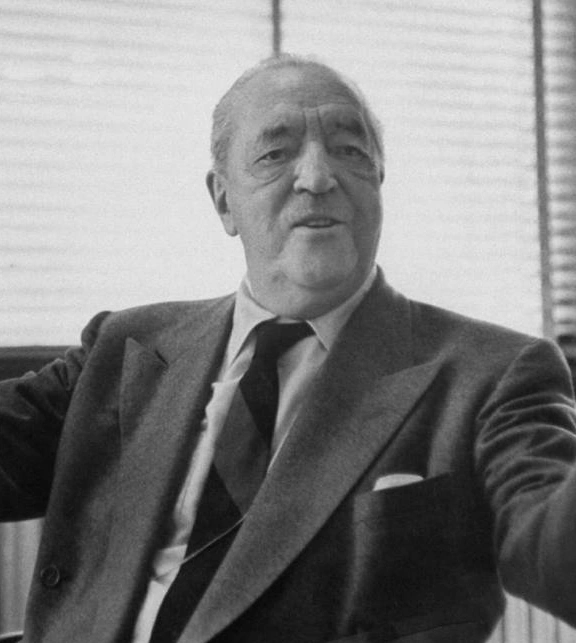
| 9 Quotes | |
| Born as | Maria Ludwig Michael Mies |
| Occup. | Architect |
| From | USA |
| Born | March 27, 1886 Aachen, Kingdom of Prussia, German Empire |
| Died | August 17, 1969 Chicago, Illinois, U.S. |
| Aged | 83 years |
| Cite | |
Citation Formats
APA Style (7th ed.)
Ludwig mies van der rohe biography, facts and quotes. (2026, February 11). FixQuotes. https://fixquotes.com/authors/ludwig-mies-van-der-rohe/
Chicago Style
"Ludwig Mies van der Rohe biography, facts and quotes." FixQuotes. February 11, 2026. https://fixquotes.com/authors/ludwig-mies-van-der-rohe/.
MLA Style (9th ed.)
"Ludwig Mies van der Rohe biography, facts and quotes." FixQuotes, 11 Feb. 2026, https://fixquotes.com/authors/ludwig-mies-van-der-rohe/. Accessed 5 Mar. 2026.
Early Life and Background
Maria Ludwig Michael Mies was born on 1886-03-27 in Aachen, then in the German Empire, the son of a stonemason and builder. He grew up amid the material facts of construction - brick, mortar, cut stone, and the pride of craft. That early proximity to making things, and to the quiet discipline of the workshop, became a lifelong counterweight to architectural grandstanding. Even before he had a theory, he had a temperament: reserved, exacting, drawn to order, and alert to how dignity can be built into ordinary surfaces.In his early twenties he began calling himself Ludwig Mies van der Rohe, a self-fashioning that signaled ambition as well as a desire for distance from provincial expectations. The new name read like a manifesto - cosmopolitan, controlled, slightly aristocratic - and it matched the persona he cultivated: the architect as a modern classicist. Behind it was a man who watched the rapid industrialization of cities and the social churn before World War I, sensing that architecture would need to find a new calm inside modern speed.
Education and Formative Influences
Mies did not follow a conventional academic route; instead he learned through practice in Berlin, first in workshops and offices and then under major figures who shaped his eye and ethics. His period with Peter Behrens connected him to a circle that included Walter Gropius and Le Corbusier and exposed him to the emerging alliance of industry, design, and corporate patronage. From these years he absorbed both the classical lessons of proportion and the modern lessons of standardization, arriving at an ideal of architecture as precise, structural, and culturally consequential rather than merely decorative.Career, Major Works, and Turning Points
After early residential work in Germany, Mies became a central voice of European modernism, and in 1930 he was appointed director of the Bauhaus, attempting to steer the embattled school through political hostility until its closure under Nazi pressure in 1933. He left Germany and in 1938 relocated to the United States, where he led the architecture program at the Armour Institute of Technology (later Illinois Institute of Technology) in Chicago and reshaped American architectural education around rigor and constructive clarity. His built legacy includes the Barcelona Pavilion (1929) and Tugendhat House in Brno (1930) in Europe, and in the US the IIT campus plan and buildings (from the 1940s), the Farnsworth House in Plano, Illinois (completed 1951), 860-880 Lake Shore Drive in Chicago (1951), the Seagram Building with Philip Johnson in New York (1958), and the late Neue Nationalgalerie in Berlin (1968). Across wars, exile, and a new continent, his turning point was the decision to treat steel-and-glass modernity not as novelty but as a new classic order.Philosophy, Style, and Themes
Mies pursued an architecture of restraint that was never meant to feel thin. He sought a disciplined frame, exact junctions, and materials allowed to be themselves - steel reading as steel, glass reading as glass. The famous aphorism “Less is more”. was less a slogan than a personal safeguard against sentimentality: a way to keep feeling from leaking into indulgence. In his hands, reduction was not an aesthetic trick but an ethical method, as if the only honest beauty was the one that could survive the removal of everything unnecessary.Yet his minimalism was rooted in obsession, not emptiness. “God is in the details”. That sentence captures his inner life: the controlled intensity of a man who trusted the small decision - the joint, the reveal, the alignment - to carry the building's moral weight. At the same time, he framed architecture as a public act, not merely private taste: “Architecture is the will of an epoch translated into space”. The glass tower and the open plan were, for him, not futuristic costumes but spatial answers to modern institutions, modern labor, and modern transparency - even when those ideals collided with the complexities of lived privacy, as critics noted in the case of the Farnsworth House.
Legacy and Influence
Mies died on 1969-08-17 in Chicago, by then a defining architect of the 20th century and a major shaper of the international style in the United States. His influence runs through the corporate skyline, the modern museum, and the studio culture of architecture schools that teach structure as an intellectual system. Admirers see in his work a hard-won serenity, a classicism made from industrial means; detractors argue that his language became a corporate default. Either way, the enduring "Miesian" lesson is that modern architecture can be both radical and conservative at once - radical in its stripping away of convention, conservative in its belief that order, proportion, and meticulous construction are the true carriers of cultural value.Our collection contains 9 quotes written by Ludwig, under the main topics: Witty One-Liners - Ethics & Morality - Wisdom - Art - Learning.