
Ludwig Wittgenstein Biography Quotes 48 Report mistakes
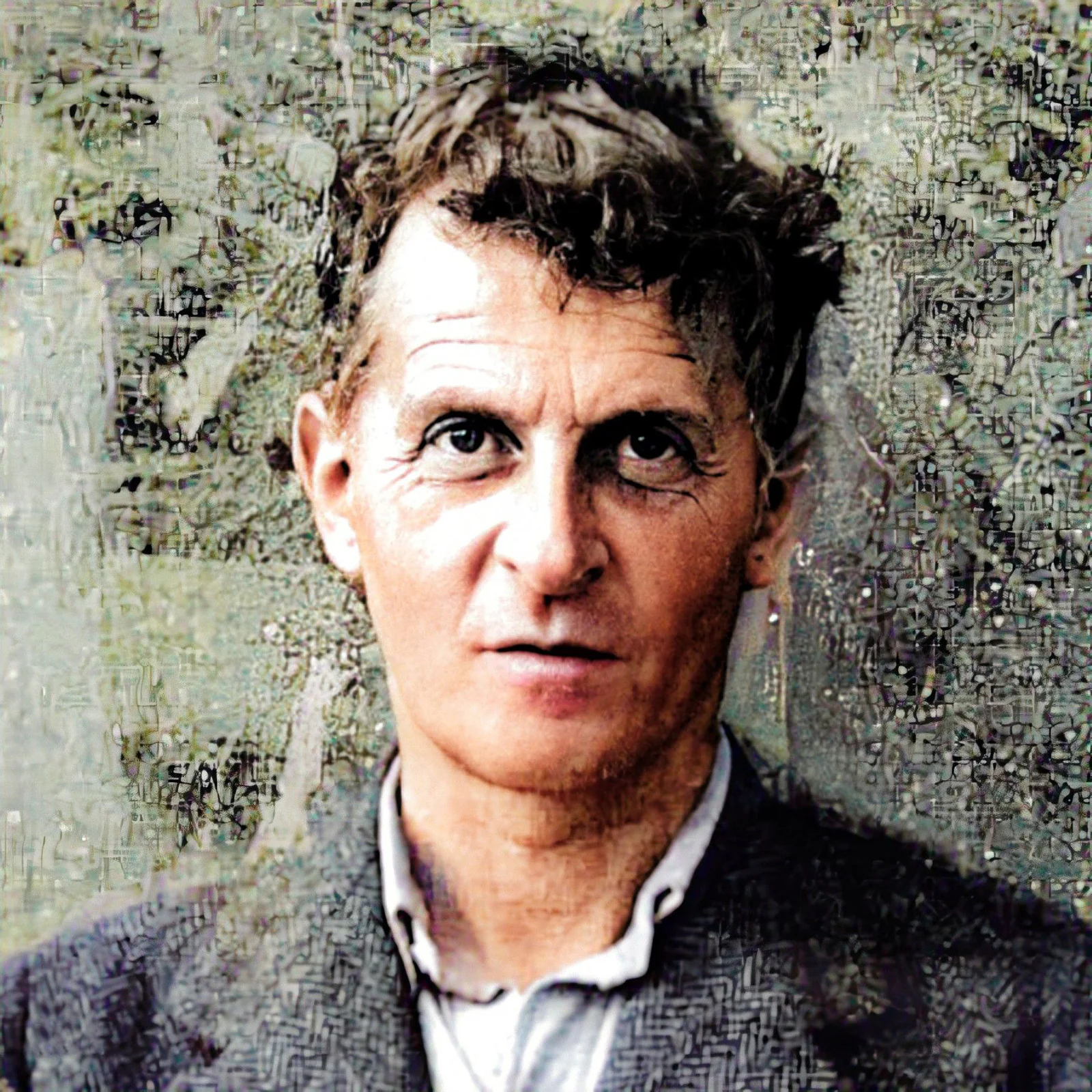
| 48 Quotes | |
| Born as | Ludwig Josef Johann Wittgenstein |
| Occup. | Philosopher |
| From | Austria |
| Born | April 26, 1889 Vienna, Austria-Hungary |
| Died | April 29, 1951 Cambridge, England, United Kingdom |
| Cause | Prostate cancer |
| Aged | 62 years |
| Cite | |
Citation Formats
APA Style (7th ed.)
Ludwig wittgenstein biography, facts and quotes. (2026, February 11). FixQuotes. https://fixquotes.com/authors/ludwig-wittgenstein/
Chicago Style
"Ludwig Wittgenstein biography, facts and quotes." FixQuotes. February 11, 2026. https://fixquotes.com/authors/ludwig-wittgenstein/.
MLA Style (9th ed.)
"Ludwig Wittgenstein biography, facts and quotes." FixQuotes, 11 Feb. 2026, https://fixquotes.com/authors/ludwig-wittgenstein/. Accessed 5 Mar. 2026.
Early Life and Background
Ludwig Josef Johann Wittgenstein was born on 1889-04-26 in Vienna, Austria-Hungary, into one of the empire's richest industrial families. His father, Karl Wittgenstein, dominated Austro-Hungarian steel, while his mother, Leopoldine (Poldi), made the home a salon where Brahms and Mahler were not distant names but living presences. Yet the splendor had a claustrophobic edge: intense expectations, perfectionism, and a household atmosphere in which brilliance was assumed and weakness quietly punished. Several of Ludwig's brothers died by suicide, a family tragedy that cast a long shadow over his own stark moral seriousness and recurrent desire to renounce comfort.The Vienna of his youth was a city of glittering culture and subterranean crisis - nationalism, antisemitism, and the fraying of liberal certainties alongside avant-garde art and new sciences. Wittgenstein grew up amid this paradox and internalized it as a personal problem: how to live cleanly in a world that seems conceptually and ethically confused. From early on he showed an engineer's temperament and a monk-like self-demand, alternating between exacting technical focus and bouts of self-reproach that made ordinary ambition feel morally suspect.
Education and Formative Influences
After schooling in Linz, Wittgenstein studied engineering in Berlin and then at the University of Manchester, working on aeronautics and propeller design. Mathematics drew him toward logic, and by 1911 he went to Cambridge to study with Bertrand Russell, quickly impressing him with a ferocious intensity that made philosophy feel less like a profession than a trial of conscience. He read Frege and met him in Jena, absorbed the spirit of late imperial scientific rigor, and then, in the outbreak of World War I, volunteered for the Austro-Hungarian army. The war years were decisive: in the trenches and on the Eastern and Italian fronts, he drafted the notes that would become his first masterpiece, fusing logical austerity with a nearly religious sense that the deepest matters are those that refuse formulation.Career, Major Works, and Turning Points
Captured in 1918 and completing his book as a prisoner of war, Wittgenstein published the Tractatus Logico-Philosophicus in 1921-22, a compressed system proposing that propositions picture facts and that logic shows the limits of sense. Believing he had solved philosophy, he gave away much of his inheritance, taught as a village schoolmaster in Lower Austria, worked as a gardener's assistant in a monastery, and designed a severe modernist house in Vienna for his sister Margarethe with architect Paul Engelmann. Dissatisfied, he returned to Cambridge in 1929, earned a PhD with the Tractatus, and slowly dismantled his earlier outlook through lectures and notebooks that culminated in the posthumous Philosophical Investigations (1953), with related works such as the Blue and Brown Books, Remarks on the Foundations of Mathematics, and On Certainty. During World War II he worked in British hospitals as a porter and laboratory assistant; in his final years, marked by cancer and relentless revision, he wrote as if clarity were a moral debt.Philosophy, Style, and Themes
Wittgenstein's early philosophy sought a crystalline boundary: what can be said with sense and what can only be shown. Its famous ethical pressure point is his insistence that “Whereof one cannot speak, thereof one must be silent”. For him this was not a polite caution but a spiritual discipline: the temptation to talk past the limits of language is also the temptation to counterfeit understanding, to replace life with rhetoric. Even when he later rejected the Tractatus' architecture, he retained its ascetic impulse - a demand that thought be answerable to what we can actually do with words in the world.The later work turns from logical idealization to ordinary practices, treating meaning as use and philosophical problems as knots tied by grammar. His style mirrors his aim: remarks, questions, examples, abrupt reversals - writing that stages therapy rather than system. He insisted that “An inner process stands in need of outward criteria”. , pressing against the fantasy that private mental items can ground public meaning. This concern with criteria also shapes his view of persons: “The human body is the best picture of the human soul”. The psyche is not a hidden object so much as a pattern lived in expressions, reactions, and forms of life. Underneath lies his severe self-scrutiny, a fear of intellectual vanity and moral evasion, as if every philosophical sentence risked becoming a lie to oneself.
Legacy and Influence
Wittgenstein died in Cambridge on 1951-04-29, having transformed 20th-century philosophy twice: first by helping set the agenda for logical positivism and analytic rigor, then by undercutting the very picture of language that fueled it. Philosophical Investigations reshaped debates on meaning, mind, rule-following, and skepticism, influencing figures from G.E.M. Anscombe and Norman Malcolm to Stanley Cavell, as well as linguistics, anthropology, psychotherapy, and literary theory. His life - renunciation and return, engineering exactness and prophetic intensity - became part of the reception: a philosopher for whom clarity was not cleverness but conscience, and for whom the hardest work was to bring words back from metaphysical temptation to the everyday ground where human beings actually live.Our collection contains 48 quotes written by Ludwig, under the main topics: Witty One-Liners - Motivational - Wisdom - Truth - Art.
Other people related to Ludwig: Karl Kraus (Writer), Iris Murdoch (Author), Saul Kripke (Philosopher), Avrum Stroll (Educator), Charles D. Broad (Philosopher), J. L. Austin (Philosopher), Rudolf Carnap (Philosopher), Georg Trakl (Poet), Bruce Nauman (Sculptor), William Gass (Writer)
Ludwig Wittgenstein Famous Works
- 1978 Remarks on the Foundations of Mathematics (Book)
- 1969 On Certainty (Book)
- 1958 The Blue and Brown Books (Book)
- 1953 Philosophische Untersuchungen (Book)
- 1921 Tractatus Logico-Philosophicus (Book)