
Luis Palau Biography Quotes 6 Report mistakes
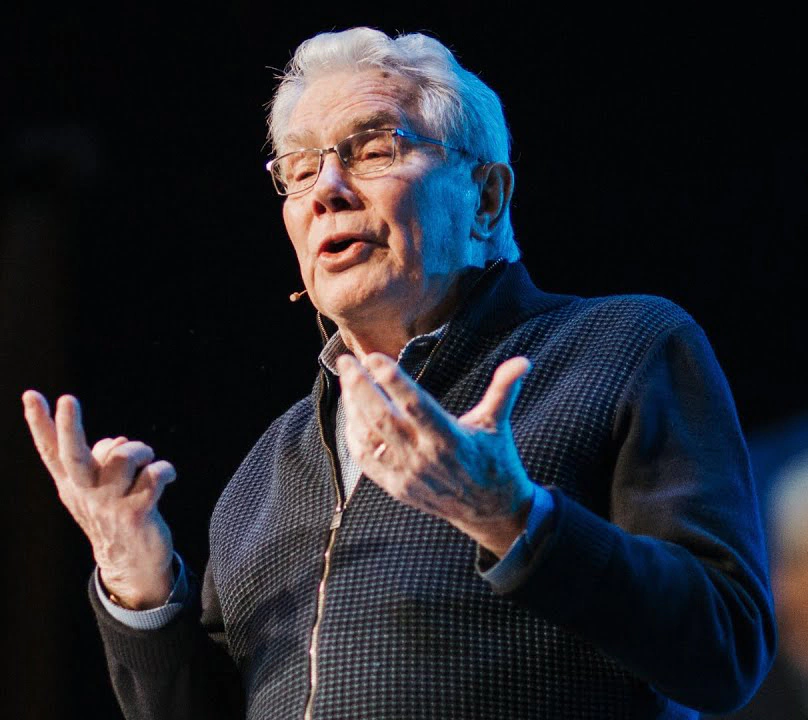
| 6 Quotes | |
| Born as | Luis Palau Jr. |
| Occup. | Clergyman |
| From | Argentina |
| Spouse | Patricia Palau |
| Born | November 27, 1934 Buenos Aires, Argentina |
| Died | March 11, 2021 Portland, Oregon, U.S. |
| Aged | 86 years |
| Cite | |
Citation Formats
APA Style (7th ed.)
Luis palau biography, facts and quotes. (2026, February 11). FixQuotes. https://fixquotes.com/authors/luis-palau/
Chicago Style
"Luis Palau biography, facts and quotes." FixQuotes. February 11, 2026. https://fixquotes.com/authors/luis-palau/.
MLA Style (9th ed.)
"Luis Palau biography, facts and quotes." FixQuotes, 11 Feb. 2026, https://fixquotes.com/authors/luis-palau/. Accessed 6 Mar. 2026.
Early Life and Background
Luis Palau Jr. was born on November 27, 1934, in Argentina, into a middle-class immigrant milieu shaped by European roots and the volatility of a nation swinging between democratic hopes and populist upheaval. He grew up in a Spanish-speaking Protestant minority, a position that demanded clarity about identity and belief in a largely Catholic culture. That outsider status later became an advantage: Palau learned early to translate faith across cultural boundaries and to speak plainly to people who did not share his assumptions.His father died when Luis was a boy, a loss that forced maturity and intensified the practical, family-centered piety that would mark his preaching. In the 1940s and 1950s, Argentina was defined by Juan Peron, labor politics, and social polarization, but Palau's private world centered on grief, responsibility, and a hunger for certainty. Those pressures helped produce a clergyman who spoke about conversion not as a theory but as an event that could reorder a life under strain.
Education and Formative Influences
Palau attended local schooling and became active in evangelical circles where Bible teaching, youth ministry, and visiting evangelists offered a larger map of the world than his neighborhood provided. A decisive influence was the evangelistic model of Billy Graham, whose combination of clear proclamation and public-scale organization suggested a vocation that was both spiritual and logistical. By his late teens Palau was preaching and learning how to structure campaigns, raise support, and build teams - the early architecture of a ministry that would eventually operate on several continents.Career, Major Works, and Turning Points
In the late 1950s Palau moved to the United States, enrolling at Multnomah School of the Bible in Portland, Oregon, and then joining the Billy Graham Evangelistic Association, where he absorbed modern mass-evangelism methods: disciplined messaging, rigorous follow-up, and credibility through personal integrity. He later founded the Luis Palau Association (based in the Portland area), leading large evangelistic festivals and citywide outreaches across Latin America, North America, and beyond, while also building a major media presence in Spanish and English. He became known for accessible preaching, civic partnerships, and a pragmatic insistence that proclamation be accompanied by visible service - initiatives that linked churches, volunteers, and local authorities in an era when evangelicalism was learning to navigate urbanization, immigration, and the media age. Palau wrote widely read Christian books, appeared frequently on radio and television, and remained a high-profile evangelist until Parkinson's disease narrowed his public life; he died on March 11, 2021, after years of family-supported ministry continuity.Philosophy, Style, and Themes
Palau's inner life was organized around urgency: the conviction that the human heart could pivot quickly, and that delay was spiritually dangerous. His preaching returned repeatedly to the shock of grace as a lived interruption, not a slow self-improvement project: “One encounter with Jesus Christ is enough to change you, instantly, forever”. That sentence captures his psychological center - a man shaped by early loss, who trusted decisive moments because he knew how abruptly life can change.At the same time, he did not romanticize the Christian life. He spoke as a realist about fatigue, temptation, and the long grind of public ministry, urging strength rather than escape: “When you face the perils of weariness, carelessness, and confusion, don't pray for an easier life. Pray instead to be a stronger man or woman of God”. His evangelistic theology was similarly non-negotiable, framed less as a personal preference than as obedience: “Evangelism is not an option for the Christian life”. The mix - instant conversion, long endurance, and compulsory witness - explains his style: simple vocabulary, direct appeals, and a steady pressure toward decision, all delivered with the warmth of a pastor and the precision of an organizer.
Legacy and Influence
Palau helped normalize a transnational, bilingual evangelical voice: Argentine by birth, North American by institutional base, and Latin American in affect and cadence, he modeled how to speak across class and culture without losing theological clarity. His association trained leaders, produced media, and staged city-focused campaigns that influenced later festival models blending proclamation with social action, and he offered countless churches a template for collaboration beyond denominational silos. In the public memory he remains a bridge figure - between Graham-era crusade evangelism and contemporary urban outreach, between Spanish-speaking Pentecostal fervor and broadly evangelical networks - and his enduring impact rests on the confidence he gave ordinary believers that witness is both possible and required, even when life is hard.Our collection contains 6 quotes written by Luis, under the main topics: Ethics & Morality - Faith - God - Prayer.
Source / external links