
Lynden Oscar Pindling Biography Quotes 7 Report mistakes
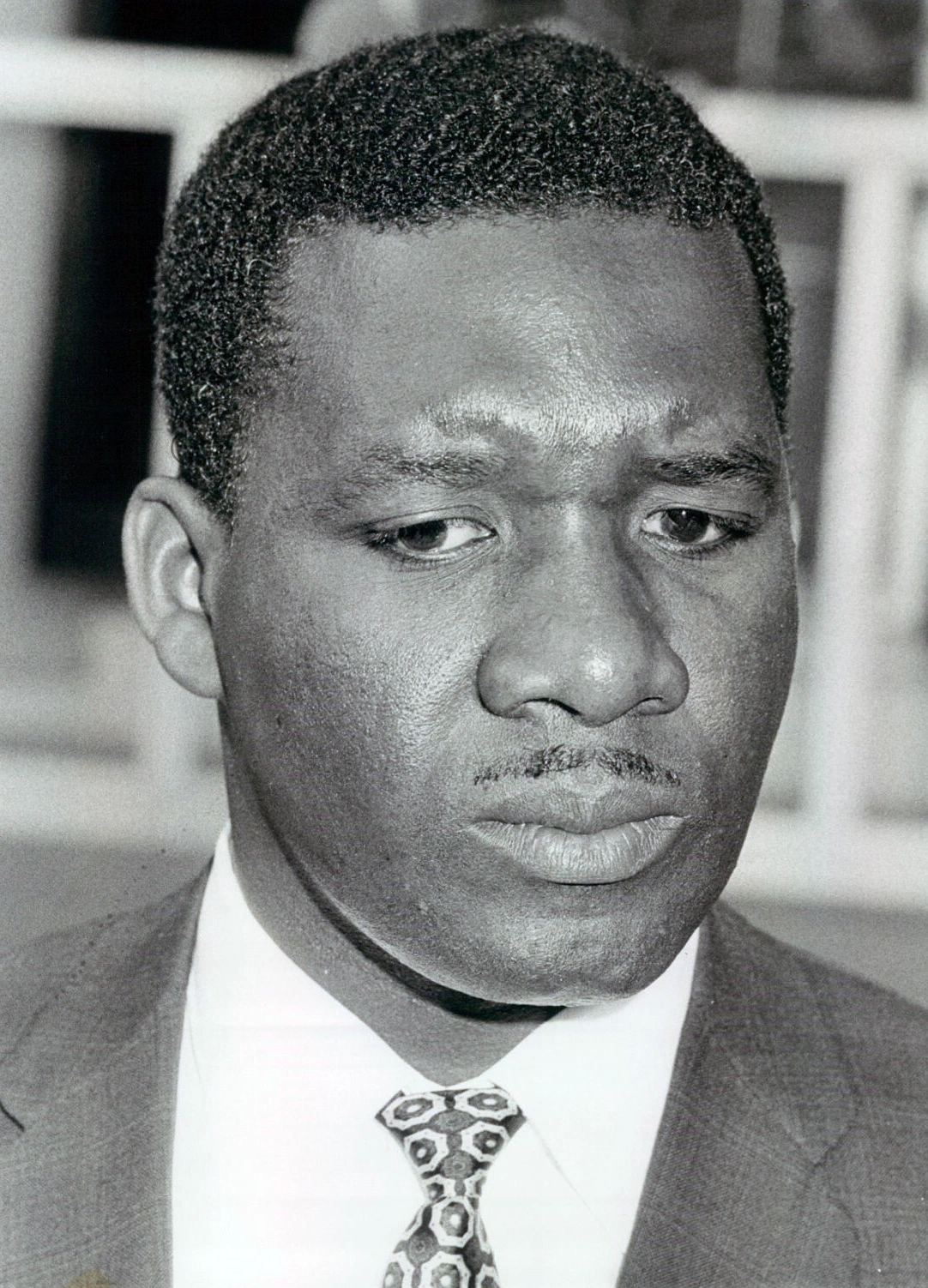
| 7 Quotes | |
| Known as | Sir Lynden Oscar Pindling |
| Occup. | Statesman |
| From | Bahamas |
| Spouse | Marguerite McKenzie |
| Born | March 22, 1930 Nassau, New Providence, Bahamas |
| Died | August 26, 2000 Nassau, Bahamas |
| Cause | Prostate cancer |
| Aged | 70 years |
| Cite | |
Citation Formats
APA Style (7th ed.)
Lynden oscar pindling biography, facts and quotes. (2026, February 16). FixQuotes. https://fixquotes.com/authors/lynden-oscar-pindling/
Chicago Style
"Lynden Oscar Pindling biography, facts and quotes." FixQuotes. February 16, 2026. https://fixquotes.com/authors/lynden-oscar-pindling/.
MLA Style (9th ed.)
"Lynden Oscar Pindling biography, facts and quotes." FixQuotes, 16 Feb. 2026, https://fixquotes.com/authors/lynden-oscar-pindling/. Accessed 28 Mar. 2026.
Early Life and Background
Lynden Oscar Pindling was born on March 22, 1930, in Nassau, New Providence, in the British colony of the Bahamas. He grew up in a segregated, class-stratified society where political power and commercial life were dominated by a small white merchant elite, while most Black Bahamians had limited access to opportunity. That imbalance was not abstract to him - it was visible in neighborhoods, schools, and hiring lines, and it helped form a personality that read politics as an argument about dignity as much as about policy.Raised in an Anglican household and shaped by the moral vocabulary of church life, Pindling developed an early sense that authority had to answer to a higher standard than convenience. Friends and later rivals alike noted his discipline and his appetite for detail, traits that made him effective in the tight, personal politics of Nassau. By the time he entered public life, he already carried a two-track ambition: to elevate the condition of ordinary Bahamians and to prove that a majority-Black electorate could govern itself with competence.
Education and Formative Influences
Pindling was educated at Government High School in Nassau and then studied law in London, training at the Inner Temple and being called to the Bar before returning home to practice. Exposure to postwar Britain, where decolonization debates and welfare-state ideals were in the air, sharpened his sense that constitutional change was attainable - but only if paired with administrative capacity and economic planning. Back in Nassau, law became his apprenticeship in power: he learned how institutions worked, how patronage operated, and how language in a courtroom could become language on a campaign platform.Career, Major Works, and Turning Points
Pindling entered electoral politics with the Progressive Liberal Party (PLP), became its leader in 1967, and that same year led the PLP to victory in the election that produced Majority Rule - a foundational turning point in modern Bahamian history. He served as premier from 1967 and, after Independence on July 10, 1973, as the Bahamas first prime minister, remaining in office until 1992. His long tenure encompassed the building of a postcolonial state, expanded public services, and a development model centered on tourism and offshore financial services, as well as the hard moral weather of the 1980s, when allegations of corruption and drug-trafficking influence dogged his government and strained public trust. Defeated by Hubert Ingraham and the Free National Movement in 1992, he lived long enough to see his era debated as both nation-making and cautionary tale; he died on August 26, 2000.Philosophy, Style, and Themes
Pindling spoke in the cadences of moral instruction and collective uplift, using faith and nationhood as levers to move a society from deference to self-assertion. He was adept at turning political conflict into a story about belonging, insisting that the postcolonial state had to treat citizens as ends rather than instruments: “People are more important than things; that men are more important than machines”. That was not merely sentimental. It rationalized the PLP promise that public policy - jobs, housing, education - existed to elevate human standing, especially for those who had long been excluded.His most durable theme was that flags and anthems were insufficient without material power. “Political Independence for The Bahamas is almost meaningless unless it holds forth the prospect of economic independence”. In practice, that meant courting foreign investment while trying to widen Bahamian participation in ownership and senior positions, a balancing act that revealed his pragmatism and his vulnerability to charges of favoritism. He also cultivated a paternal but modernizing idea of leadership, claiming a special duty to level with the public: “Our people can be trusted with the truth”. Admirers heard democratic respect; critics heard an argument he did not always live up to when scandals made transparency costly. Psychologically, these lines show a leader who believed history had handed him a mission - and who measured legitimacy by whether ordinary Bahamians felt seen.
Legacy and Influence
Pindling remains the Bahamas defining nation-builder: the strategist of Majority Rule, the central architect of Independence, and the political figure against whom later prime ministers have been compared. His legacy is double-edged and therefore enduring - expanded Black political power and state capacity on one side, and on the other the unresolved questions of patronage, accountability, and the susceptibility of small states to transnational crime and easy money. Yet even critics concede that he shifted the countrys sense of what was possible, leaving a political culture in which the demands for equality, local advancement, and economic self-determination are still framed in the terms he made unavoidable.Our collection contains 7 quotes written by Lynden, under the main topics: Ethics & Morality - Truth - Leadership - Freedom - Faith.
Source / external links