
Lynn Davies Biography Quotes 10 Report mistakes
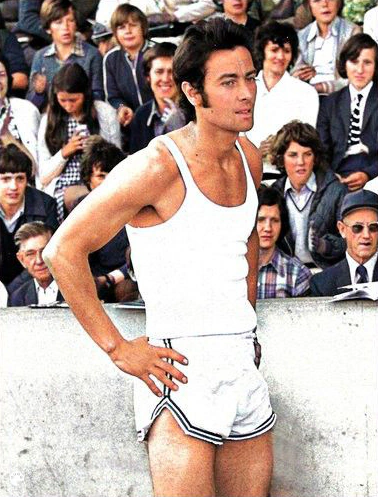
| 10 Quotes | |
| Occup. | Athlete |
| From | United Kingdom |
| Born | May 20, 1942 Bridgend, Wales |
| Age | 83 years |
| Cite | |
Citation Formats
APA Style (7th ed.)
Lynn davies biography, facts and quotes. (2026, February 11). FixQuotes. https://fixquotes.com/authors/lynn-davies/
Chicago Style
"Lynn Davies biography, facts and quotes." FixQuotes. February 11, 2026. https://fixquotes.com/authors/lynn-davies/.
MLA Style (9th ed.)
"Lynn Davies biography, facts and quotes." FixQuotes, 11 Feb. 2026, https://fixquotes.com/authors/lynn-davies/. Accessed 4 Mar. 2026.
Early Life and Background
Lynn Davies was born on May 20, 1942, in Nantymoel, a coal-mining village in the Ogmore Valley of South Wales. He grew up in a Britain still marked by wartime austerity and the hard, communal rhythms of the Valleys - a world where toughness was assumed and opportunity was something to be seized rather than granted. That landscape formed his temperament: plainspoken, competitive, and suspicious of shortcuts.Sport offered a kind of passage out of narrow horizons. As a boy he played widely, but his gift for running and leaping became the thread that pulled him toward a larger stage. The postwar expansion of school sport and local clubs gave him a ladder, but the climb was never romantic - it demanded repetition, travel, and a willingness to fail in public and return to training anyway.
Education and Formative Influences
Davies developed through Welsh schools and the British club system at a time when athletics remained formally amateur, organized around county meetings, inter-club rivalries, and the prestige of representing Wales and Great Britain. Coaches and senior athletes mattered because information traveled person-to-person, not through professionalized support teams: technique was learned on cinder tracks, in winter conditioning, and in the slow acquisition of confidence. Those formative years bred his later insistence that success is built from teachability and self-management, not talent alone.Career, Major Works, and Turning Points
A specialist in the long jump, Davies rose into international contention in the early 1960s, a period when British athletics sought renewed identity in the shadow of American and Soviet dominance. His defining triumph came at the 1964 Tokyo Olympics, where he won the gold medal in the long jump and became one of the most recognizable British track-and-field champions of his generation. He followed with further major medals, including at the 1966 European Championships, and remained a prominent figure through the era of the Commonwealth Games and a changing Olympic landscape that increasingly tested the old amateur codes. After his competitive peak, he turned his authority outward - into coaching, sports administration, and public advocacy for athletics as a vehicle for character - recasting his own career as evidence that elite performance could be explained, taught, and replicated.Philosophy, Style, and Themes
Davies spoke about sport like someone who had lived inside its repetitive demands rather than merely benefited from its spotlight. His long-jump style - speed controlled into precision at the board, then the disciplined violence of takeoff - suited a psychology that valued craft over mystique. He did not mythologize the champion as a lone genius; he treated excellence as a partnership between instruction and autonomy. “You've got to be actively involved in the process yourself and you've got to listen carefully to what the coach is saying, take that on board yourself and implement what the coach is saying”. The sentence reads like self-portrait: attentive, pragmatic, and intolerant of passive wishing.Running through his public reflections is an ethical argument that athletics is rehearsal for adulthood. He framed the track as a controlled arena for disappointment, restraint, and patience - qualities he believed were transferable beyond medals. “There are hurdles to overcome in sport and in life. Sport is a very valuable learning ground for how to live your life in the best possible way”. That idea also explains his emphasis on time: not the stopwatch alone, but the longer duration required to discover who you are under strain. “It's perseverance that's the key. It's persevering for long enough to achieve your potential”. In his telling, perseverance is not stubbornness; it is a learned ability to return to detail - approach run, takeoff, posture, recovery - until the body and mind agree.
Legacy and Influence
Davies endures as both an Olympic champion and a distinctly British type of sporting elder: a mediator between an older amateur ethos and modern high-performance systems. His Tokyo gold remains a landmark in UK athletics history, but his broader influence lies in how he articulated elite sport as education - a disciplined craft guided by coaching, reflection, and resilience. In a culture often hungry for inspirational shortcuts, his legacy is steadier and more demanding: greatness is built by listening, practicing, and staying in the process long enough for potential to become performance.Our collection contains 10 quotes written by Lynn, under the main topics: Learning - Life - Sports - Self-Discipline - Perseverance.
Other people related to Lynn: Ralph Boston (Athlete)
Source / external links