
Lynn Johnston Biography Quotes 28 Report mistakes
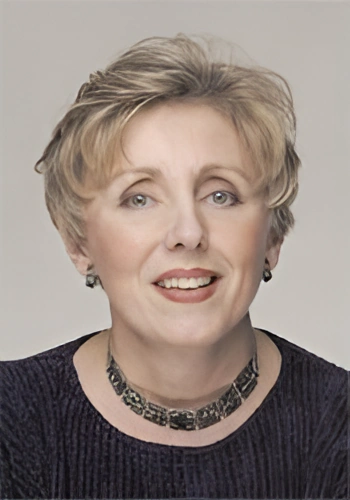
| 28 Quotes | |
| Occup. | Cartoonist |
| From | USA |
| Born | May 28, 1947 |
| Age | 78 years |
| Cite | |
Citation Formats
APA Style (7th ed.)
Lynn johnston biography, facts and quotes. (2026, February 11). FixQuotes. https://fixquotes.com/authors/lynn-johnston/
Chicago Style
"Lynn Johnston biography, facts and quotes." FixQuotes. February 11, 2026. https://fixquotes.com/authors/lynn-johnston/.
MLA Style (9th ed.)
"Lynn Johnston biography, facts and quotes." FixQuotes, 11 Feb. 2026, https://fixquotes.com/authors/lynn-johnston/. Accessed 24 Mar. 2026.
Early Life and Background
Lynn Johnston was born May 28, 1947, in Collingwood, Ontario, Canada, and grew up in a postwar country that still carried Depression-era habits - thrift, hand-me-downs, and the quiet expectation that you made do. Though sometimes described in broad strokes as North American, her earliest sense of self was formed in small-town Ontario: long winters, close neighbors, and the sharp awareness of who had money and who did not. That atmosphere later became the emotional weather of her fiction - ordinary kitchens and school corridors where private dramas play out in public.In her household, scarcity was not merely a condition but a creative engine. She has recalled how a family can look fine from the outside while improvising constantly within it, an experience that trained her eye for the unsentimental details of domestic life. The adult Johnston would become famous for the way she made middle-class normalcy feel documentary, but the roots of that realism lay in childhood: inventing entertainments, noticing how adults mask anxiety, and learning early that humor can be both shield and signal.
Education and Formative Influences
Johnston studied at the Vancouver School of Art (now Emily Carr University) in British Columbia, where she absorbed the discipline of draftsmanship while also encountering the countercurrents of the late 1960s and early 1970s - a time when autobiography, confession, and social critique were pushing into mainstream media. She was also steeped in classic comic-strip craft and children's comics, and she carried forward a particular devotion to Little Lulu, admiring its imaginative elasticity and emotional precision: “I loved the Little Lulu stories, where she would fantasize that her bedroom rug would turn into a pool of water, and she could dive down into the center of the world”. That blend of everyday setting and sudden interior flight became a template for her own approach.Career, Major Works, and Turning Points
After early professional work as an illustrator and cartoonist, Johnston made her name with the syndicated strip For Better or For Worse, launched in 1979 and based in a lightly fictionalized Canadian suburb. Over decades, she did something rare in newspaper comics: she let characters age in real time, turning domestic continuity into narrative pressure, and allowing consequences to accumulate the way they do in life. Her strip moved from sitcom rhythms into long-form realism, taking on marriage strain, adolescence, illness, and death without abandoning humor. Major turning points included storylines that mirrored her own lived experience of a difficult first marriage and the hard-won stability of later life, and the strip's decision to address issues that many papers once avoided, including sexuality and grief. The work's popularity - and the controversies it occasionally sparked - came from its insistence that a family strip could be a social novel in daily panels.Philosophy, Style, and Themes
Johnston's psychological engine is candor paired with restraint. She understood that the strongest revelations in family life are often indirect - a pause, a half-finished sentence, a character standing in a doorway after an argument. Her line is clean and readable, but the real artistry is pacing: she allows silence to do narrative labor, trusting the reader to feel what is not drawn. That belief is stated plainly in her own words: “The most profound statements are often said in silence”. In practice, she used the small frame of the strip to make quiet moments unavoidable, a technique that made her sentimental only when sentiment was earned.Her themes orbit the ethics of noticing: who gets comfort, who goes unseen, and how a household narrates itself to survive. She has been explicit about using drawing as a private laboratory for taboo curiosity and emotional volatility, describing adolescence as a time when art served as both education and concealment: “If I was in love with someone, I would get their picture out of the school yearbook and do portraits. If I was curious about sex, I would draw pictures of it. There were no books for me to look at. Then I would go find my father's matches to burn the paper”. That confession illuminates the strip's hallmark tension: the desire to tell the truth, and the fear of what truth costs. Even her lighter aphorisms carry a boundary-setting pragmatism - “Complaining is good for you as long as you're not complaining to the person you're complaining about”. - suggesting an artist who valued emotional honesty but also knew when silence, distance, or humor protected the vulnerable.
Legacy and Influence
Johnston's enduring influence lies in legitimizing the family comic strip as a venue for time, change, and moral complexity. For Better or For Worse helped expand what syndicated comics could discuss, paving the way for more autobiographical and issue-aware storytelling while proving that craft and popularity need not be enemies. She became a model for cartoonists who wanted to treat domestic life with novelistic patience, and for readers who recognized themselves in characters allowed to grow older, make mistakes, and keep living in the space between a punchline and a confession.Our collection contains 28 quotes written by Lynn, under the main topics: Witty One-Liners - Art - Deep - Life - Resilience.
Source / external links