
Lynndie England Biography Quotes 6 Report mistakes
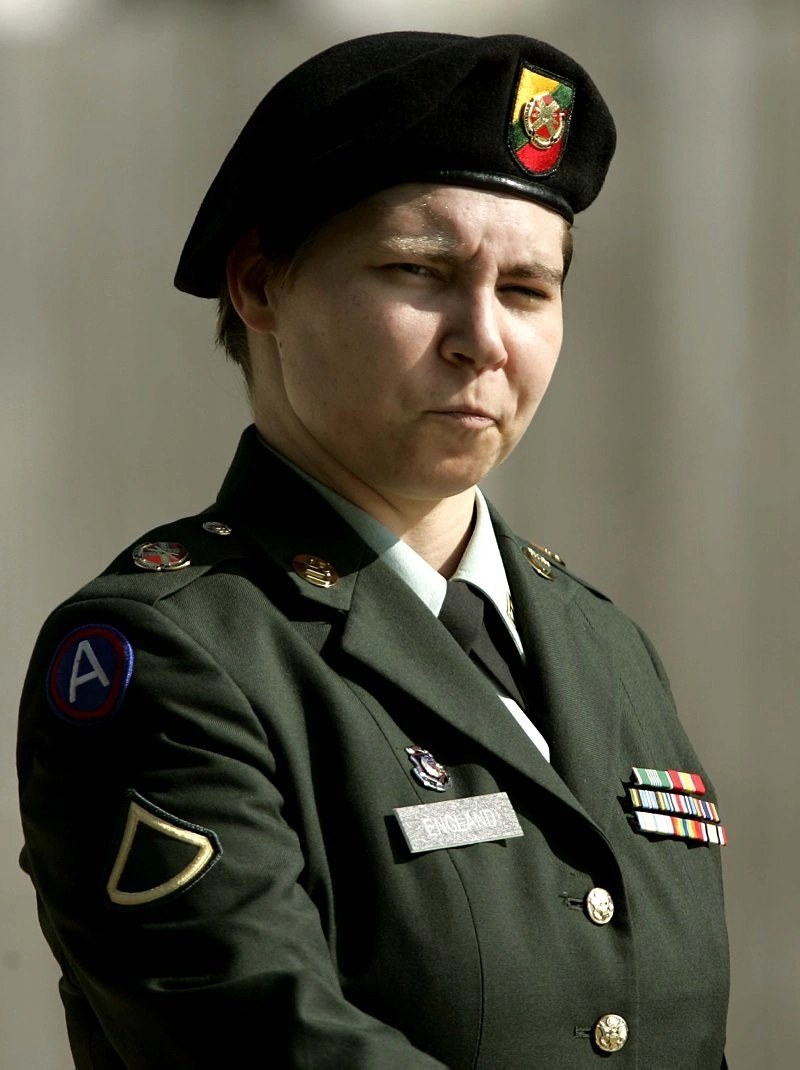
| 6 Quotes | |
| Occup. | Criminal |
| From | USA |
| Born | November 8, 1982 |
| Age | 43 years |
| Cite | |
Citation Formats
APA Style (7th ed.)
Lynndie england biography, facts and quotes. (2026, February 11). FixQuotes. https://fixquotes.com/authors/lynndie-england/
Chicago Style
"Lynndie England biography, facts and quotes." FixQuotes. February 11, 2026. https://fixquotes.com/authors/lynndie-england/.
MLA Style (9th ed.)
"Lynndie England biography, facts and quotes." FixQuotes, 11 Feb. 2026, https://fixquotes.com/authors/lynndie-england/. Accessed 6 Mar. 2026.
Early Life and Background
Lynndie Rana England was born on November 8, 1982, in rural West Virginia, USA, and grew up far from the policy centers that would later define her notoriety. Her early life unfolded in the post-Cold War years when the US military was increasingly marketed as both employer and proving ground, especially in economically constrained regions where steady wages and benefits carried outsized gravity. The world she knew was intimate, local, and practical - a place where reputation traveled faster than opportunity and where adulthood often arrived early.That background mattered when the Iraq War pulled ordinary Americans into extraordinary circumstances. England did not enter public life through art, politics, or activism, but through the blunt machinery of enlistment and deployment. Her later image - a young soldier grinning in a prison block - would be read as emblematic of national power and moral failure. Yet it also came from a life shaped by limited horizons, strong institutional authority, and the promise that following rules would keep you safe.
Education and Formative Influences
Public details of England's formal education are sparse, and what is known points less to academic formation than to social formation: the military as a primary educator. Like many young enlisted soldiers of her generation, she was shaped by a chain-of-command culture that rewarded compliance and group belonging, intensified by the wartime urgency after 9/11. Training emphasized procedure, cohesion, and deference - skills that can stabilize units under stress, but can also erode moral independence when informal norms in a unit turn corrosive.Career, Major Works, and Turning Points
England served in the US Army Reserve and deployed to Iraq during the occupation, assigned to the Abu Ghraib prison complex near Baghdad. In late 2003, detainee abuse occurred within a military police unit, and photographs documenting humiliation and brutality surfaced publicly in 2004, detonating global outrage and strategic damage to the US war effort. England became one of the most identifiable faces of the scandal due to images showing her participating in the degradation of prisoners, including holding a detainee on a leash. She was court-martialed, convicted on multiple counts related to detainee abuse, reduced in rank, and sentenced to imprisonment; later releases and interviews fixed her in the public imagination as both perpetrator and pawn, a minor soldier caught in a system that demanded results, tolerated cruelty, and then sought containment through punishment.Philosophy, Style, and Themes
England's inner life, as it emerges in statements and testimony, circles around obedience, belonging, and the aftershock of shame. Her explanations consistently frame the prison block as a moral bubble where approval from peers and superiors overrode the basic humanity of detainees. “I still can't really believe it. They just told us, 'Hey, you're doing great. Keep it up.'”. Psychologically, this is the language of a young subordinate measuring right and wrong by feedback rather than principle, a reliance that can harden into moral numbness when the environment rewards transgression.A second recurring theme is displacement of agency onto authority, not as abstract theory but as survival logic inside rigid hierarchy. “To all of us who have been charged, we all agree that we don't feel like we were doing things that we weren't supposed to, because we were told to do them. We think everything was justified, because we were instructed to do this and to do that”. This is not only self-defense; it is a portrait of how institutional power colonizes conscience, turning "orders" into a solvent that dissolves responsibility. Yet her later apologies gesture toward an awakening shaped less by empathy in the moment than by the public consequences of the images: “I've heard attacks were made on coalition forces because of those. I apologize to the families of those who lost loved ones or were injured because of the photos”. The focus on downstream harm to coalition forces reveals a psyche trying to regain belonging - to the military, to the nation - by translating moral failure into operational damage, a language she could grasp because it matched the values she had been trained to prioritize.
Legacy and Influence
England's legacy is inseparable from Abu Ghraib itself: a case study in how war, secrecy, and dehumanization can metastasize into ritualized cruelty, and how photographs can collapse denial into irrevocable evidence. She remains a symbol used by multiple narratives - of individual depravity, of systemic failure, of gendered scandal, of low-ranking scapegoating - because her visibility made abstraction unnecessary. In military ethics education, journalism, and human-rights advocacy, her story persists as a warning about situational power and moral drift: the way ordinary people can be led, rewarded, and recorded doing what they will later insist they never imagined themselves capable of doing.Our collection contains 6 quotes written by Lynndie, under the main topics: Motivational - Justice - Military & Soldier - Human Rights - War.
Other people related to Lynndie: Janis Karpinski (Soldier)
Source / external links