
Lynne Cheney Biography Quotes 3 Report mistakes
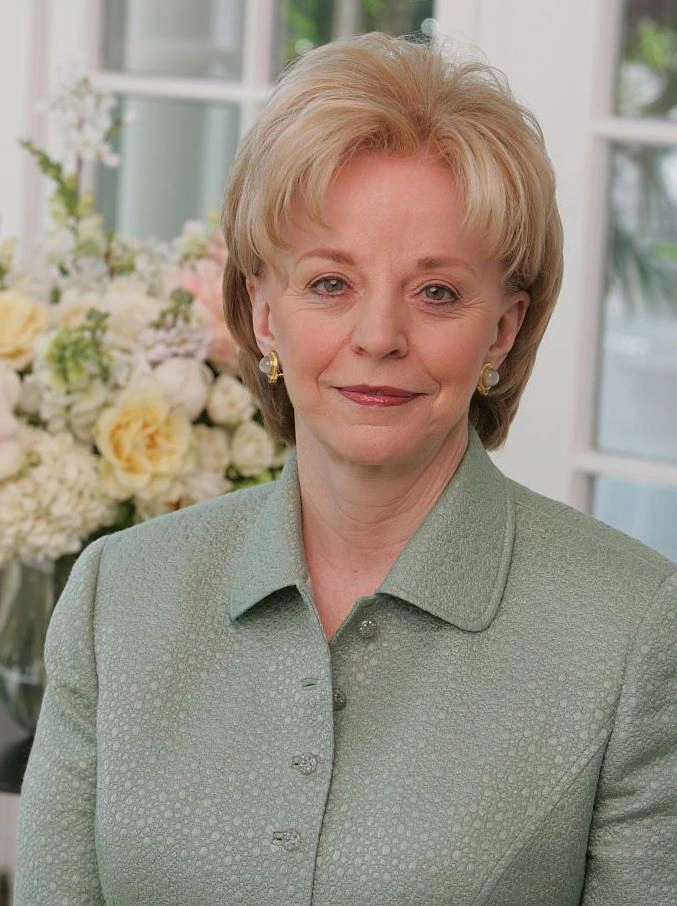
Attr: David Bohrer/White House, Public domain
| 3 Quotes | |
| Born as | Lynne Ann Vincent |
| Occup. | Author |
| From | USA |
| Spouse | Richard Cheney |
| Born | August 14, 1941 Casper, Wyoming, USA |
| Age | 84 years |
| Cite | |
Citation Formats
APA Style (7th ed.)
Lynne cheney biography, facts and quotes. (2026, March 7). FixQuotes. https://fixquotes.com/authors/lynne-cheney/
Chicago Style
"Lynne Cheney biography, facts and quotes." FixQuotes. March 7, 2026. https://fixquotes.com/authors/lynne-cheney/.
MLA Style (9th ed.)
"Lynne Cheney biography, facts and quotes." FixQuotes, 7 Mar. 2026, https://fixquotes.com/authors/lynne-cheney/. Accessed 27 Mar. 2026.
Early Life and Background
Lynne Ann Vincent was born on August 14, 1941, in Casper, Wyoming, a state whose sparse landscapes, extractive economy, and frontier self-image marked her imagination for life. She grew up in a family shaped by work, thrift, and civic seriousness rather than inherited prominence. Wyoming in the 1940s and 1950s was not simply a backdrop but a moral atmosphere: community reputation mattered, self-command mattered, and public life was understood less as spectacle than as duty. That inheritance helps explain the distinctive combination that would define Cheney as author, public intellectual, and political spouse - a patrician seriousness of tone rooted in a distinctly Western, middle-class origin.
Her marriage in 1964 to Richard B. Cheney joined two ambitious Wyoming Republicans whose careers would become inseparable in public memory, but Lynne Cheney was never merely ancillary to her husband's ascent. Before Washington made her a national figure, she had already developed the habits that would distinguish her own career: voracious reading, historical curiosity, and a belief that culture and politics could not be separated. She came of age during the Cold War, amid arguments over American purpose, education, and national confidence, and those arguments became the terrain on which she would later fight - first in scholarship and writing, then in the institutions of government and the broader culture wars of the late 20th century.
Education and Formative Influences
Cheney attended Colorado College, earning a B.A. in English in 1965, then pursued graduate study at the University of Colorado, where she received an M.A. and later a Ph.D. in 1979. Her academic formation in literature rather than formal political theory is important: she approached public questions through language, narrative, and the canon, convinced that what a society reads determines what it believes itself to be. Teaching and scholarship sharpened her suspicion of fashionable relativism just as universities were being remade by the upheavals of the 1960s and 1970s. Those years taught her to see education as a battleground over national memory. They also gave her an enduring respect for disciplined argument and archival evidence, traits visible in both her historical books and her later bureaucratic combat at the National Endowment for the Humanities.
Career, Major Works, and Turning Points
Cheney built a career that moved across fiction, history, policy, and children's literature. Her early novel "Executive Privilege" (1979) announced an interest in power, secrecy, and Washington's moral theater. Far more consequential was her appointment by President Ronald Reagan in 1986 as chair of the National Endowment for the Humanities, a post she held until 1993. There she became one of the most prominent conservative critics of academic trends she believed weakened standards, patriotism, and the very idea of objective knowledge. In the 1990s and 2000s she expanded her public role through essays, speeches, and books aimed at adults and younger readers alike, including "Telling the Truth" (1995), "America: A Patriotic Primer" (2002), "When Washington Crossed the Delaware" (2004), "A Time for Freedom" (2005), and "James Madison: A Life Reconsidered" (2014). As Second Lady from 2001 to 2009, she used ceremonial visibility to advocate for history education and civic literacy, while remaining a fierce defender of the administration in an era defined by terrorism, war, and acute ideological polarization.
Philosophy, Style, and Themes
At the center of Cheney's work lies a conviction that culture is upstream from politics and that truth, once surrendered, cannot be replaced by mere procedural civility. Her writing repeatedly returns to the formation of character through reading, the uses of historical memory, and the danger of elite institutions teaching contempt for inherited national ideals. She stated the issue with characteristic bluntness: “I soon discovered, after I became chairman of the NEH, that for a number of academics, the truth was not merely irrelevant - it no longer existed”. That sentence reveals more than a policy position. It shows a mind offended not just by bad ideas but by epistemological betrayal - by the sense that institutions once entrusted with transmitting knowledge had come to distrust the possibility of truth itself.
Her rhetoric was combative but not purely tribal. Cheney insisted that democratic argument required moral steadiness and emotional self-control: “There can be differences of opinion without there being personal differences”. The line captures a disciplined, almost old-fashioned civic ethic, one born of both literary training and Western reserve. Yet she also rejected sentimental efforts to flatten ambition in the name of equality. “Expecting to be able to get rid of the competitive drive, first of all, flies in the face of human nature - and little girls certainly have this drive, as much as little boys do, or at least the little girls I have observed in my immediate family have it”. That argument illuminates her feminism: not a politics of victimhood, but one of capacity, rigor, and earned achievement. Stylistically, her books favored clarity over experimentation, moral contrast over ambiguity, and anecdote in the service of argument. Even when writing for children, she aimed less to entertain than to initiate readers into citizenship.
Legacy and Influence
Lynne Cheney's legacy sits at the junction of letters and politics. She helped institutionalize a conservative critique of the humanities that became central to late-20th-century debates over curriculum, multiculturalism, and national identity, and she did so with uncommon fluency in both scholarship and media combat. Her historical writing and patriotic primers reached readers beyond party elites, while her public role helped redefine what a vice-presidential spouse could be: not only ceremonial partner, but active interpreter of history and guardian of civic narrative. Admirers see in her a formidable defender of standards, evidence, and constitutional memory; critics see a culture warrior who linked scholarship too tightly to patriotic instruction. Either way, her influence endures in ongoing disputes over what schools should teach, what universities are for, and whether a nation can survive without a confident story about itself.
Our collection contains 3 quotes written by Lynne, under the main topics: Truth - Respect - Daughter.
Other people related to Lynne: Mary Cheney (Celebrity)
Lynne Cheney Famous Works
- 2014 James Madison: A Life Reconsidered (Biography)
- 2007 Blue Skies, No Fences: A Memoir of Childhood and Family (Memoir)
- 2006 Our 50 States: A Family Adventure Across America (Book)
- 2004 When Washington Crossed the Delaware: A Wintertime Story for Young Patriots (Book)
- 2003 A Is for Abigail: An Almanac of Amazing American Women (Book)
- 2002 America: A Patriotic Primer (Book)
Source / external links