
M. Scott Peck Biography Quotes 17 Report mistakes
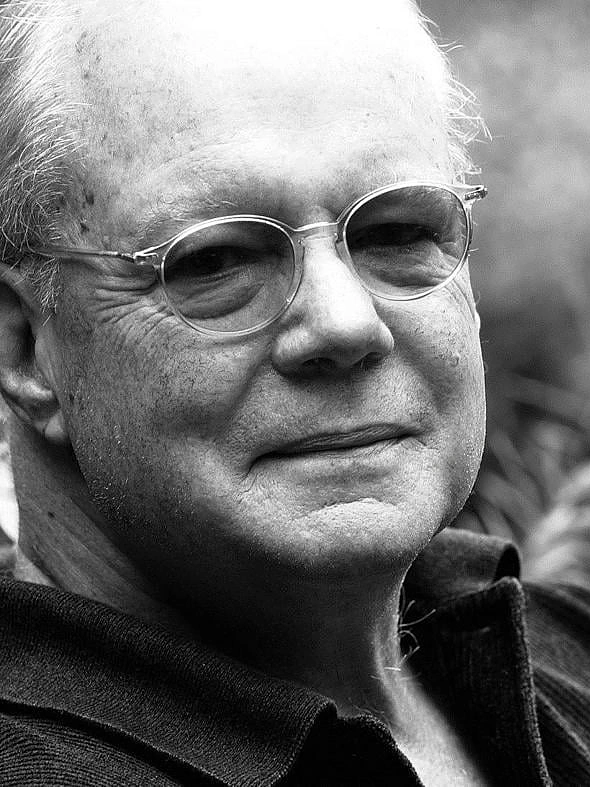
Attr: buffalonews.com
| 17 Quotes | |
| Occup. | Psychologist |
| From | USA |
| Born | May 22, 1936 |
| Died | September 25, 2005 |
| Aged | 69 years |
| Cite | |
Citation Formats
APA Style (7th ed.)
M. scott peck biography, facts and quotes. (2026, February 11). FixQuotes. https://fixquotes.com/authors/m-scott-peck/
Chicago Style
"M. Scott Peck biography, facts and quotes." FixQuotes. February 11, 2026. https://fixquotes.com/authors/m-scott-peck/.
MLA Style (9th ed.)
"M. Scott Peck biography, facts and quotes." FixQuotes, 11 Feb. 2026, https://fixquotes.com/authors/m-scott-peck/. Accessed 22 Mar. 2026.
Early Life and Background
Morgan Scott Peck was born on May 22, 1936, in New York City into a comfortable, establishment world that assumed order could be engineered and character could be earned. The United States he entered was moving from Depression memory toward postwar confidence, and by the time he reached adolescence the Cold War had turned private life into a moral theater: conformity promised safety, while dread and ambition ran underneath. Peck later wrote as a man suspicious of easy optimism, attuned to the ways privilege can disguise inner disorder and the ways respectability can keep pain unspoken.Family expectations and a competitive milieu helped shape the lifelong tension that would animate his work: a desire for disciplined mastery paired with an intense hunger for meaning. He was not raised in the counterculture that would later buy his books; he came from the culture it contested. That origin mattered. His eventual emphasis on responsibility, honesty, and spiritual growth can be read as an effort to build a vocabulary sturdy enough to hold both the era's therapeutic self-focus and the older American demand for moral seriousness.
Education and Formative Influences
Peck attended Phillips Exeter Academy, then Harvard University, and earned his MD from Case Western Reserve University School of Medicine. He trained in psychiatry at institutions including the Cleveland Clinic and later served as an Army psychiatrist, experiences that placed him at the intersection of clinical suffering and institutional power. Mid-century psychiatry was shifting from psychoanalytic dominance toward biological models, while the wider culture was moving through Vietnam, the civil rights struggle, and a crisis of trust in authority. Peck absorbed the language of medicine and the disciplines of hierarchy, but he also began to suspect that many human wounds were not only chemical or behavioral - they were ethical, relational, and spiritual.Career, Major Works, and Turning Points
After military service he practiced psychiatry and psychotherapy, gradually becoming a public moral psychologist for an audience that wanted therapeutic clarity without cynicism. His breakthrough came with The Road Less Traveled (1978), which opened bluntly with "Life is difficult" and argued that discipline, delayed gratification, and responsibility were the instruments of freedom. Popular success gave him a platform to develop a controversial synthesis: clinical insights joined to an explicitly spiritual account of love, evil, and community. In People of the Lie (1983) he framed certain destructive personalities as manifestations of "evil", a term many clinicians avoided; later books such as The Different Drum (1987) explored community formation and conflict, while his subsequent writing continued to circle the same problem - how to become an integrated self capable of real love. He died on September 25, 2005, in Connecticut, after decades of influence that reached far beyond psychiatry into churches, recovery movements, and leadership circles.Philosophy, Style, and Themes
Peck wrote in a clean, commanding voice that borrowed the authority of the clinic and the sermon, offering case-derived parables rather than academic argument. His central claim was developmental and moral: growth hurts, and the psyche matures by choosing truth over comfort. He insisted that adversity is not an interruption of life but its curriculum, captured in his aphorism, “It is only because of problems that we grow mentally and spiritually”. The line is both compassionate and demanding - a mirror of his therapeutic stance, which treated suffering as meaningful while refusing to romanticize it. Likewise, his maxim “One extends one's limits only by exceeding them”. distills his belief that character is forged through disciplined risk: the self expands when it voluntarily meets what it would rather avoid.His most distinctive theme was love as an act of will aimed at spiritual evolution. Against sentimental definitions, he described love as commitment, attention, and truth-telling - often strenuous, sometimes lonely, and always responsibility-laden. In this frame, listening becomes a moral practice, not a social nicety, and he pressed the point with severe simplicity: “You cannot truly listen to anyone and do anything else at the same time”. Psychologically, the statement reveals his inner preoccupation with dividedness - the ways ego multitasks to protect itself from being changed. Peck's writings repeatedly return to the battle between authenticity and self-deception, portraying evil less as theatrical villainy than as the chronic refusal to face one's own darkness, especially when that refusal is armored by status, piety, or certainty.
Legacy and Influence
Peck remains a defining figure of late-20th-century American spiritual self-help: a psychiatrist who brought moral vocabulary back into popular psychology and helped readers interpret inner life as a terrain of choices. Admirers credit him with re-legitimizing discipline, commitment, and community in an era that often reduced freedom to impulse; critics fault him for overreaching clinically, especially in his use of "evil" and his occasional certainty. Yet his enduring impact lies in the bridge he built - between therapy and ethics, between private suffering and public responsibility - and in the steady implication running through his work that a person can become more truthful, more loving, and therefore more free.Our collection contains 17 quotes written by Scott Peck, under the main topics: Motivational - Ethics & Morality - Love - Overcoming Obstacles - Equality.