
Madame de Stael Biography Quotes 25 Report mistakes
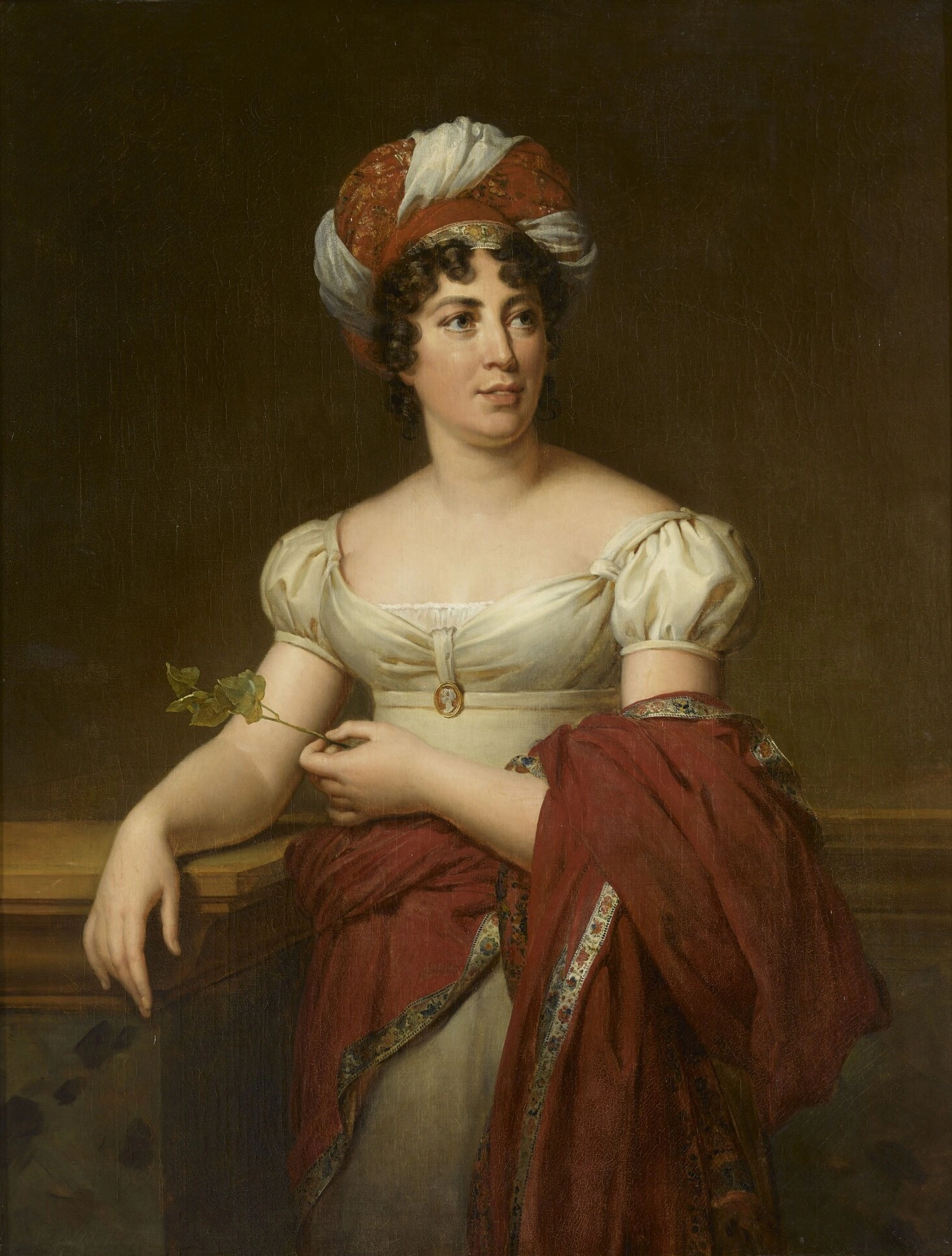
Attr: After François Gérard
| 25 Quotes | |
| Born as | Anne Louise Germaine Necker |
| Known as | Madame de Staël |
| Occup. | Writer |
| From | France |
| Spouses | Erik Magnus Staël von Holstein Albert Jean Michel de Rocca |
| Born | April 22, 1766 Paris, France |
| Died | July 14, 1817 Paris, France |
| Cause | Stroke |
| Aged | 51 years |
| Cite | |
Citation Formats
APA Style (7th ed.)
Madame de stael biography, facts and quotes. (2026, February 11). FixQuotes. https://fixquotes.com/authors/madame-de-stael/
Chicago Style
"Madame de Stael biography, facts and quotes." FixQuotes. February 11, 2026. https://fixquotes.com/authors/madame-de-stael/.
MLA Style (9th ed.)
"Madame de Stael biography, facts and quotes." FixQuotes, 11 Feb. 2026, https://fixquotes.com/authors/madame-de-stael/. Accessed 27 Mar. 2026.
Early Life and Background
Anne Louise Germaine Necker was born in Paris on April 22, 1766, into the most politically exposed salon in pre-Revolutionary France. Her father, Jacques Necker, a Swiss Protestant banker, became Louis XVI's finance minister; her mother, Suzanne Curchod, ran a formidable gathering place where philosophes, diplomats, and economists tested ideas in public. From childhood, Germaine absorbed the theater of power - the way a phrase could tilt policy, the way reputation could replace proof - and she learned early that a woman could rule a room even when barred from office.The Revolution made her family both symbolic and vulnerable. Necker's rise and falls, the Court's resentments, and the streets' volatility placed Germaine at the crossing of aristocratic manners and democratic fury. The collapse of old hierarchies did not free her from constraints; it sharpened them. She developed a lifelong habit of turning political danger into intellectual travel and turning emotional dependence into literary energy - a psychology formed in a Paris where attention was currency and exile could arrive overnight.
Education and Formative Influences
Educated largely at home, she read widely in Rousseau, Montesquieu, and English constitutional thought, and she practiced conversation as a discipline rather than an ornament. Her mother's salon gave her a rigorous apprenticeship in argument, memory, and performance; she learned to think in publics, not in solitude. Early encounters with the language of rights, the fragility of credit, and the moral claims of sensibility shaped her conviction that politics without moral imagination becomes mere force - and that literature can be a form of civic education.Career, Major Works, and Turning Points
In 1786 she married Erik Magnus Stael von Holstein, Swedish ambassador to France, gaining diplomatic cover and the title by which she is known, but not domestic peace. During the Revolution she defended constitutional monarchy and tried to protect friends from the Terror; by the 1790s she was building her own intellectual state at Chateau de Coppet near Lake Geneva, gathering figures such as Benjamin Constant and August Wilhelm Schlegel. Her novels Delphine (1802) and Corinne, or Italy (1807) dramatized the collision between a woman's genius and society's sanctions, while her critical and political works - notably De la litterature (1800), De l'Allemagne (written 1810, published 1813 after Napoleonic suppression), and Considerations on the Principal Events of the French Revolution (published posthumously, 1818) - made her a central interpreter of modern Europe. Napoleon regarded her independence as subversion; repeated bans from Paris turned exile into her method, widening her map and hardening her liberal, anti-authoritarian stance.Philosophy, Style, and Themes
Stael wrote as if ideas were lived experience, and her sentences carry the pressure of a mind that could not separate feelings from public consequence. Her work insists that political institutions require inner disciplines: sympathy, restraint, and the courage to act. In her moral psychology she is unsparing about the costs of consciousness - “One must choose in life between boredom and suffering”. - a line that reads like self-portrait as much as aphorism, capturing her refusal of safe neutrality. She preferred the pain of engagement - love, argument, risk, travel - to the deadening security offered to talented women as consolation.Her heroines and narrators return obsessively to recognition, the need to be seen without being owned. “We cease loving ourselves if no one loves us”. distills her belief that identity is relational, forged in the gaze of others, and therefore politically fraught in a world that polices women's visibility. She also theorized modern power in gendered terms, noting how desire can become a social instrument: “The desire of the man is for the woman, but the desire of the woman is for the desire of the man”. In Corinne especially, admiration becomes both nourishment and trap - the crowd's applause making genius possible while foreshadowing its punishment. Across her criticism, she argues for national character in literature and for the moral seriousness of art, treating imagination not as escape but as a force that can humanize politics.
Legacy and Influence
Madame de Stael died in Paris on July 14, 1817, after returning to France in the Bourbon Restoration, but her afterlife belongs to the Europe she helped invent: a liberal, comparative, psychologically alert culture of letters. She accelerated French Romanticism by introducing German thought, legitimized the idea that literature reflects political institutions, and modeled the intellectual as a transnational actor whose salon could rival a ministry. Later writers and critics - from the Romantics to modern feminist scholarship - have read her as a theorist of exile, a diagnostician of tyranny's emotional mechanisms, and a proof that public speech can be both a personal necessity and a political weapon.Our collection contains 25 quotes written by Madame, under the main topics: Ethics & Morality - Truth - Wisdom - Art - Love.
Madame de Stael Famous Works
- 1818 Considerations on the Principal Events of the French Revolution (Book)
- 1813 Germany (Book)
- 1807 Corinne, or Italy (Novel)
- 1802 Delphine (Novel)
- 1800 On Literature (Book)
Source / external links