
Madeleine L'Engle Biography Quotes 16 Report mistakes
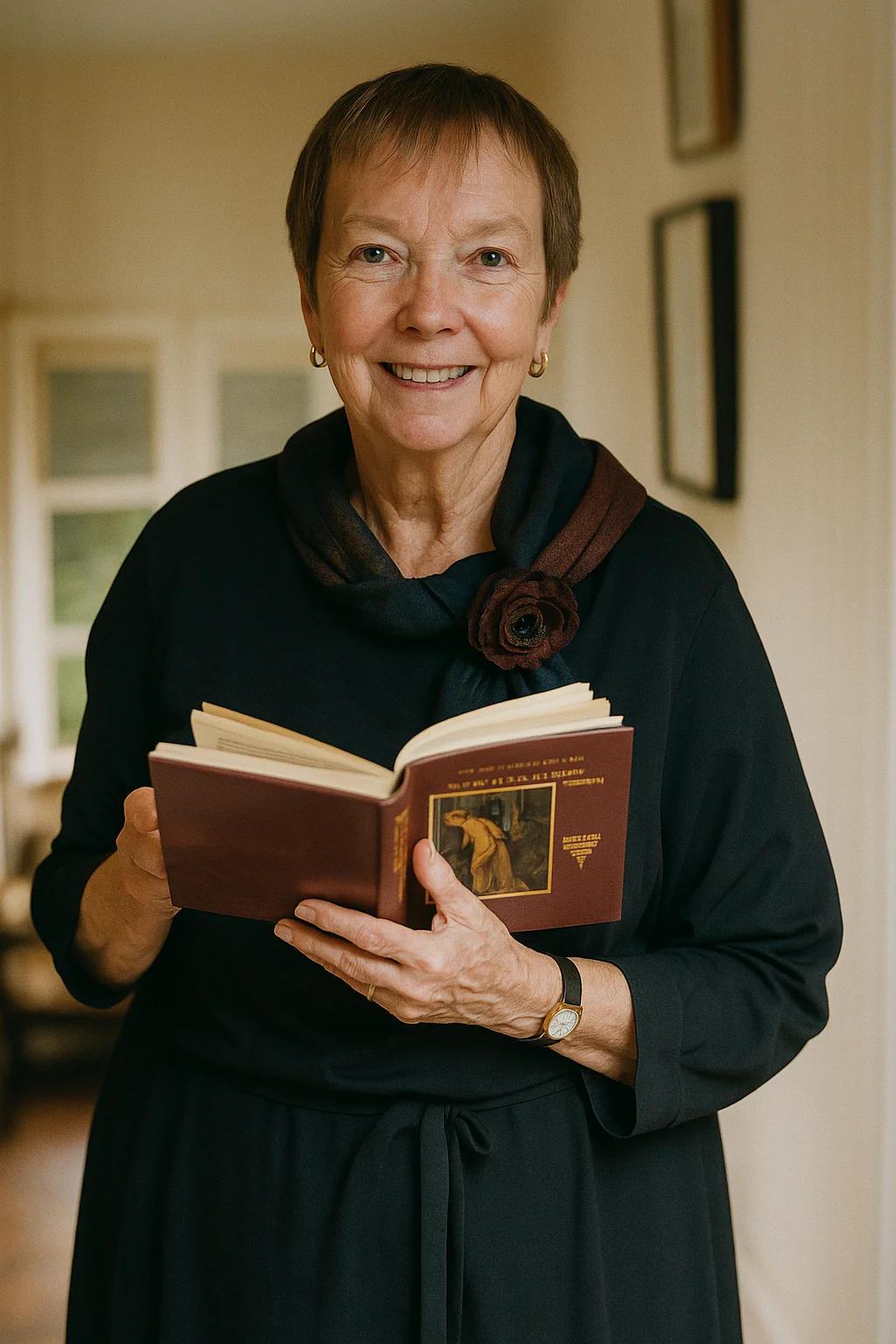
| 16 Quotes | |
| Born as | Madeleine L'Engle Camp |
| Occup. | Novelist |
| From | USA |
| Spouse | Hugh Franklin (1946-1986) |
| Born | November 29, 1918 New York City |
| Died | September 6, 2007 Litchfield, Connecticut, USA |
| Aged | 88 years |
| Cite | |
Citation Formats
APA Style (7th ed.)
Madeleine l'engle biography, facts and quotes. (2026, February 11). FixQuotes. https://fixquotes.com/authors/madeleine-lengle/
Chicago Style
"Madeleine L'Engle biography, facts and quotes." FixQuotes. February 11, 2026. https://fixquotes.com/authors/madeleine-lengle/.
MLA Style (9th ed.)
"Madeleine L'Engle biography, facts and quotes." FixQuotes, 11 Feb. 2026, https://fixquotes.com/authors/madeleine-lengle/. Accessed 25 Mar. 2026.
Early Life and Background
Madeleine L'Engle Camp was born on November 29, 1918, in New York City, an only child in a family shaped by the aftershocks of World War I and the swift modernization of American life. Her father, Charles Wadsworth Camp, was a writer and a businessman with a deep fascination for language and ideas; her mother, Madeleine Hall Barnett Camp, brought a keen social intelligence and an unromantic steadiness to household life. From the beginning, L'Engle grew up between temperaments - an inward, imaginative child watching two adults negotiate ambition, money, and the emotional weather of marriage.Her childhood unfolded across shifting addresses and schools, with formative stretches in Switzerland and France as her father's health faltered. Europe in the 1920s and early 1930s offered her both beauty and unease - a continent still haunted by war and, increasingly, by the anxieties that would culminate in another. The private loneliness of hotels, classrooms, and travel hardened into a lifelong habit of turning experience into story: she learned early that the self could be both refuge and laboratory, and that faith, science, and art could coexist in the same mind without canceling each other.
Education and Formative Influences
After returning to the United States, she attended boarding schools and then Smith College, graduating in 1941, when the world was sliding toward global conflict and American culture was being retooled by modernism, psychology, and new scientific frontiers. At Smith she found discipline equal to her imagination, absorbing classic literature and theater while sharpening a prose voice that could carry both domestic realism and metaphysical hunger. The era's pressures - wartime uncertainty, women's constrained public roles, and the sense that meaning had to be built against chaos - became the tension she would never stop writing inside.Career, Major Works, and Turning Points
L'Engle published her first novel, The Small Rain (1945), followed by works such as A Severed Wasp (1949) and the memoir-like novel Two-Part Invention (1988), but her decisive turning point came with A Wrinkle in Time (1962). After repeated rejections, the book emerged as an improbable synthesis - science fiction concepts, Christian metaphysics, and a girl's fierce love braided into a quest narrative - and it won the Newbery Medal, launching the Time Quintet (A Wind in the Door, A Swiftly Tilting Planet, Many Waters, An Acceptable Time). Her marriage to actor Hugh Franklin (1946) and their years running a general store in rural Connecticut grounded her in the ordinary pressures of family, work, and community even as her imagination traveled through galaxies; later, her long association with the Cathedral of St. John the Divine in New York as writer-in-residence widened her public identity into that of theologian-artist, a novelist whose essays (Walking on Water, The Irrational Season) argued that spiritual life and artistic practice are not rivals but collaborators.Philosophy, Style, and Themes
L'Engle's inner life was marked by a stubborn refusal to amputate parts of herself to satisfy categories. She wrote as a Christian who distrusted piety without imagination, and as a storyteller who distrusted imagination without moral weight. Her characters often stand at the edge of knowledge - children facing adult grief, scientists confronting mystery, families learning that love is not comfort but commitment. She insisted on the dignity of human agency in a cosmos that can feel indifferent, returning again and again to the moral drama of choice: “It is the ability to choose which makes us human”. That conviction animates Meg Murry's defiant love, the O'Keefe family's complicated loyalties, and the recurrent insistence that darkness is fought not by power but by fidelity.Her style joined clear, quick scenes to sudden apertures into the metaphysical - a pragmatic American sentence opening into wonder. She treated creativity as vocation rather than mood, a way of showing up even when the self is resistant or afraid: “Inspiration usually comes during work, rather than before it”. Aging, too, was not decline in her work but accumulation, the soul carrying its earlier selves forward: “The great thing about getting older is that you don't lose all the other ages you've been”. This psychological through-line helps explain her enduring empathy for adolescents - she remembered the adolescent as a permanent resident inside the adult - and her recurring interest in vulnerability as the condition of being alive, loving, and responsible.
Legacy and Influence
Madeleine L'Engle died on September 6, 2007, in Connecticut, leaving behind a body of work that expanded what American children's and young adult literature could risk - intellectually, spiritually, and emotionally. She normalized the mingling of astrophysics and prayer, family comedy and cosmic terror, and she offered generations of readers a model of seriousness without cynicism. Her influence is visible in contemporary fantasy and YA that trusts young people with metaphysical questions, and in writers who treat belief not as propaganda but as lived complexity. For many readers, her lasting gift was permission: to be intelligent and tender at once, to question without surrendering awe, and to choose love as an act of will in a universe vast enough to make that choice matter.Our collection contains 16 quotes written by Madeleine, under the main topics: Ethics & Morality - Wisdom - Art - Writing - Life.
Frequently Asked Questions
- Madeleine L'Engle books in order: Time Quintet: A Wrinkle in Time; A Wind in the Door; A Swiftly Tilting Planet; Many Waters; An Acceptable Time. Austin Family: Meet the Austins; The Moon by Night; The Young Unicorns; A Ring of Endless Light; Troubling a Star. O’Keefe: The Arm of the Starfish; Dragons in the Waters; A House Like a Lotus.
- Madeleine L'Engle poetry: The Weather of the Heart; A Cry Like a Bell; The Ordering of Love: New and Collected Poems; Lines Scribbled on an Envelope and Other Poems.
- Madeleine L'Engle interesting facts: Won the 1963 Newbery Medal for A Wrinkle in Time; that book was rejected by 26+ publishers; blended science, fantasy, and Christian themes; longtime writer-in-residence at NYC’s Cathedral of St. John the Divine; kept a Connecticut home (Crosswicks) and wrote the Crosswicks Journals.
- Madeleine L'Engle pronunciation: MAD-uh-lin LENG-guhl
- How old was Madeleine L'Engle? She became 88 years old
Madeleine L'Engle Famous Works
- 2001 Walking on Water: Reflections on Faith and Art (Non-fiction)
- 1994 Troubling a Star (Novel)
- 1989 An Acceptable Time (Novel)
- 1988 Two-Part Invention: The Story of a Marriage (Autobiography)
- 1986 Many Waters (Novel)
- 1984 A House Like a Lotus (Novel)
- 1980 A Ring of Endless Light (Novel)
- 1978 A Swiftly Tilting Planet (Novel)
- 1977 The Irrational Season (Essay)
- 1973 A Wind in the Door (Novel)
- 1972 A Circle of Quiet (Memoir)
- 1965 The Arm of the Starfish (Novel)
- 1963 The Moon by Night (Novel)
- 1962 A Wrinkle in Time (Novel)
- 1960 Meet the Austins (Novel)
- 1951 Camilla Dickinson (Novel)
- 1949 And Both Were Young (Novel)
Source / external links