
Madonna Ciccone Biography Quotes 21 Report mistakes
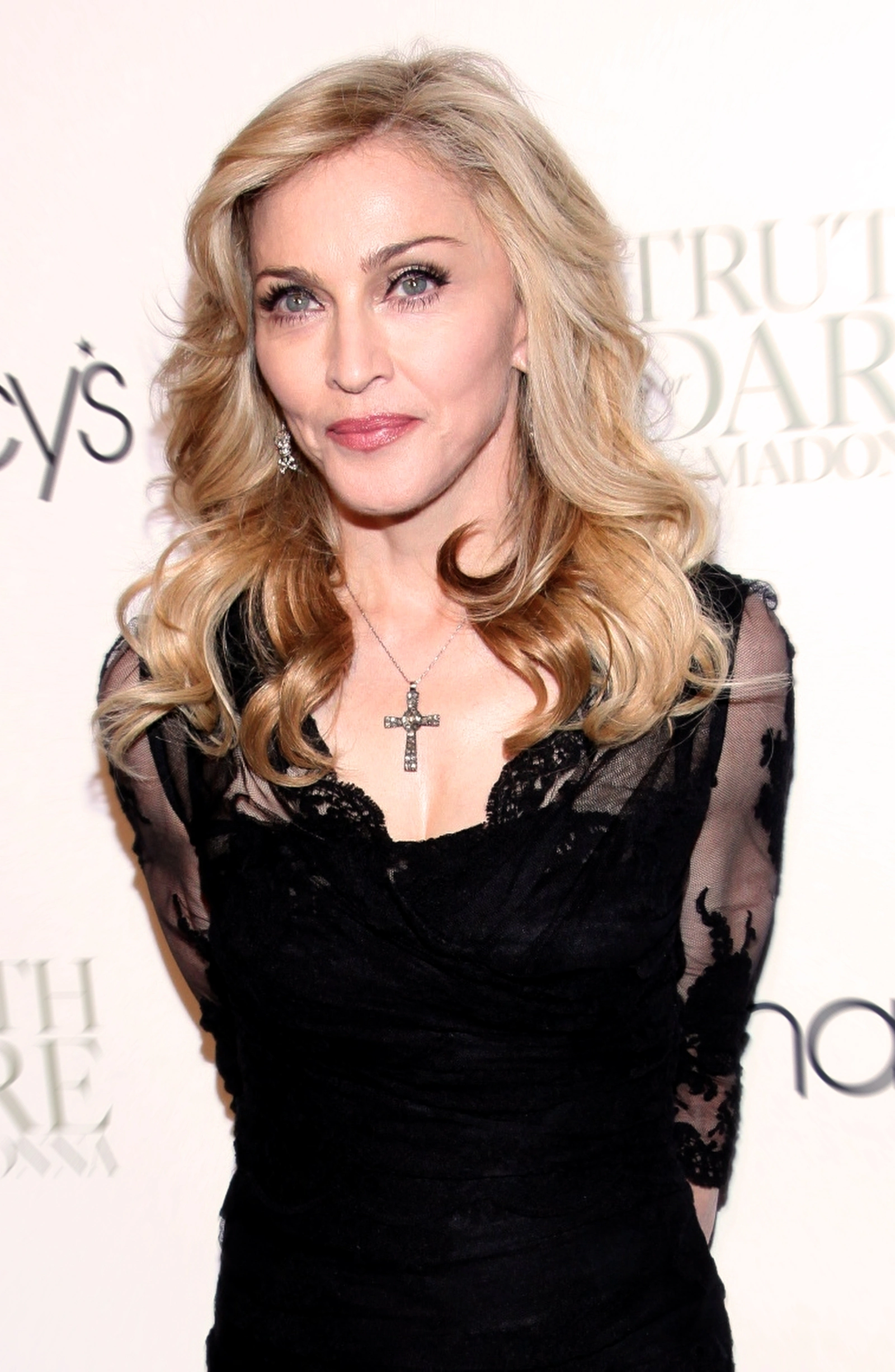
| 21 Quotes | |
| Born as | Madonna Louise Ciccone |
| Known as | Madonna |
| Occup. | Entertainer |
| From | USA |
| Born | August 16, 1958 Bay City, Michigan |
| Age | 67 years |
| Cite | |
Citation Formats
APA Style (7th ed.)
Madonna ciccone biography, facts and quotes. (2026, February 11). FixQuotes. https://fixquotes.com/authors/madonna-ciccone/
Chicago Style
"Madonna Ciccone biography, facts and quotes." FixQuotes. February 11, 2026. https://fixquotes.com/authors/madonna-ciccone/.
MLA Style (9th ed.)
"Madonna Ciccone biography, facts and quotes." FixQuotes, 11 Feb. 2026, https://fixquotes.com/authors/madonna-ciccone/. Accessed 5 Mar. 2026.
Early Life and Background
Madonna Louise Ciccone was born on August 16, 1958, in Bay City, Michigan, and raised primarily in the Detroit suburbs of Pontiac and Rochester Hills. She grew up in a large Italian American Catholic family; her father, Silvio "Tony" Ciccone, worked as an engineer for Chrysler and General Motors, and her mother, Madonna Fortin, was a homemaker whose presence anchored the household's rituals and expectations.That stability ruptured when her mother died of breast cancer in 1963, a loss Madonna later treated as both wound and engine. In the years that followed, discipline, church culture, and the constant churn of siblings created a competitive domestic theater in which attention was scarce and performance became survival. She learned early that control - over image, over narrative, over desire - could substitute for what grief had taken away.
Education and Formative Influences
At Rochester Adams High School she excelled academically and in dance, studying under choreographer Christopher Flynn, who introduced her to Detroit's gay clubs, modern dance, and a wider artistic world than suburban respectability allowed. In 1976 she won a dance scholarship to the University of Michigan, but by 1978 she left for New York City with little money and a fixed intent to become someone on her own terms, absorbing downtown hustle, punk attitude, and disco's body-first democracy as she took dance classes, worked odd jobs, and began shaping an identity that fused street hardness with pop clarity.Career, Major Works, and Turning Points
After early stints in bands (the Breakfast Club, then Emmy), she pivoted to solo work and signed with Sire Records, breaking through with "Holiday" (1983) and the albums Madonna (1983) and Like a Virgin (1984), whose MTV-era visuals made her a new kind of star: provocative, authorial, and relentlessly legible. The run from True Blue (1986) to Like a Prayer (1989) and The Immaculate Collection (1990) consolidated her as a global entertainer, while controversies - the "Like a Prayer" video, the Blond Ambition Tour (1990), and the Erotica/Sex period (1992) - tested how far a woman could push sexuality and sacrilege in mass culture. She kept shifting: Evita (1996) reframed her as a serious screen performer; Ray of Light (1998) married electronica to spiritual searching; later eras (Music, Confessions on a Dance Floor) proved her durability in a market built to discard female pop stars as they age.Philosophy, Style, and Themes
Madonna's inner life is often misread as pure provocation, but her most consistent psychological trait is an insistence on self-authorship against any gatekeeper, whether family, church, or industry. The persona is armor and instrument: she performs desire with clinical intentionality, turning voyeurism back onto the audience and making the rules of looking part of the show. Her own blunt self-diagnosis captures the engine: “I'm tough, I'm ambitious, and I know exactly what I want. If that makes me a bitch, okay”. Ambition, for her, is not merely careerism but a refusal to be managed - a stance that makes sense for an artist who entered fame when women were expected to be grateful, not directive.Stylistically she is a magpie and a strategist, borrowing from disco, post-punk, house, R&B, electronica, and Latin pop, then welding sound, costume, dance, and scandal into a single legible thesis. Beneath the spectacle sits a moral argument about agency: “Poor is the man whose pleasures depend on the permission of another”. Even her most polarizing work often aims at that target - exposing how institutions regulate pleasure, especially women's. Yet the later Madonna also recognizes the costs of turning oneself into an icon, admitting the artificiality that fame rewards: “I suppose I sometimes used to act like I wasn't a human being... Sometimes I look back at myself and remember things I used to say, or my hairstyle, and I cringe”. That tension - between control and vulnerability, reinvention and regret - gives her catalog its emotional bite.
Legacy and Influence
Madonna's enduring influence lies in how she professionalized reinvention and made pop stardom a form of authorship: the artist as CEO of image, sound, touring, and controversy, with the right to change her mind in public. She expanded the mainstream vocabulary for women's sexual self-definition, normalized the confessional-cum-theatrical pop persona, and helped build the template for modern multimedia eras in which video, fashion, and live spectacle are inseparable from the music. For subsequent performers - from Britney Spears and Lady Gaga to Beyonce and countless others - her career remains a case study in sustaining power through adaptation, and in treating culture wars not as side effects but as terrain to be navigated, exploited, and sometimes transformed.Our collection contains 21 quotes written by Madonna, under the main topics: Funny - Music - Freedom - Learning - Parenting.
Other people related to Madonna: Lady Gaga (Musician), Edvard Munch (Painter), Rosanna Arquette (Actress), Kevyn Aucoin (Artist), Guy Ritchie (Director), Sean Penn (Actor), David Fincher (Director), Dick Clark (Entertainer), Keith Haring (Artist), Julie Brown (Actress)
Source / external links