
Magic Johnson Biography Quotes 16 Report mistakes
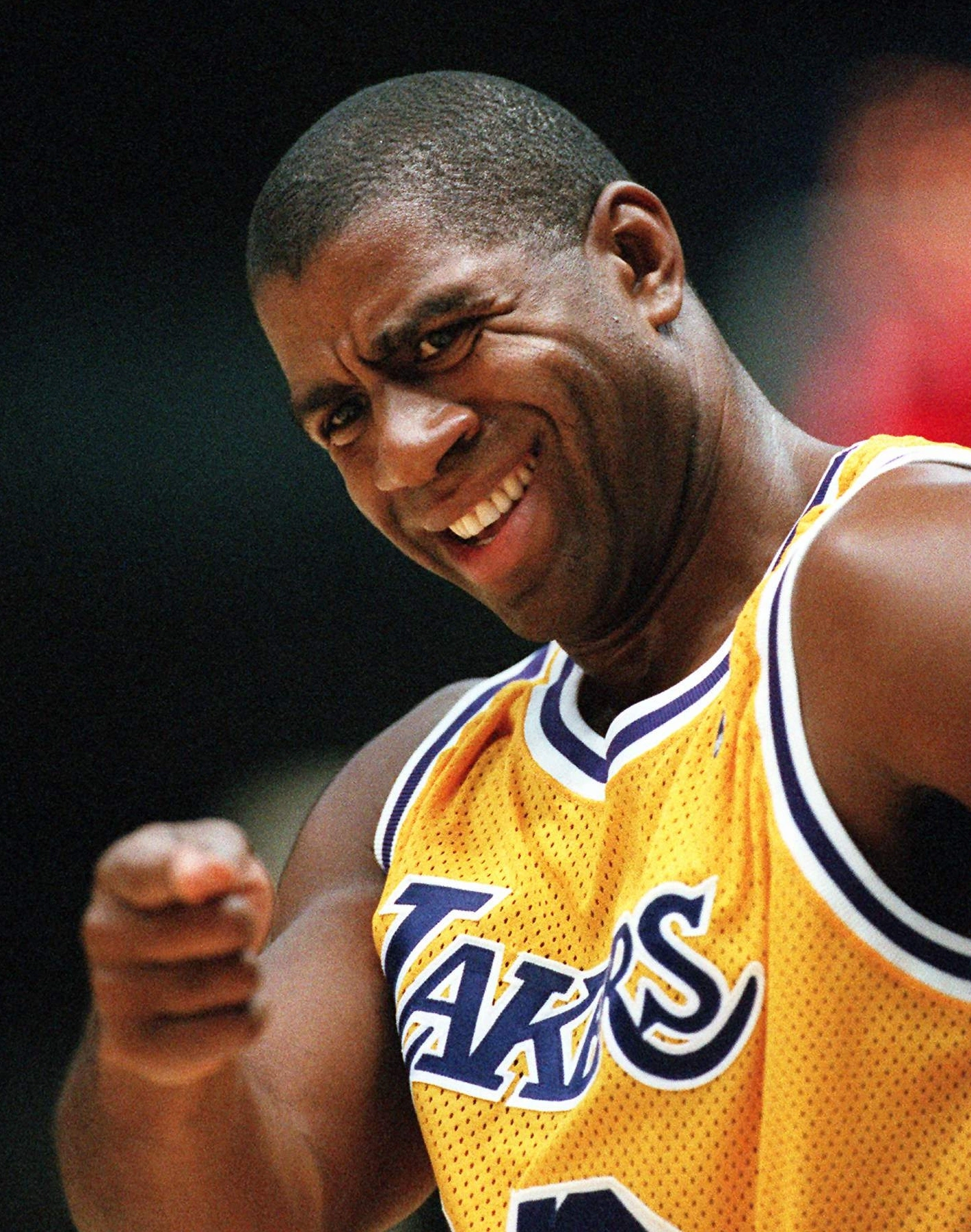
| 16 Quotes | |
| Born as | Earvin Johnson |
| Occup. | Athlete |
| From | USA |
| Born | August 14, 1959 Lansing, Michigan, U.S. |
| Age | 66 years |
| Cite | |
Citation Formats
APA Style (7th ed.)
Magic johnson biography, facts and quotes. (2026, February 11). FixQuotes. https://fixquotes.com/authors/magic-johnson/
Chicago Style
"Magic Johnson biography, facts and quotes." FixQuotes. February 11, 2026. https://fixquotes.com/authors/magic-johnson/.
MLA Style (9th ed.)
"Magic Johnson biography, facts and quotes." FixQuotes, 11 Feb. 2026, https://fixquotes.com/authors/magic-johnson/. Accessed 27 Mar. 2026.
Early Life and Background
Earvin "Magic" Johnson was born August 14, 1959, in Lansing, Michigan, the son of Earvin Sr., a General Motors assembly worker, and Christine Johnson, a school janitor. He grew up in a large, working-class family, in a Midwestern city shaped by factory rhythms, church life, and the tight social geography of segregated neighborhoods. His nickname came early, after a junior-high performance that seemed to bend the normal rules of scoring and passing; it stuck because it named something real in him - a joyfully public talent paired with an appetite for responsibility.Johnson's inner life was forged in the everyday pressures of being both gifted and watched. Lansing in the 1960s and 1970s offered limited lanes to national visibility for Black teenagers, so sports became both an outlet and a contract: excellence would be rewarded, but only if it came with discipline. Friends and teachers described him as magnetic yet unusually organized, someone who wanted not merely to win but to orchestrate, to make a whole group look smarter than it was. That impulse - to lift a room, not just himself - would become the defining pattern of his life.
Education and Formative Influences
At Lansing Everett High School, Johnson became a local phenomenon, leading the team to a state championship in 1977 and learning how charisma can function as leadership rather than showmanship. He chose Michigan State University and, under coach Jud Heathcote, refined his game into a sophisticated blend of size (6-foot-9) and point-guard vision. The 1979 NCAA championship against Larry Bird's Indiana State - a cultural event as much as a game - gave him a rival, a stage, and a lesson in how American sports could turn personal matchups into national mythmaking.Career, Major Works, and Turning Points
Drafted first overall by the Los Angeles Lakers in 1979, Johnson became the engine of "Showtime", a fast-break style that matched the city's appetite for spectacle and helped revive the NBA's popularity in the 1980s. He won NBA titles in 1980, 1982, 1985, 1987, and 1988, collecting multiple MVP and Finals MVP honors while redefining the point guard as a full-court director who could post up, rebound, and improvise. His partnership with Kareem Abdul-Jabbar, the coaching eras of Paul Westhead and Pat Riley, and his on-court duels with Bird's Celtics framed a decade. The major turning point came in November 1991, when Johnson announced he was HIV-positive and retired, abruptly shifting from entertainer and champion to a public face of a crisis still burdened by fear and stigma. He later returned briefly to the court, including the 1992 Dream Team Olympics and a 1996 comeback, while building a second career as an entrepreneur and civic presence in Los Angeles.Philosophy, Style, and Themes
Johnson played like a social theory: the fastest way to power was to distribute it. His game elevated role players into finishers, turning basketball into a moving conversation where everyone had to stay ready to speak. That psychology appears in his own formulation of leadership: “Ask not what your teammates can do for you. Ask what you can do for your teammates”. It is less slogan than self-description - a star who measured greatness by the confidence he could manufacture in others, and who used delight (the grin, the no-look pass) to keep pressure from curdling into fear.After 1991, his themes widened from court vision to public honesty. He refused euphemism about transmission and responsibility, insisting on plain speech that treated adults like adults: “The real story is that I had unprotected sex. That's that. That's easy”. The candor was strategic as well as moral; it cut through celebrity myth and made room for health education, testing, and the idea that prevention had to be discussed without shame. Even in moments of triumph, he stressed that his outcome was not universal and that HIV remained deadly for many. In later years, as he funded urban redevelopment through Magic Johnson Enterprises and spoke to young audiences, he returned to a mentorship ethic rooted in his own climb: “All kids need is a little help, a little hope and somebody who believes in them”. The through-line is responsibility - first to teammates, then to communities, then to truth.
Legacy and Influence
Johnson's enduring influence is twofold: he transformed basketball aesthetics and he altered the public conversation about HIV. On the court, he helped normalize positional versatility and made passing a headline skill, leaving a blueprint for big playmakers from the 1990s onward. Off the court, he became one of the most visible Americans living long-term with HIV, helping move the subject from whispered fear to public health realism, while also modeling a modern athlete-entrepreneur role in media, ownership circles, and community investment. The synthesis of joy, leadership, and accountability - the belief that charisma is most powerful when it serves others - remains the most "Magic" part of his story.Our collection contains 16 quotes written by Magic, under the main topics: Motivational - Never Give Up - Parenting - Movie - Health.
Other people related to Magic: Hakeem Olajuwon (Athlete), Isaiah Thomas (Athlete), Arsenio Hall (Comedian), Patrick Ewing (Athlete), Bill Cartwright (Athlete), Chuck Daly (Coach), James Patrick Murray (Journalist)
Source / external links