
Magnus Carlsen Biography Quotes 41 Report mistakes
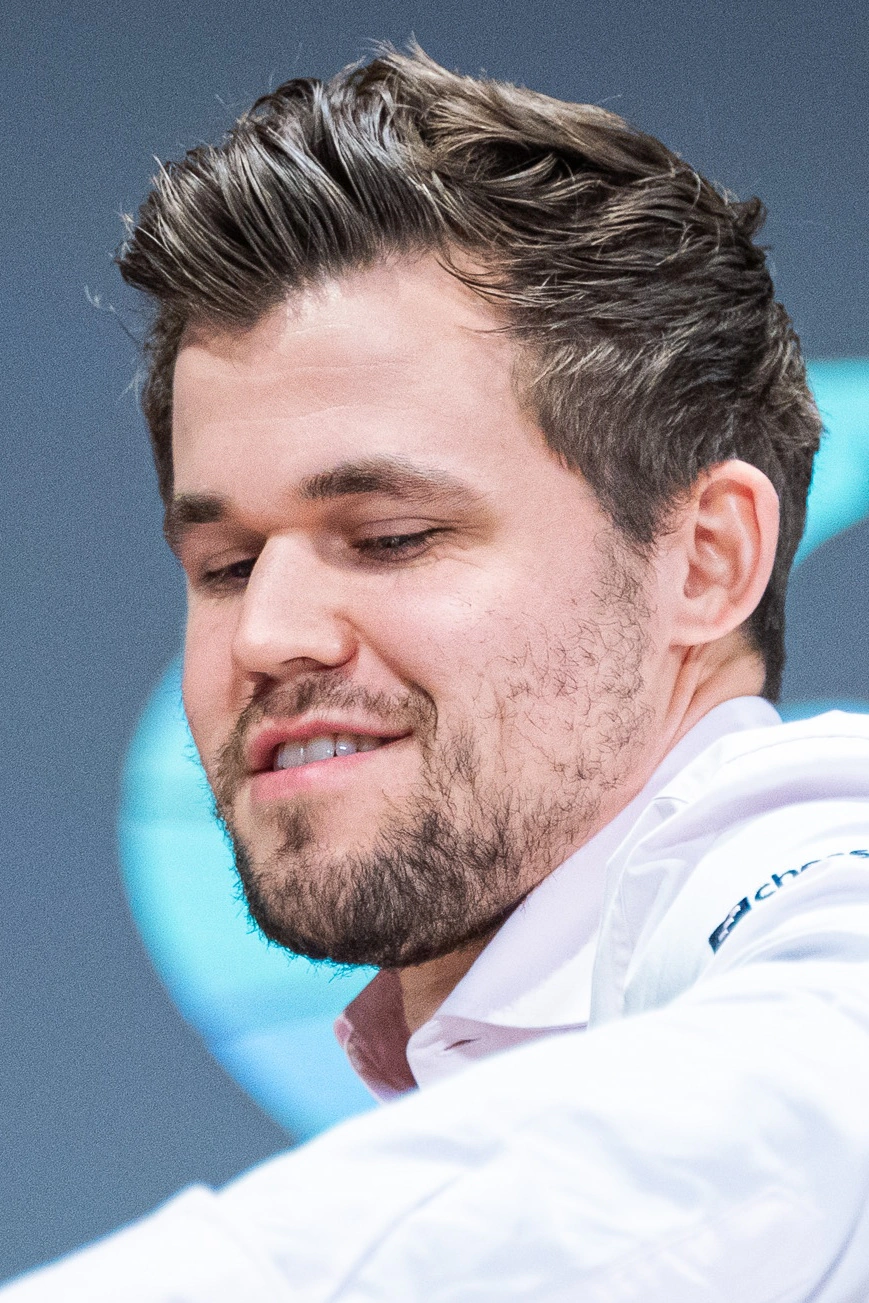
Attr: Lennart Ootes, CC BY-SA 4.0
| 41 Quotes | |
| Born as | Sven Magnus Øen Carlsen |
| From | Norway |
| Born | November 30, 1990 Tønsberg, Norway |
| Age | 35 years |
| Cite | |
Citation Formats
APA Style (7th ed.)
Magnus carlsen biography, facts and quotes. (2026, February 11). FixQuotes. https://fixquotes.com/authors/magnus-carlsen/
Chicago Style
"Magnus Carlsen biography, facts and quotes." FixQuotes. February 11, 2026. https://fixquotes.com/authors/magnus-carlsen/.
MLA Style (9th ed.)
"Magnus Carlsen biography, facts and quotes." FixQuotes, 11 Feb. 2026, https://fixquotes.com/authors/magnus-carlsen/. Accessed 27 Mar. 2026.
Early Life and Background
Sven Magnus Oen Carlsen was born on November 30, 1990, in Tonsberg, Vestfold, Norway, into a country that prized winter stamina, social egalitarianism, and quiet competence more than celebrity. His parents, Henrik Carlsen and Sigrun Oen, cultivated a household where curiosity was indulged and performance was treated as a craft, not a spectacle. Long before he was a public figure, he was known as a child with an unusually retentive memory and a taste for structured challenges - maps, numbers, and puzzles that rewarded patience.Chess entered that landscape as one more system to master, but it quickly became the system that could hold his full attention. Family travel and the routines of Norwegian childhood gave him both steadiness and space: long stretches for solitary practice, but also enough normalcy that winning did not become his only identity. That balance - intense inward focus inside an outwardly calm life - would later become part of the Carlsen mystique: the seeming contradiction of a relaxed demeanor paired with relentless competitive appetite.
Education and Formative Influences
Carlsen learned chess young and was competing seriously by grade school, with the Norwegian coach Simen Agdestein playing an early, decisive role in shaping his technique and professional habits. He came of age during chess's post-Kasparov transition, when databases, engines, and global youth circuits were reshaping what "talent" looked like; he absorbed that modernity while also studying older models of clarity and endgame realism. A key formative jolt arrived in 2004, when Garry Kasparov mentored him briefly - less an apprenticeship than a transfer of seriousness - confirming that Carlsen's instinct for practical pressure could be made systematic.Career, Major Works, and Turning Points
Carlsen became a grandmaster in 2004 at 13, quickly moving from prodigy to contender, with tournament breakthroughs such as Wijk aan Zee and Linares signaling he could outlast elite opposition in long games. His rise culminated in 2013 when he defeated Viswanathan Anand to become World Chess Champion, then defended the title in rematches and high-stakes matches against Sergey Karjakin (2016), Anand again (2014), and Fabiano Caruana (2018), with tie-break rapid chess often showcasing his nerve and speed. He reached the top of the FIDE rating list in 2010 and pushed rating records in the 2800-plus era, while also reshaping public chess culture through a distinctly 21st-century portfolio: rapid and blitz dominance, online events, and the Magnus Carlsen brand, including Play Magnus and later ties into the Chess.com ecosystem. The major turning point of his mature career came in 2022, when he declined to defend the classical world title, signaling that his sovereignty lay not in a crown but in choosing the arenas that still felt alive.Philosophy, Style, and Themes
Carlsen's chess psychology is built around intrinsic motivation and a resistance to the kind of narrative that turns sport into destiny. “People ask what my goal is. I don't have a goal”. That line is not emptiness but insulation: by refusing a single culminating endpoint, he keeps his focus on the daily problem, the next position, the next decision, and the long arc of improvement without the brittleness that comes from chasing a single promised moment.His style made that inner orientation visible on the board. At his best he is a strategist of discomfort, selecting lines that keep options open, avoid easy liquidation, and force an opponent to play chess rather than recite it. “I am trying to beat the guy sitting across from me and trying to choose the moves that are most unpleasant for him and his style”. He often wins not by a single tactical thunderbolt but by accumulating small advantages - superior piece placement, better time management, tougher endgames, and sustained pressure that turns one imprecision into a cascade. The moral center of that approach is enjoyment rather than martyrdom: “Without the element of enjoyment, it is not worth trying to excel at anything”. Even when he speaks of intuition and pragmatism, the underlying theme is freedom: he wants the game to remain a living contest, not a clerical exercise, and his best performances radiate the confidence of someone playing to explore as well as to conquer.
Legacy and Influence
Carlsen's enduring influence lies in how completely he broadened what dominance could mean in modern chess: not just classical titles, but supremacy across time controls, formats, and media, paired with a public persona that made elite chess feel contemporary rather than antique. In Norway he triggered a nationwide chess boom, filling broadcast slots and making tournaments cultural events; globally he modeled a new professional identity in which preparation, fitness, psychology, and online presence are all part of the job. His decision to step away from defending the classical crown did not diminish his stature so much as sharpen it: he forced the chess world to confront the distinction between being champion and being the era's strongest player, and in doing so he made the conversation about excellence - its costs, its pleasures, and its autonomy - part of his biography as much as any match score.Our collection contains 41 quotes written by Magnus, under the main topics: Witty One-Liners - Motivational - Never Give Up - Music - Friendship.
Source / external links