
Mak Dizdar Biography Quotes 4 Report mistakes
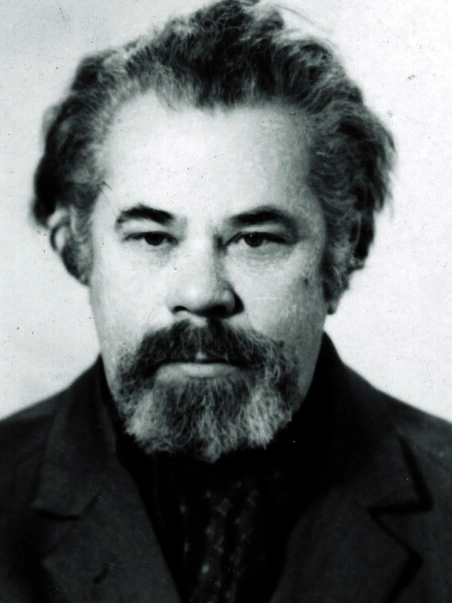
| 4 Quotes | |
| Born as | Mehmedalija Dizdar |
| Occup. | Poet |
| From | Bosnia and Herzegovina |
| Spouse | Senija Dizdar |
| Born | October 17, 1917 Stolac, Bosnia and Herzegovina, Austria-Hungary |
| Died | July 14, 1971 Sarajevo, Bosnia and Herzegovina, Yugoslavia |
| Aged | 53 years |
| Cite | |
Citation Formats
APA Style (7th ed.)
Mak dizdar biography, facts and quotes. (2026, March 13). FixQuotes. https://fixquotes.com/authors/mak-dizdar/
Chicago Style
"Mak Dizdar biography, facts and quotes." FixQuotes. March 13, 2026. https://fixquotes.com/authors/mak-dizdar/.
MLA Style (9th ed.)
"Mak Dizdar biography, facts and quotes." FixQuotes, 13 Mar. 2026, https://fixquotes.com/authors/mak-dizdar/. Accessed 3 Apr. 2026.
Early Life and Background
Mehmedalija "Mak" Dizdar was born Mehmedalija Dizdar in Stolac, in Herzegovina, usually dated to 17 October 1917, into a Bosniak Muslim family shaped by the layered cultures of Ottoman inheritance, Austro-Hungarian administration, and the new South Slav state that emerged after World War I. Stolac was not merely his birthplace but a lifelong imaginative reservoir: a town of stone houses, rivers, graveyards, oral legends, and the medieval stecci tombstones that would later become central to his poetry. He grew up in a world where identity was never singular. Bosnia and Herzegovina in the early twentieth century carried Islamic, Catholic, Orthodox, and older medieval traces in the same landscape, and Dizdar's mature work would turn that coexistence into a poetic archaeology of memory.His family environment encouraged literacy and public engagement. His brother Hamid Dizdar also became an important writer and cultural worker, and the household belonged to that stratum of provincial Bosnian intelligentsia for whom language, newspapers, and history mattered. The instability of the interwar Kingdom of Yugoslavia, with its centralizing politics and unresolved national tensions, formed the political weather of his youth. So did the social vulnerability of Bosnian Muslims, often suspended between imposed categories and their own historical self-understanding. These pressures did not make Dizdar a merely political poet; rather, they sharpened his instinct for the buried life of a people, for what official narratives omit, and for how a homeland can survive in speech, stone, and ritual even when states rise and fall above it.
Education and Formative Influences
Dizdar was educated in Sarajevo after leaving Stolac, and the move from Herzegovinian provincial life to the republic's cultural center widened his field of reference. He began publishing young, entering journalism and literary circles before World War II, absorbing South Slavic modernism, expressionist intensity, folklore, and the discipline of editorial work. The war years, the destruction of the Independent State of Croatia's rule, and the broader anti-fascist struggle left deep marks on his generation, though his greatest poetry would not come from direct war testimony alone. Instead, he learned to think historically across long durations. Medieval Bosnian inscriptions, oral song, Qur'anic and Biblical tonalities, and the idiom of common speech all entered his ear. After 1945, in socialist Yugoslavia, he worked in publishing and cultural institutions, experiences that exposed him both to the opportunities of a new literary order and to its pressures toward orthodoxy, simplification, and cultural administration.Career, Major Works, and Turning Points
Dizdar's early books, including Vidovopoljska noc and Okrutnosti kruga, showed skill and seriousness, but they did not yet reveal the full originality of his voice. He worked as an editor and cultural organizer in Sarajevo, helping shape literary life while searching for a language equal to Bosnia's historical depth. The decisive turn came in the 1960s with Kameni spavac, the book on which his reputation rests, first published in 1966 and later expanded. Drawing on the epigraphic world of the stecci, he created not antiquarian verse but a modern poetic cosmos in which the dead speak, the land remembers, and medieval Bosnia reenters present consciousness. Modra rijeka, published near the end of his life, extended that visionary mode into one of the great river symbols in South Slavic poetry. By then he had become a central Bosnian and Yugoslav poet, though also a contested one, because his reclamation of Bosnia's medieval and Muslim-inflected inheritance challenged narrow national canons. He died in Sarajevo on 14 July 1971, at only fifty-three, leaving behind a body of work smaller than that of many contemporaries but vastly more concentrated.Philosophy, Style, and Themes
Dizdar's poetry is built on compression, recurrence, and the authority of utterance that sounds at once ancient and immediate. He stripped away ornament until the line could carry the density of inscription, prayer, lament, and riddle all at once. His own severe aesthetic standard is audible in the remark, “I haven't written much. It seems to me that I have written well. I would like to write even less. And even better”. That statement is not vanity but discipline: an almost lapidary ethic of reduction, fitting for a poet obsessed with carved stone, silence, and survival. He wrote as if each poem had to justify its existence against oblivion. Hence the recurrent voices of the dead, travelers, witnesses, and nameless Bosnians who speak from beyond official history.At the center of his imagination lies a metaphysical materialism of stone and earth: the belief that matter itself stores human truth. “Stone is better, its dead life weightier than the words of philosophers who for a while deceived us, then left us bereft”. This is a key to his psychology - distrust of abstraction, distrust of ideology, trust in endured existence. Yet his work is never merely archaic. In Modra rijeka, transcendence appears not as escape from history but as passage through depth: “There is a blue river. It is wide, it is deep. It is a hundred years wide, a thousand years deep”. The river is time, death, initiation, Bosnia itself, and the soul's trial before any promised crossing. Across his poems, themes of mortality, exile, belonging, heresy, and communal memory converge in a language that feels excavated rather than invented. He transformed Bosnia from a disputed territory into a spiritual and poetic category.
Legacy and Influence
Mak Dizdar is now widely regarded as one of the defining poets of Bosnia and Herzegovina and one of the major South Slavic poets of the twentieth century. His achievement was not simply literary excellence but civilizational recovery: he gave modern Bosnia a powerful poetic image of its own deep past without reducing that past to propaganda. Later Bosnian writers, especially those preoccupied with memory, multilingual inheritance, and the ethics of witness, have worked under his shadow. During the late twentieth century, when Bosnia again became the site of violence and contested history, his poems acquired renewed urgency because they had already imagined the land as a graveyard, archive, and promise. Kameni spavac remains the touchstone - a book in which medieval epitaph, modernist concentration, and Bosnian self-recognition became one. His life was relatively brief, but his language endures with the permanence he admired in stone.Our collection contains 4 quotes written by Mak, under the main topics: Truth - Nature - Writing - Heartbreak.
Source / external links